
Episode summary
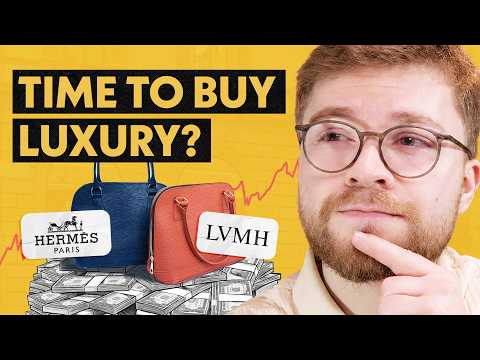
Hermès and LVMH Stock: Time to Buy Luxury?
 The Intrinsic Value Podcast
· · Hosts: Daniel Mahncke, Shawn O'Malley
Summary
The hosts frame Hermes and LVMH as fallen luxury names trading near historical valuation lows after two weak years for the sector. They argue the main problem is not a loss of brand prestige but a slowdown in aspirational buyers, especially in China, where luxury spending has been hit by weaker property prices, softer confidence, and tighter perceptions around conspicuous consumption. The result is a market that is still enormous, but no longer growing the way it did in the post-pandemic boom.
The discussion draws a sharp contrast between Hermes and LVMH. Hermes is presented as a more exclusive, supply-constrained business that protects its most coveted bags through gating and limited availability, while LVMH is described as a larger, more diversified conglomerate that still gets most of its profits from fashion and leather goods. That concentration, the guest argues, makes LVMH more exposed to the slowdown in first-time luxury buyers and more vulnerable to pricing fatigue after aggressive increases since 2019.
They also note that some parts of luxury remain resilient, including jewelry, the U.S. market, and pockets of the Middle East, while spirits and cognac are weaker. Still, the central view is that the sector’s recovery depends heavily on China and on whether top-end demand can offset the collapse in broader aspirational spending. The episode sets up valuation as the final question: whether these brands are now cheap enough to compensate for the macro risks.
Key takeaways
- The host says Hermes and LVMH are trading at near historical valuation lows, largely because the luxury cycle has turned down.
- The guest argues aspirational buyers, not top-end customers, have driven much of the weakness, especially in China.
- Hermes is portrayed as more protected because it limits access to its Birkin and Kelly bags through gating and scarcity.
- LVMH remains highly concentrated despite 75 brands, with fashion and leather goods still driving almost half of revenue and 75% of profits.
- The guest says weaker Chinese property prices and sentiment have reduced luxury demand, while the U.S. remains a key offset.
- Wine and spirits, especially Hennessy cognac, are under pressure, while jewelry has held up better.
Notable quotes
“Hermes and LVMH are trading at significant discounts compared to the last times we looked at them and we want to find out whether that makes them a great buying opportunity today”
“aspirational buyers generally account for roughly half of the total luxury market's value”
“LVMH has experienced declining sales for two years in a row now, for example”
“Hermes has limited aspirational buyers”
“So the common problems for LVMH and airmes are that firstly aspirational buyers have spent less in recent years and China as the kind of centerpiece of demand for the luxury good market”
How the episode opens
We had a good run covering luxury companies in the past here on the show. You covered LVMH and Ferrari. I covered MS and Monontlair.
And today we want to take another look at the fallen angels of luxury fashion. That's right. Hermes and LVMH are trading at significant discounts compared to the last times we looked at them and we want to find out whether that makes them a great buying opportunity today.
Not only compared to last time, but they are trading at near historical valuation lows. And a lot of it seems to be macro related, which usually tends to be one of the greatest times to buy these setups. All right, Daniel, where do you want to start today?
So, maybe a good place to start today is the state of the luxury market in general because it's quite interesting. I feel like luxury has been seen as this stable non-yclical industry since its customers are supposed to be less concerned with how the general economy is doing. So, you know, when you have $20 million in the bank account, you're not really that faced by how the economy is doing anymore.
At least I assume. I unfortunately don't have 20 million in my bank account. But as we worked out in our original episodes, luxury brands that get bigger and bigger also sell to people who you call aspirational buyers.
And this is even more true for LVMH than MS. But as MS gets bigger, it definitely experiences similar things too. And just to quickly mention the definition of aspirational buyers.
These are consumers who have relatively high earning jobs. They're not wealthy or rich or they don't necessarily feel wealthy or rich. And they do very much need their monthly paycheck when they go out and shop at LVMH.
From the episode’s captions: roughly the first two minutes, lightly cleaned. Keep watching on YouTube →
Topics
- luxury market state
- hermes business performance
- lvmh business performance
- china impact on luxury
- stock valuation
Companies and tickers mentioned
- MC
- Hermès
- LVMH
- Louis Vuitton
- Dior
- Tiffany
- Hennessy
Watch the episode
Watch “Hermès and LVMH Stock: Time to Buy Luxury?” on YouTube
Summary, takeaways and quote selection by Octagon. Quotes are short excerpts; the full conversation is in the episode.
More from The Intrinsic Value Podcast
-
 Canadian Pacific Kansas City Limited (CP.TO): Irreplaceable Moat, Unproven Compounding
-
 Reddit (RDDT): Record Cash Flow, Collapsing Share Price
-
 McDonald's ($MCD): Generational Compounder in Historical Drawdown
-
 Mercado Libre ($MELI): We Doubled Down on Meli!
-
 Airbnb (ABNB) The Business Outgrew Its Peak, the Stock Hasn't
-
 GE Aerospace: The Ultimate Compounder?
The Intrinsic Value Podcast, this episode and its artwork belong to The Investor's Podcast Network. Octagon is not affiliated with the show; this page is an independent summary.
