
Episode summary
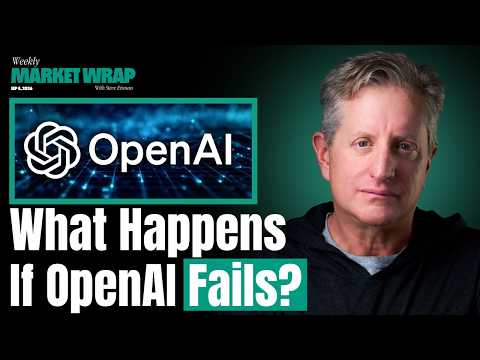
Is OpenAI the Achilles’ Heel of the US Economy? | The Weekly Wrap
 The Real Eisman Playbook
· · 24 min · Hosts: Steve Eisman
Summary
Steve Eisman argues that the US economy has become unusually dependent on AI spending, especially hyperscaler capex, and that higher rates, AI-related debt issuance, and slowing growth could expose how fragile that setup is. He says the 10-year yield nearly touched 4.8%, notes that AI spending has become such a large driver of GDP that a sharp pullback could trigger recession, and warns that OpenAI may be the most important weak link in the chain.
His core thesis is that OpenAI and Anthropic sit at the center of the AI ecosystem, with Oracle, CoreWeave, Nvidia, and the big cloud providers all tied to their demand. He points to OpenAI’s leadership departures, weak revenue growth, rising costs, and heavy dependence on external funding as signs that its position is deteriorating. Eisman stops short of predicting failure, but says the market should think through the consequences now because an OpenAI stumble could force hyperscalers to cut capex and hit stocks across tech, banks, and AI-linked industrials.
He contrasts that downside risk with Nvidia’s still-strong revenue growth, arguing that the headline numbers confirm AI is still running even as concentration risk grows. He also treats Meta’s 17 plus billion settlement as a potentially favorable outcome that could reduce legal uncertainty, and he flags property-and-casualty insurance, healthcare, and consumer staples as areas investors may rotate toward if the AI trade weakens.
Key takeaways
- Steve Eisman says the US economy could tip into recession quickly if AI spending stops because hyperscaler capex is a major GDP driver.
- He argues OpenAI is the most important weak point in the AI chain because it sits behind Oracle, CoreWeave, and much of hyperscaler AI revenue.
- He cites OpenAI's June quarter revenue of 6.7 billion versus 12.3 billion of costs as evidence that the business is not yet improving.
- He says Nvidia’s growth remains explosive, but its accounts receivable are highly concentrated in just five customers, highlighting ecosystem risk.
- He suggests investors may rotate toward safety sectors and subsectors like healthcare, consumer staples, and property and casualty insurance if AI spending slows.
Notable quotes
“The entire US economy hinges on the success of AI. The amount being spent is just so large that were it to stop, the economy would go into a recession almost immediately”
“I think that open AI is potentially in trouble. Things are not moving in the right direction”
“So where is the Achilles heel? I think that it resides with anthropic and open AI because they are so central to the entire AI food chain”
How the episode opens
The 10-year yield almost brushed against 4.8% and there is no question that at some level of interest rates the market will correct. The entire US economy hinges on the success of AI. The amount being spent is just so large that were it to stop, the economy would go into a recession almost immediately.
I think that open AI is potentially in trouble. Things are not moving in the right direction. So, I'm starting to think that the demise of open AI could push the US into an almost immediate recession.
It's not too early to think about the ramifications of open AI failing. So, let's think about it. Hi, this is Steve Eisman.
Welcome to the weekly rap. This is for the week ending Friday, September 4, but recorded Thursday night, September 3. First, I will take a moment to thank everyone who has joined me on Substack and subscribe to both free and premium.
We'll be increasing our premium prices on September 7th at midnight to $20 per month and $200 per year. If you want to get the old pricing, subscribe now before Labor Day. Existing subscribers, your rates will not change if you stay subscribed.
Thinking about switching to annual? Now is the time to lock in the price at $107.99 per year for as long as you stay subscribed. If you're interested in being a premium subscriber and receiving daily comments on the market and economy, being part of a thriving community, receiving an extra weekly episode, including a two-part master class on analyzing banks, which drops soon, and accessing all free episodes, ad free, consider subscribing before we raise the price on September 7th.
Over the past several months, we've gotten several requests from subscribers to interview Ed Zitron, the Substack newsletter writer, who is one of the most famous critics of the entire AI story.
From the episode’s captions: roughly the first two minutes, lightly cleaned. Keep watching on YouTube →
Topics
- ai capex
- openai risk
- nvidia
- meta settlement
- interest rates
Companies and tickers mentioned
- NVDA
- META
- OpenAI
- Nvidia
- Meta
Watch the episode
Watch “Is OpenAI the Achilles’ Heel of the US Economy? | The Weekly Wrap” on YouTube
Summary, takeaways and quote selection by Octagon. Quotes are short excerpts; the full conversation is in the episode.
More from The Real Eisman Playbook
-
 The AI Debate is No Longer Boom vs Bust: Why It’s Time to Go Back to Stock Picking | The Weekly Wrap
-
 The Midterms Have Changed the AI Narrative: S&P Down 4.4%, Nasdaq Down 5.5% | The Weekly Wrap
-
 Why Young Americans Feel Locked Out with the Lemonade Stand Podcast | The Real Eisman Playbook Ep 82
-
 Anthropic’s Growth is Slowing: Is AI Capex Next? | The Weekly Wrap
-
 Inflation, The Deficit & Why the Dollar Stays King with Benn Steil | The Real Eisman Playbook Ep 81
-
 AI Narrative Switched, Debt Yields Spike | The Weekly Wrap
The Real Eisman Playbook, this episode and its artwork belong to Steve Eisman. Octagon is not affiliated with the show; this page is an independent summary.
