
Episode summary
Wall Street Week | Blue Wave Economic Impacts, European Welfare Woes
 Wall Street Week
· · Guests: Glenn Hubbard, Tom Barkin
Summary
The episode centers on how politics and policy shape economic outcomes after the U.S. midterm elections. A guest argues voters were less interested in ideology than in whether government can deliver affordability, growth, and broader participation in the economy. He says tariff policy, housing costs, electricity prices, permitting reform, and preparing workers for AI-era jobs all need to be addressed together, while debt and Social Security pressure will eventually force harder fiscal choices.
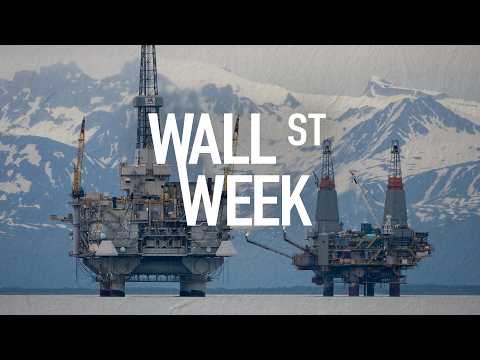
The show then turns to Alaska, where higher oil prices from the Iran conflict are both a burden and a windfall. Higher heating costs hit households, especially in remote communities, but the state’s oil royalties, taxes, and permanent fund mean many Alaskans may be partly or fully made whole, and the state may have room for extra rebates or spending.
From there, Richmond Fed President Tom Barkin’s field visit to a South Carolina manufacturing plant shows a sector that is adapting but still wants stability. The plant sees automation and AI as tools for higher-skill work, while Barkin hears a district economy that is generally solid but uneasy about tariffs, pricing power, and uncertainty. The episode closes with a warning that Europe’s welfare states, especially in France and Italy, face mounting fiscal strain from aging populations, rising pension costs, and competing demands for defense and investment.
Key takeaways
- The guest says voters want “what works,” not ideology, and that policymakers need to connect growth plans with concrete help on affordability and participation.
- He argues tariff reduction only makes sense if it is paired with policies that help more Americans adjust to change.
- Alaska’s oil windfall could exceed households’ extra fuel costs, allowing the state to raise dividends or rebates even as residents pay more at the pump.
- Tom Barkin says his district’s manufacturers are fine at the business level but are uneasy about tariffs, costs, and macro uncertainty.
- The European segment argues pensions and aging populations are creating fiscal pressure that will force reforms, especially in France and Italy.
Notable quotes
“The first is that voters want what works. The second is that voters want you to actually look at their problems”
“I think anybody who says, "I want to renew trade, "I want to reduce tariffs," also has to have in mind, how am I going to help”
“We're making a frickin fortune”
“If we have a stable environment, and we can do that, but switching back very quickly would be difficult”
“the economic horse needs to pull the social cart”
How the episode opens
David Westin: This is "Wall Street Week. I'm David Westin, bringing you stories of capitalism. Americans are reeling from the high cost of diesel and other fuel in the wake of the Iran conflict.
We visit one state where people could break even, or even come out ahead. Plus, we continue our site visits with regional Fed presidents, this time with Richmond's Tom Barkin on his visit to a manufacturing plant in Union, South Carolina. And demonstrations in the streets of Paris show the stress on the French social welfare system.
Can Europe still afford what it put in place decades ago? But we start with the aftermath of the midterm elections this week, and what they may mean for the policies, or lack of policies, on the economic issues that matter to voters. We talked with Glenn Hubbard of the Columbia Business School, who served as Chair of the Council of Economic Advisers under President George W.
Bush. -I think there are two messages, and I don't think the press has really picked up on them. The first is that voters want what works.
The second is that voters want you to actually look at their problems. I think there's a view that, well, the Democrats won because their ideas are better. Well, they may or may not be, but that's not what the electorate was saying.
I think the electorate is just saying, give me something that works. Affordability is an example. But really we've had decades of big change in the economy.
Politicians on both sides of the aisle have nodded, but have not offered solutions. And I think voters are sick of it. Westin: So if the Democrats turned to you tomorrow and said, "OK, what plan should we pursue "in the new Congress that would address "some of the affordability concerns?
From the episode’s captions: roughly the first two minutes, lightly cleaned. Keep watching on YouTube →
Topics
- midterm economic impacts
- oil prices
- american manufacturing
- european welfare
- youth protests
Watch the episode
Watch “Wall Street Week | Blue Wave Economic Impacts, European Welfare Woes” on YouTube
Summary, takeaways and quote selection by Octagon. Quotes are short excerpts; the full conversation is in the episode.
More from Wall Street Week
-
 Wall Street Week | Nvidia Shakeup, Midwest Stadium Bids, Care Work Gap, India’s Wedding Economy
-
 What American Manufacturers Are Telling the Fed about the Economy
-
 Europe’s Welfare State Faces a Reckoning
-
 How the Blue Wave Could Reshape America’s Economy
-
 Why Capitalism Is Losing Young Americans
-
 Why Voters Are Turning Against Data Centers
Wall Street Week, this episode and its artwork belong to Bloomberg. Octagon is not affiliated with the show; this page is an independent summary.
