

About these summaries
Octagon has summarized 195 episodes of Wall Street Week published between Jan 10, 2026 and Nov 8, 2026. The companies discussed most often are Centerview Partners, Apollo Global Management and SpaceX. Frequent guests include Steven Rattner, Jason Furman and Blair Effron. Each summary lists key takeaways, short timestamped quotes and the companies and tickers mentioned, with a link to the full episode.
Most-mentioned tickers
- APO 5
- GOOG 5
- GOOGL 5
- BX 4
- BYDDY 3
- GS 3
- IBM 3
- SONY 3
- TSLA 3
- BLK 2
- F 2
- JNJ 2
- JPM 2
- MP 2
- MU 2
Most-mentioned companies
- Centerview Partners 6
- Apollo Global Management 5
- SpaceX 5
- Blackstone 4
- Sony 4
- Anthropic 3
- Brookings Institution 3
- BYD 3
- Goldman Sachs 3
- IBM 3
- Tesla 3
- Willett Advisors 3
- Bloomberg 2
- CoBank 2
- Ford 2
Frequent guests
- Steven Rattner 8
- Jason Furman 6
- Blair Effron 4
- Nicholas Burns 4
- Steve Rattner 4
- Glenn Hubbard 3
- Hank Paulson 3
- Lloyd Blankfein 3
- Marc Rowan 3
- Natasha Sarin 3
- Richard Haass 3
- Sam Palmisano 3
Episodes
- What American Manufacturers Are Telling the Fed about the Economy
Tom Barkin’s trip to Gestamp in Union, South Carolina, was a ground-level check on how manufacturers are navigating a mixed economy.
- Europe’s Welfare State Faces a Reckoning
Europe’s postwar welfare state is colliding with aging demographics, rising pension obligations and competing demands on public budgets.
- How the Blue Wave Could Reshape America’s Economy
Glenn Hubbard argues that the midterm results were less a mandate for any one ideology than a demand for policies that visibly improve people’s lives.
- Inside Alaska’s Oil Paradox
Higher oil prices tied to the war in Iran are squeezing U.S. consumers, but Alaska is unusually positioned to benefit.
- Wall Street Week | Blue Wave Economic Impacts, European Welfare Woes
The episode centers on how politics and policy shape economic outcomes after the U.S. midterm elections.
- The $40 Trillion Problem Washington Won’t Talk About
America’s $40 trillion debt problem is presented as both a market issue and a political failure.
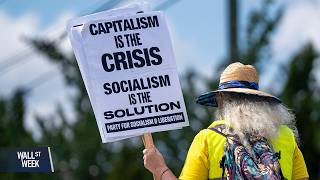
- Why Capitalism Is Losing Young Americans
The discussion centers on why socialism is gaining traction, especially with younger Americans, as capitalism faces more skepticism and its defenders struggle to make a…
- Why Voters Are Turning Against Data Centers
Artificial intelligence is becoming an election issue, but the backlash is aimed less at the technology itself than at the data centers needed to power it.
- The Cost of Living Crisis That Won’t Go Away
Affordability dominated the discussion because the economy’s headline strength is no comfort to households facing persistently high costs for housing, health care, groceries and…
- Wall Street Week | Affordability, Data Center Divide, Debt Hits Households, Capitalism on the Ballot
Affordability dominated the election conversation, with the host framing cost of living as the issue voters care about most and guests arguing that the problem is felt in…
- Inside The Two Argentinas Under Javier Milei
Argentina under Javier Milei is being pulled into two different economies.
- Why Mistral Is Betting on a Different Kind of AI
Mistral is presented as Europe’s answer to an AI race dominated by U.S. hyperscalers, but with a different strategy: open-source and open-weight models aimed at enterprise…
- How This County Made the Data Center Boom Pay Off
The episode argues that data centers can be a major fiscal windfall for communities, but only if local governments negotiate hard and set clear boundaries.
- Has Election Spending Hit a Tipping Point?
Money is flooding into U.S. elections with just over a week left before voters decide control of Congress and 33 governorships, but Blair Effron argues the biggest lesson is not…
- Wall Street Week | Europe’s AI Player, Argentina’s Two Economies
Campaign money is flooding into U.S. politics, but the episode argues that returns on that spending may already be diminishing.
- Can India Win From the Globalization Reset?
Indian Prime Minister Narendra Modi opened Bloomberg’s New Economy Forum by warning that the forces that once connected the world are increasingly being used as leverage.
- Can America Rebuild Trust With Its Allies?
Chrystia Freeland argues that the US-Canada relationship has been strained by President Trump's tariffs and by a broader U.S. turn away from reliable allied partnerships.
- The Inflation Warning Coming From America’s Farms
Chicago Fed President Austan Goolsbee traveled to rural Illinois to hear how farmers are experiencing the economy before those pressures fully show up in national data.
- The Battery Boom Moving From Electric Cars to the Power Grid
Battery storage is emerging as the bridge between a weaker EV market and a stronger grid-storage market.
- Wall Street Week | America’s Relationship Woes, Battery Pivot, Farmers’ Fed Warning
The episode centers on a world moving away from easy globalization and toward more fragmented trade, energy, and technology systems.
- AI’s Next Big Risk Is Hiding in the Debt Market
AI infrastructure spending is moving from an equity story into a major debt-market story.
- Inside Jamie Dimon & Jim Farley’s $1 Billion Bet on US Manufacturing
Ford, JPMorgan, and the state of Michigan are launching a push to reconnect buyers, financing, and suppliers in advanced manufacturing, with the goal of rebuilding U.S…
- How Trump Accounts Could Make Americans Worse Off
The segment argues that the real test of any new child savings program is not whether it sounds inspirational, but whether it actually leaves families better off after taxes…
- Can a Billionaire-Backed Coal Mine Revive a Struggling Canadian Town?
A proposed metallurgical coal mine in Alberta’s Crowsnest Pass is dividing the region between hopes for economic revival and fears of long-term environmental damage.
- Wall Street Week | Michigan Manufacturing, AI Debt Investments, Baby Bonds, Canadian Coal Fight
Ford, JPMorgan and Michigan are launching Michigan LIFT to link advanced manufacturers with financing and buyers, aiming to rebuild domestic supply chains for goods such as…
- Can America Break China’s Grip on Rare Earths?
China’s dominance in rare earths and magnets framed the discussion as a race the United States is still trying to enter late.
- Inside the Enrollment Cliff Hitting US Colleges
The episode argues that U.S. colleges are entering a prolonged enrollment squeeze as the college-age population declines after decades of growth.
- Can AI Outrun America’s Deficit Problem?
Kevin Hassett argues that the Trump economic plan is supported by strong underlying momentum, pointing to federal workforce reductions, projected budget savings, and the belief…
- Why Philosophers Are Worried About AI
The discussion argues that the deepest AI risk may not be machines taking over, but AI changing people: weakening authentic connection, independent thought, and the habits that…
- Wall Street Week | Your Brain on AI, Rare Earth Race, College Enrollment Cliff
Kevin Hassett argued that the economy could get a bigger boost from AI than official statistics currently capture, comparing today’s productivity gains to the internet era and…
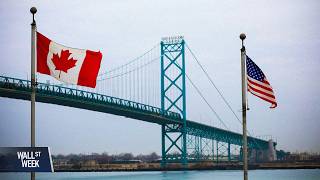
- This Bridge Was Built to Unite the US and Canada. Then Tariffs Hit.
The episode argues that the Gordie Howe Bridge, built to deepen commerce between Detroit and Windsor, has instead become a symbol of how badly U.S.-Canada relations have…
- Why Humanoid Robots Might Be the Future of Elder Care
Humanoid robots are being tested as companions in elder care, with Abi from Andromeda visiting a Northern California dementia facility to lead activities like Tai Chi, song…
- Why China's Biggest Strength Is About to Become Its Biggest Problem
Michael Froman argues that China’s biggest strength—its ability to drive growth through manufacturing and exports—has become a global problem and may soon become a domestic one.
- Inside the $100 Billion Bet to Bring Manufacturing Back to the Rust Belt
Micron’s decision to build a massive semiconductor campus outside Syracuse is presented as a test case for whether a Rust Belt city can recover through a new wave of industrial…
- Wall Street Week | China’s Trade Reckoning, Syracuse’s Second Chance, Humanoids in Healthcare
Michael Froman argues that China’s export-led model is reaching its limits: Beijing has built massive industrial capacity with subsidies, protected industries, and pressure on…
- India’s Silicon Valley Is Straining Under Its Own Growth
Bangalore’s rise as India’s tech hub is rooted in decades of policy quirks, state intervention, and demand from overseas, and it has made the city central to the country’s…
- Wall Street Week | India’s Growth Test, Bangalore’s Infrastructure Problem, Cricket Attracts Capital
India is presented as a major growth story with a structural test: its technology-led expansion has made the country one of the world’s most important investment destinations…
- The IPL Competition That is Playing Out on Wall Street
Cricket in India has become a rare consumer and media asset: a sport with national reach, a short-form format built for television, and only 10 IPL teams for a country of roughly…
- Is India Finally Reaching Its Economic Tipping Point?
India’s investment case rests on a rare mix of scale, a young workforce, and infrastructure improvements, but the episode argues that the country still has to convert those…
- Why India’s Big Tech Companies Are Betting on Hyderabad
Hyderabad has built itself into a major Indian tech and life-sciences hub by combining office campuses, universities, and policy support.
- Wall Street Week | India’s Growth Test, Bangalore’s Infrastructure Problem, Cricket Attracts Capital
India is presented as a high-growth economy with deep structural advantages: a huge, young, educated labor pool, a supportive policy environment, and an increasingly…
- Can Scotland’s Abundant Wind Power a Data Center Boom?
Scotland is using an unusual answer to its wind-power glut: build data centers near the excess electricity and turn curtailed wind into compute for AI and other digital services.
- How Will Silicon Valley Rearm America?
War in Ukraine, the Middle East, and the rise of China have pushed national security back to the center of US industrial strategy, and Mark Esper argues that means both higher…
- Why Solar Power Is Overwhelming Europe’s Grid
Europe’s solar buildout has become so large that it is starting to overwhelm the grid on sunny days.
- Can Venezuela Rescue the Oil Market?
Venezuela could eventually matter to oil markets, but Luisa Palacios says it is not a near-term fix for price pressure created by Middle East disruptions.
- Wall Street Week | Venezuela’s Oil Test, Overcapacity in Renewables, Defense Tech Boom
Venezuela has the oil reserves to matter geopolitically, but the guest argues it cannot quickly relieve pressure on global markets.
- How YouTube Filmmakers Are Reshaping Hollywood’s Talent Pipeline
YouTube is reshaping Hollywood’s talent pipeline by turning online creators into bankable filmmakers.
- The Ugly Truth About the Debt Crisis
U.S. public debt crossing $40 trillion is used as the entry point for a broader warning: the post-COVID borrowing surge has left many countries with higher interest costs, less…
- Can the US Defy Fiscal Gravity?
Long-term Treasury yields and real rates have climbed to levels not seen in nearly 25 years, but the guest argues inflation is not the main cause.
- Wall Street Week | Debt & Consequences, Defying Fiscal Gravity, Hollywood Gets Democratized
The episode centers on the costs of post-pandemic borrowing and the risk that fiscal discipline keeps getting deferred until markets force the issue.
- What the Colorado River Crisis Means for the American West
The episode argues that the Colorado River system has moved from scarcity management to emergency triage.
- Can Canada Still Trust America on Trade?
Chrystia Freeland said the U.S. and Canada appear close to a tentative trade deal that would stop the newest Trump tariffs from taking effect on August 19, but only by making…
- Making A ‘Plan B’ for the AI Boom
The discussion centers on how the AI buildout is less a software sprint than a long-cycle capital program tied to data centers, semiconductors, and energy.
- Study Shows AI Hitting Paychecks, Not Payrolls
Apollo chief economist Torsten Slok says early labor-market data suggest AI is showing up first in paychecks, not payrolls.
- Wall Street Week | AI Hits Wages, USMCA Under Pressure, Colorado River Crisis
AI spending is being justified as a multi-year infrastructure buildout, but Sam Palmisano argued that CEOs should not assume the optimistic case will play out.
- Is Cuba Finally Ready for Capitalism?
Cuba is presented as an economy under severe pressure from tighter U.S. sanctions, the collapse of past external lifelines, and deep skepticism about whether new reforms are real.
- The Private Equity Boom Hits a Reality Check
Private equity’s long run of easy wins is under pressure as higher interest rates, slower exits, and richer entry prices have changed the math.
- Inside Mexico’s Pitch for an Alternative Trade Corridor
Mexico is building the Interoceanic Corridor of the Isthmus of Tehuantepec, or CIIT, as a rail-and-road “dry canal” linking the Pacific and Gulf of Mexico.
- Rick Rieder: Inflation Isn’t the Biggest Risk for Markets
Rick Rieder argued that the latest CPI report was a relief for markets because it did not come in hot, but inflation is still above the Fed’s 2% goal.
- Wall Street Week | Inflation Meets Debt, Rerouting Global Trade, Private Equity Tested
The episode argues that markets are being pulled in opposite directions by lower near-term inflation readings and higher longer-term financing costs.
- BlackRock's Rieder Urges Hawkish BOJ Tilt to Boost Yen
Rick Rieder argues that the yen’s weakness is being driven less by spot intervention than by expectations for Japan’s policy path.
- Why Think Tanks are a Billion Dollar Business
The episode argues that think tanks are best understood as a business of ideas, with measurable costs, funding, and influence even when the output is intangible.
- Who Governs the AI Boom?
Jason Furman argues that AI should not be treated as one problem with one solution.
- J&J’s Billion-Dollar Robot Bet
Johnson & Johnson’s Ottava finally won FDA approval after a long and costly push into robotic soft tissue surgery, positioning the company to enter a market already dominated by…
- Will New Merger Rules Save the EU in the AI Race?
The episode examines the European Union’s first major rewrite of merger rules in more than 20 years and why Brussels thinks competition policy may help Europe close the gap with…
- How Long Can the Fed Wait to Raise Rates?
Jason Furman argues the Fed’s biggest signal this week was not the unchanged rate decision but the dissents, which showed where a substantial part of the committee wants policy…
- Wall Street Week | Warsh’s Waiting Game, EU Merger Rules, Robotic Surgeons
The episode opens with the Federal Reserve’s decision to hold rates steady and Jason Furman arguing that the dissenting votes mattered most because they showed where parts of the…
- Why Graduate School Is About to Get Harder to Pay For
Federal Grad PLUS loans, created in 2006 to let graduate students borrow up to the full cost of attendance, are ending under the One Big Beautiful Bill, and new federal caps are…
- 'The Chinese Won': Steven Rattner on Lessons From Trump's Trade War
Steven Rattner argues that Trump’s revived tariff strategy is less coherent than advertised and has produced little durable economic change.
- Trump’s New Tariffs Are Testing Canada’s Patience
The guest argued that the White House’s new 50% tariffs on roughly $20 billion of Canadian imports are not a narrow trade measure but part of a broader, contentious renegotiation…
- How Austin Is Beating the Affordable Housing Crisis
Austin is presented as a rare U.S. housing-market success story.
- Rattner Says AI Boom Faces Questions Over Debt, China and Higher Rates
Steven Rattner argues that artificial intelligence will be a major economic force, but investors still cannot tell which companies will ultimately win or lose.
- Wall Street Week | AI Debt, Austin Housing Test, Student Loan Reckoning, Canada Weighs US Tariffs
Artificial intelligence remains the market’s central story, but Steven Rattner argues the next phase is less about whether AI matters than which companies capture the value.
- Can Big Tech’s AI Spending Pay Off?
Blair Effron argues that artificial intelligence is distorting the markets far more than it is distorting corporate boardrooms.
- The Next Tariff Fight for Small Businesses: Getting Refunds
Small businesses that paid President Trump’s IEEPA tariffs won a major legal victory when the Supreme Court struck them down, but the episode argues that getting the money back…
- Is AI Making Inflation Harder to Beat?
Loretta Mester says the latest CPI was better than earlier readings, but inflation is still a problem because it has remained above the Fed’s 2% goal for more than five years.
- Can America Actually Build Trump’s Golden Fleet?
President Trump’s push for a larger “Golden Fleet” runs straight into the realities of shipbuilding: shipyards need stable funding, predictable orders, skilled labor and designs…
- Wall Street Week | Inflation Meets AI, Navy Buildout Challenges, Tariff Refund Fight
The episode opens on inflation, where a former Cleveland Fed president argues the U.S. still has an inflation problem because prices have been above the Fed’s 2% goal for more…
- The $360 Billion Market that Medicine Got Wrong for 20 Years
Menopause is being reframed as a major health-care and consumer market after decades of being dismissed as an inevitable part of aging.
- Why SpaceX’s Governance Has Driven Away Some Pension Funds
SpaceX’s public debut centered on a governance structure that gave Elon Musk far more control than his equity stake would suggest.
- Why Fox is ‘the most Disciplined’ Media Entertainment Company in the Streaming Era
Michael Wolf argues that Fox has been the most disciplined media company in the streaming era because it avoided the streaming arms race and built around cash-generating assets…
- How Musk’s Trillion-Dollar Fortune Tests American Capitalism
Elon Musk’s rise to a trillion-dollar fortune is used here as a stress test for American capitalism.
- Wall Street Week | The World’s First Trillionaire, Governance Meets Growth, Menopause Market Boom
The episode argues that capitalism is entering a more extreme phase, with Elon Musk’s SpaceX IPO creating the world’s first trillionaire while also exposing how ownership-based…
- Can USMCA Survive Trump’s Second Term?
The discussion centered on whether the USMCA review could destabilize the North American trading system or ultimately reinforce it.
- Can the US Afford an Energy Trade Fight?
North American energy trade works less like a single three-country system than as two major bilateral channels: Canadian oil flowing into the U.S. and American natural gas…
- Why American Farmers Are Nervous About USMCA
American farmers are approaching the U.S.-Mexico-Canada trade negotiations as a test of whether policymakers can avoid making a fragile situation worse.
- Krugman 'Shocked' By New Auto Tariff Outlook
The episode centers on the North American auto industry as the clearest test case for USMCA and for President Trump’s trade agenda.
- Wall Street Week | USMCA: Can North America’s Trade Deal Survive?
The episode argues that USMCA is less a single trade deal than the operating system for North American manufacturing, farming, and energy.
- FIFA’s American Dream: How the World Cup Cashed In
The episode argues that the 2026 men’s World Cup has become a case study in how far a mega-event can be pushed commercially.
- Google’s AI Bet
Google is reshaping Search around AI-generated answers, conversational queries and task completion, and Nick Fox says the company sees that as its biggest product shift in more…
- President Trump’s $2 Billion Quantum Bet
The Trump administration’s planned $2 billion investment in nine quantum computing firms is framed as a government venture-capital bet, not a grant program, and the announcement…
- Can Tech Justify a Trillion-Dollar Valuation?
SpaceX’s long-awaited IPO, with Anthropic and OpenAI expected behind it, was presented as a test of how far capital markets can stretch for AI-linked companies.
- Wall Street Week | SpaceX Goes Public, Google’s AI Bet, World Cup Price Backlash
The episode argues that capital markets are entering a new phase of scale, with SpaceX, Anthropic and OpenAI representing a wave of mega-IPOs that could reset what public…
- Why the US and China Need Latin America for Space
A new commercial spaceport in Pedernales, Dominican Republic is being pitched as a solution to a growing launch bottleneck as satellite demand surges toward 2030.
- Can a Forgotten Caribbean Town Become a Spaceport?
Launch On Demand’s planned commercial spaceport in Oviedo, in the Dominican Republic’s Pedernales region, is presented as a development project as much as a space project.
- Why an AI 'Death Spiral' Threatens the Internet
AI-powered search is reshaping the web by keeping more users inside search and chatbot interfaces instead of sending them out to publishers.
- Is the Dollar Losing Its Luster?
Ken Rogoff argues that the dollar’s dominance is not disappearing overnight, but the Iran conflict is another force pushing the global system toward a slower, more multipolar…
- How Bolivia's Plans to Tap Mineral Riches Are Being Tested by Mass Unrest
Bolivia’s new president, Rodrigo Paz, is trying to sell a sharp break from two decades of socialist rule by promising clearer laws, fiscal discipline, and a friendlier climate…
- Wall Street Week | AI-era Internet, Spaceport Investment, Bolivia’s Investability
Ken Rogoff argues that the dollar’s long decline as the reserve currency is being accelerated by war, higher global rates and America’s fiscal drift, though he says the dollar…
- Wall Street Week | Britain’s Debt Problem, Poland’s Economic Boom
Britain’s gilts market is presented as a constraint on politics as much as a reflection of it.
- How Poland Built a Trillion-Dollar Economy
Poland has moved from a post-communist catch-up story to one of Europe’s strongest growth cases, with GDP rising from $67 billion in 1989 to more than $1 trillion last year.
- The Aluminum Shock Hitting the Global Economy
The episode argues that aluminum is being hit by a rare double shock: war-related disruptions in the Middle East and higher U.S. tariffs.
- Why Britain’s Bond Market Is Sounding the Alarm
Rising gilt yields are colliding with Britain’s political instability, and John Authers argues the connection runs through the country’s weak fiscal position.
- The AI Boom Is Coming to Your Backyard
The episode argues that the AI buildout is shifting from an abstract market story to a local political fight.
- Wall Street Week | Britain’s Debt Problem, Poland’s Economic Boom
Britain’s politics and bond market are locked in a feedback loop, with the guest arguing that the UK’s fiscal strain gives gilts unusual power over government choices.
- What New York’s Budget Crisis Reveals About the City’s Economy
New York City’s budget fight is framed as a test of whether the city should lean on wealthy residents or rein in spending.
- What China Understands About AI and Energy That the US Doesn’t
The discussion argues that the U.S.-China competition in AI is increasingly an energy competition.
- Ray Dalio: 'Expect a Tribute System' as China Influence Grows
Ray Dalio argues that markets are still pricing the war in Iran mainly through cash flows rather than fear, even as the conflict could reshape geopolitics, alliances, and the…
- ‘The Oppenheimer’ of the AI Era
Sebastian Mallaby argues that AI is being driven by the same mix of scientific ambition, money, and power that shaped past transformative technologies, especially the nuclear age.
- Wall Street Week | Dalio's Warning, AI Arms Race, China Powers Ahead, NYC Tax Standoff
Ray Dalio argues that markets often shrug off wars because investors ultimately follow cash flows, not headlines, but he says the Iran conflict could still matter if it alters…
- Stablecoins Are Quietly Changing How the World Sends Money
Stablecoins are being presented as a practical payments tool rather than just a crypto trade.
- The Sparkling Water Wars Are Just Getting Started
The sparkling water aisle is crowded, but the guests argue that saturation is really a sign of a category shifting away from sugary soda and toward healthier, zero-sugar drinks.
- Stablecoins Are Quietly Changing How the World Sends Money
Stablecoins are presented as a practical payment rail rather than a crypto curiosity, with the clearest use case being cross-border remittances.
- New Zealanders Are Moving to Australia in Record Numbers. Can It Get Them Back?
New Zealand is losing people to Australia in record numbers, and the episode argues the main pull is simple economics: better pay, stronger job prospects, and a lower cost of…
- ‘It’s Not Because They Want to Be Friends’: Brilliant on What to Expect From the Trump-Xi Summit
The postponed Trump-Xi summit is being framed less as a path to a big deal than as a way to stabilize a volatile U.S.-China relationship.
- Wall Street Week | High Stakes Summit, New Zealand’s Brain Drain, Stablecoin Adoption, Bubbly Water
The episode opened on the postponed Trump-Xi Beijing summit, where the guest argued that both sides want stability more than a breakthrough.
- Las Vegas Is Gambling on Its Own Reinvention
Las Vegas is facing a slowdown in its core tourism engine, but the city is betting that reinvention will protect it from a deeper slump.
- Why Geothermal Could Be the Energy Breakthrough Everyone Agrees On
The episode argues that geothermal could become a rare energy source with broad political and commercial appeal just as AI data centers drive U.S. electricity demand higher.
- The Vibe Coding Era: Why AI Won’t Replace Software Engineers
AI coding tools are turning software creation into something far more accessible, from warehouse owners to nontechnical hobbyists, while also making the outlook for professional…
- What Kevin Warsh Means for the Future of the Fed
Glenn Hubbard said the Fed’s latest meeting was essentially a hold, with no change in the funds rate, but the real story was internal disagreement over the policy path.
- Wall Street Week | Warsh’s Fed, Vibe Coding, Geothermal Energy, Vegas Bets Big
The episode opens with the Fed’s latest meeting and the growing uncertainty around what comes next for rates under a new chair, Kevin Warsh.
- How Boring Businesses Create Billionaires
Wealth in America often comes from private ownership in dull-seeming businesses, not from celebrity CEOs or fast-growing tech firms.
- Can the World’s Economic Firefighter Adapt to the 21st Century?
The episode argues that the IMF is still central to global financial stability, but its 1944-era design is under strain from wars, supply-chain fragmentation, debt buildup, and…
- Why this Chinese EV terrifies Europe’s carmakers
China’s auto industry has moved from outsider to global force, and the episode argues that BYD is the clearest symbol of that shift.
- What the Fed Can Do About Anthropic’s Latest System
Anthropic’s latest system, Mythos, is described as too dangerous for public release because it can autonomously probe bank software, find vulnerabilities, and act at high speed…
- Wall Street Week | Anthropic Cybersecurity Risk, BYD Goes Global, The Billionaire Next Door
Anthropic’s new Mythos preview sharpened concerns that nearly autonomous AI could probe bank software for vulnerabilities faster than human defenders can react.
- Are the Rich Paying Their Fair Share of Taxes?
The discussion argues that the U.S. tax system is pulling in too little revenue, and that a major reason is the treatment of capital income and inherited wealth.
- Why the US Is Pushing to Rebuild Its Copper Supply
Copper demand is rising sharply as AI data centers, power grids, defense spending, and clean-energy buildouts all require more metal.
- The Hidden Damage Behind the Iran Oil Shock
The guest says the duration of the disruption through the Strait of Hormuz will determine how severe the shock becomes.
- Hank Paulson on Iran War, Inflation, and Market Risk
Hank Paulson argued that the war in Iran is likely to raise inflation and keep interest rates higher for longer, with spillovers across jet fuel, diesel, gasoline…
- Wall Street Week | Paulson on Iran War, Energy Market Disruptions, Copper Supply Strain, Tax Debate
The episode opens with Hank Paulson arguing that the Iran war is less about direct U.S. damage than about global spillovers.
- Inside the American Startups Trying to Break China's Mineral Chokehold
Phoenix Tailings in Exeter, New Hampshire is trying to build a U.S.-based alternative to China’s grip on critical minerals by processing tailings into rare earth metals and…
- The Choke Point That Could Break the Global Economy
The discussion centers on how the war in Iran is rippling far beyond the battlefield through oil prices, shipping risk, inflation, and central bank policy.
- The IMF Meetings Were Supposed to Be About Trade. Then Came the Iran War.
The IMF and World Bank meetings in Washington are being overtaken by the war in Iran, which Chrystia Freeland says has pushed trade, AI, and growth debates off the agenda.
- Wall Street Week | Haass on Iran, Oil Fallout, IMF Meeting Anxiety, US-China Rare Earth Competition
Richard Haass argued that the Iran cease-fire opened a hard, messy negotiating phase rather than a clean resolution.
- Haass: Iran Has Far More Leverage Than Before War
Richard Haass argues that the talks over Iran come after a war that has changed the balance of leverage, even if the United States and Israel can claim battlefield success.
- How Singapore and Australia Took Opposite Paths on Housing
The episode argues that policies meant to help first-time buyers often just shift the burden or push prices higher.
- The Hidden Cost of Viral Food Trends
Social media is turning niche foods like matcha, ube, acai, and Dubai chocolate into global sensations faster than supply chains can adapt.
- Iran War Sends Shockwaves From Energy Markets to Global Food Supply
The war in Iran is pushing energy costs higher, but the bigger market story is the knock-on effect on agriculture.
- China's Neighbors Won't Come to Assistance in a Global Crisis,' Nicholas Burns Says
Nicholas Burns argues that the Iran conflict is already creating strategic gains for Russia, because U.S. decisions to loosen pressure on Russian and Iranian oil are sending cash…
- Wall Street Week | China’s Role in Iran War, Global Fertilizer Disruptions, Matcha’s Supply Problem
The episode argues that the Iran war is rippling far beyond energy markets: it has delayed a planned Trump-Xi summit, intensified pressure on global fertilizer and natural gas…
- Why Australia’s Social Media Restrictions are Dividing Opinion
Australia’s under-16 social media restrictions are being treated as a live test of whether tougher rules can protect children without breaking the platforms or triggering major…
- Trump’s Tariffs on Canada: Economic Pain or Long-Term Gain?
President Trump’s new tariffs have strained the long-standing U.S.-Canada trading relationship, and the report from Knowlton, Quebec, shows how quickly politics has seeped into…
- Why AI Might Not Replace Your Job After All
Arvind Narayanan argues that AI is a powerful general-purpose technology, but not an imminent force that will upend labor markets or make economics irrelevant.
- Why the Effect of War Might Hit the Economy Sooner Than We Think
Randal Quarles argues that the war-driven uncertainty now hanging over the economy is likely to keep the Federal Reserve on hold, because the main forces he sees are more…
- Wall Street Week | Fed on Iran War, AI Expectations
The Fed kept rates steady against a backdrop of war in Iran, with a former Fed vice chair arguing that the bigger threat for now is uncertainty-fed caution, not an immediate need…
- What the Millennial Prime Minister of Nepal Teaches Us About Inequality
A youth-driven revolt in Nepal began with social media posts about fairness, inequality, and elite privilege, then escalated after the government cracked down on platforms…
- How the Private Credit Crunch Is Raising New Questions About Risk
Private credit is under heavier scrutiny after recent trouble with fund redemptions and a selloff in related public stocks such as KKR, Blue Owl, and Apollo.
- Why Sweden Is Becoming a Defense Powerhouse as Europe Rearms
Sweden’s defense sector has moved from an afterthought to a centerpiece of Europe’s rearmament, with Saab reporting record orders and sharply higher output as demand surges after…
- Is the US Jobs Market Starting to Crack? Steven Rattner on Tariffs, AI and Stagflation
Steven Rattner says the U.S. labor market has been softening for more than just the last few months, with job creation running well below prior years even as GDP still looks solid.
- Wall Street Week | Soft US Jobs, Swedish Defense Spending, Private Credit Woes
The episode starts with a cautious read on the U.S. labor market.
- Philip Morris CEO Says Cigarettes Belong in a Museum as Zyn and IQOS Surge
Philip Morris International is betting that its future lies in smoke-free nicotine, not combustible cigarettes.
- Why Data Centers Are Creating a Blue-Collar Gold Rush
AI’s data center buildout is creating a surge in demand for construction labor, especially electricians, HVAC specialists, welders and other skilled trades.
- Wall Street Week | Lloyd Blankfein, Ukraine’s Tech, Big Tobacco’s Future, Building Data Centers
Lloyd Blankfein argues that markets are often most fragile when they look calm, and that investors should expect geopolitical shocks like the Iran war to hit oil and sentiment…
- How Ukraine Digitized Government in the Middle of War
Ukraine’s digital-government push has become part of its wartime economic strategy.
- Former Goldman Sachs CEO Lloyd Blankfein: “We Haven’t Had a Reckoning in Years”
Lloyd Blankfein argues that the war in Iran is a serious geopolitical shock but may prove only a temporary market problem unless it disrupts oil flows through the Strait of Hormuz.
- How Sweden’s Housing Factories Could Fix US Home Prices
Sweden’s modular housing industry is presented as a working example of how factory production can raise output and potentially lower housing costs.
- President Trump’s Economy: Boom, Bust, or Business as Usual?
Jason Furman argued that the U.S. economy under President Trump looks more like a continuation of the prior year than a dramatic boom or bust.
- Wall Street Week | Examining Trump’s Economy, Takeaways from Corporate & Government Mistakes
Harvard economist Jason Furman argues that President Trump’s economy looks less like a breakout boom than a steady continuation of the prior year: solid growth, a stable…
- Why Leaders Should Rethink the Way They Handle Mistakes
The conversation centers on the difference between mistakes and failures, and why that distinction matters for leaders.
- Sony, Panasonic, and the Private Capital Boom Reshaping Japan
Japanese corporate reform is moving from theory into practice as companies cut loose noncore assets, rethink listings, and bring in outside capital to fund growth.
- How Fast is Japan’s Corporate Culture Changing?
Japan’s corporate culture is being pulled in a new direction by inflation, market reform, and investor pressure.
- Wall Street Week | Investment Opportunities, Corporate Transformation and the Private Capital Boom
Japan is being recast as an investable market after decades of stagnation, deflation, and corporate caution.
- Japan’s Comeback: Why the “Lost Decades” May Finally Be Ending
Japan’s long period of stagnation is being recast as a transition rather than a dead end.
- Why Foreign Investors Are Seeing Opportunity in Japan
Japan is being presented as a market in transition, with the episode arguing that inflation, governance reform, and a growing need for capital are pushing companies and…
- Who will survive and thrive in the new AI era?
AI is presented as a technology that changes the value of human expertise unevenly rather than simply replacing workers wholesale.
- How America Ended Up Paying So Much for Public Buses
America’s bus system is carrying enormous demand—3.8 billion rides in 2024—but the episode argues that the bigger problem is how expensive it has become to buy buses in the first…
- Wall Street Week | Rattner on Manufacturing, US Public Buses, Milan’s Boom, AI & The Future of Work
Steve Rattner argues that President Trump’s tariff strategy has not yet revived U.S. manufacturing output or employment.
- Why The Ultra Rich Are Moving to Milan
Milan is attracting wealthy newcomers, financial firms and private-club operators as Italy’s flat-tax regime, political stability and cosmopolitan lifestyle make the city look…
- Is Trump’s Manufacturing Comeback Real?
Steve Rattner argues that Trump’s manufacturing comeback has not materialized: industrial output was already weakening before Trump, January’s uptick is too small to matter, and…
- Inside the Second China Shock Sweeping Across Europe
Germany’s auto supply chain is under pressure as Chinese competition, slowing demand, and the shift to electric vehicles squeeze manufacturers around Schweinfurt and across…
- Inside the Risks of Investing in Art
Art is presented as a passion asset that only becomes an investment when appreciation, liquidity, and market demand line up.
- Wall Street Week | Bostic on Inflation, Volatile Gold Prices, Second China Shock, Investing in Art
Outgoing Atlanta Fed President Raphael Bostic argued that inflation is still too high for comfort and that the central bank must stay restrictive until it gets back to 2%.
- Fed’s Bostic Discusses Inflation, Warsh & K-Shaped Economy
The guest said the Fed still has to keep policy restrictive until inflation is back at 2%, arguing that high prices have been entrenched too long and are especially painful for…
- How the Debt Problem is Fueling the Gold Market
The guest said the Atlanta Fed district still looks resilient despite widespread caution, with businesses and households adapting to tariff uncertainty rather than expecting the…
- Hunger in One of America’s Wealthiest Counties
Feeding Westchester is trying to meet rising food insecurity in one of the wealthiest counties near New York City, where Tami Wilson says the organization distributes about 20…
- The High Stakes of SNAP: Inside America’s Food Safety Net
SNAP, formerly food stamps, is shown as both a household lifeline and a major economic engine.
- How Private Equity Is Reshaping Youth Sports in America
Youth sports have turned into a sprawling, expensive market, with families spending an estimated $40 billion a year on training, travel, coaching, and equipment.
- Trump Taps Warsh For Fed Chair, Furman Reacts to Rate Hold
President Trump’s plan to nominate Kevin Warsh as the next Federal Reserve chair framed the first part of the discussion, with the guest praising Warsh’s “credibility” and…
- Wall Street Week | Trump Picks Warsh, US State Capitalism, SNAP Cuts, Business of Youth Sports
President Donald Trump’s choice of Kevin Warsh to lead the Federal Reserve set up a discussion about central bank independence, the path of inflation, and how markets may react…
- Is the US Moving Toward State Capitalism?
The discussion centered on whether the Trump administration’s direct stakes in companies like Intel, MP Materials, and U.S. Steel amount to a move toward state capitalism.
- Ecuador’s Cocoa Boom Shows How Climate Change Is Redrawing Agriculture
Ecuador is emerging as a major cocoa supplier as climate stress squeezes West Africa, which produces about 70% of the world’s cocoa beans.
- Why Israeli Weapons Are in Demand Despite Global Criticism
Global criticism of Israel has not stopped demand for its defense technology.
- Wall Street Week | Chrystia Freeland, Wine Tariffs, Ecuador’s Cocoa Boom, Israel Defense Technology
Chrystia Freeland argued that the Trump-Zelensky meeting in Davos reflected unusual alignment among Ukraine, the U.S. and Europe, and she said the focus should now shift from…
- Chrystia Freeland: ‘Ball Is In Putin’s Court’
Chrystia Freeland said the Ukraine talks in Davos have reached an unusually aligned moment, with Ukrainians, Americans and Europeans broadly on the same page.
- Why European Wine Could Get Pricier Under New US Tariffs
President Trump’s renewed threat of a 200% tariff on French wine and champagne set off concern across the U.S. wine trade, from importers to restaurants to distributors.
- Why “Big Ski” Economics is Hard to Shake Off
Two companies have reshaped skiing by turning it into a subscription-style business: Vail Resorts with the Epic Pass and Alterra with the Ikon Pass.
- Israel’s Wartime Tech Economy
Israel’s tech sector is presented as a paradoxical winner from wartime disruption: despite the Israel-Hamas war, high-tech fundraising and exits accelerated rather than slowed.
- Inside Saudi Arabia’s Push to Become a Global Vacation Destination
Saudi Arabia is trying to cut its dependence on oil by turning tourism into a major growth engine under Vision 2030.
- Bill Dudley: Trump Pressure on Powell ‘Counterproductive’
Bill Dudley said the Justice Department’s criminal subpoena targeting Jerome Powell is more noise than immediate market risk, but he argued the Trump administration’s public…
- Waymo, Zoox, Tesla: Who Wins the Robotaxi Race?
The episode argues that 2026 may be the year robotaxis move from novelty to broader commercial rollout, but not in a sudden, hockey-stick way.
- Why Mount Everest Became a Playground for the Ultra-Rich
Mount Everest has shifted from a symbol of pure exploration into a high-priced status adventure for the ultra-rich.
- Wall Street Week | US-Venezuela Policy, Farming Without Subsidies, Robotaxis, Everest Exclusivity
The episode argues that U.S. capitalism and policy are increasingly shaped by strategic priorities, not just markets.
- Why New Zealand Abolished Farm Subsidies
The discussion contrasts the U.S. system of agricultural support with New Zealand’s decision to abolish farm subsidies in one year.
- Oil Access and Power Politics: Inside America’s Venezuela Strategy
Richard Haass argues that the Trump administration’s Venezuela policy is driven first by access to oil, not regime change, democracy promotion, or human rights.



































Wall Street Week, its episodes and artwork belong to Bloomberg. Octagon is not affiliated with the show; these pages are independent summaries.
