
Episode summary
Can the World’s Economic Firefighter Adapt to the 21st Century?
 Wall Street Week
· · 12 min · Guests: Gita Gopinath, Kevin Gallagher
Summary
The episode argues that the IMF is still central to global financial stability, but its 1944-era design is under strain from wars, supply-chain fragmentation, debt buildup, and artificial intelligence. The host frames the fund as a “firefighter” that must respond quickly to crises, yet questions whether it is still fit for purpose in a world shaped by Iran, Ukraine, COVID, higher rates, and climate shocks.
A guest says the IMF’s surveillance role is especially valuable in an environment of high uncertainty, but its governance has not kept pace with the rise of China or with the fact that wealthy countries still dominate decisions about lending and program design. The guest also says the IMF has moved away from blanket austerity toward more targeted spending cuts, including protecting vulnerable groups, though those policies remain painful.
The conversation ends with a call for reform: the IMF should be bigger, more inclusive, and better tailored to country-specific shocks. The guest says it should offer short-term liquidity without austerity in cases of external shocks, and give recipient countries more say in how programs are designed.
Key takeaways
- A guest says the IMF is still essential because its surveillance and emergency lending matter most in periods of high global uncertainty.
- The guest argues the IMF’s quota system lags China’s economic rise, creating a legitimacy problem in fund governance.
- The guest says the IMF has become more targeted than in the East Asian crisis, with less blanket spending-cut pressure and more focus on protecting the vulnerable.
- The guest says external shocks should be met with short-term liquidity rather than austerity conditions.
- The guest argues the IMF needs more firepower, more inclusiveness, and more recipient-country influence over program design.
Notable quotes
“-I think we need to step back and look at the IMF and World Bank, their core missions. We cannot have these kind of elite beliefs get in the way”
“the IMF is somewhat better placed, because it plays the role of a firefighter. And when you're a firefighter, you don't really have the luxury to fuss around”
“-The quota has gone up, but not commensurate to the formula that the United States made which says that it should go up relative to the size of your economy”
“The countries that receive the programs have no say in what the design looks like. They can request and they often get what they need, but they have no say in the terms”
“-It needs to get bigger, it needs to get better, and needs to get more inclusive. It's not big enough”
How the episode opens
This is a story about being fit for purpose. As the IMF met in Washington last week, its mission of providing global financial stability has never been more important. But one of the fund's key participants expressed doubts about whether it's up to it, whether it is still fit for its very important purpose.
-I think we need to step back and look at the IMF and World Bank, their core missions. We cannot have these kind of elite beliefs get in the way. -An awesome force of a thousand planes and gliders thrusts deep into France.
Westin: That core mission for the IMF and the World Bank was crafted back in 1944, in the White Mountains of Bretton Woods, New Hampshire, less than a month after allied troops helped turn the tide in World War II by storming the beaches of Normandy. Eighty years later, the world is a very different place. And the wars that multilateral organizations like the IMF are contending with are now in places like Iran and Ukraine.
-Even if the war ends tomorrow, it would take quite some time for the recovery to kick in. -War is, in any circumstances, the worst outcome. -There are reasons to really worry about the upside inflation risks from the war in Iran.
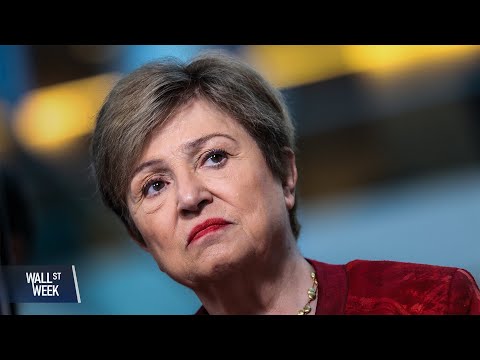
-The IMF and the World Bank, I mean, these were institutions that were created even before the end of the Second World War with the basic idea that if countries can work together and cooperate on the economic and the financial front, and we can have stability in the world, then we would have less wars. Clearly, that is being tested at this current moment. Westin: Until she joined the Harvard Economics Faculty last year, Gita Gopinath helped countries work together as the first Deputy Managing Director of the IMF.
From the episode’s captions: roughly the first two minutes, lightly cleaned. Keep watching on YouTube →
Topics
- imf governance
- voting rights
- geopolitical uncertainty
- austerity
- ai and global economy
Watch the episode
Watch “Can the World’s Economic Firefighter Adapt to the 21st Century?” on YouTube
Summary, takeaways and quote selection by Octagon. Quotes are short excerpts; the full conversation is in the episode.
More from Wall Street Week
-
 Wall Street Week | Nvidia Shakeup, Midwest Stadium Bids, Care Work Gap, India’s Wedding Economy
-
 What American Manufacturers Are Telling the Fed about the Economy
-
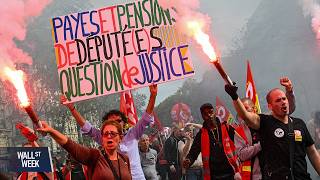 Europe’s Welfare State Faces a Reckoning
-
 How the Blue Wave Could Reshape America’s Economy
-
 Inside Alaska’s Oil Paradox
-
 Wall Street Week | Blue Wave Economic Impacts, European Welfare Woes
Wall Street Week, this episode and its artwork belong to Bloomberg. Octagon is not affiliated with the show; this page is an independent summary.
