
Episode summary
Can Canada Still Trust America on Trade?
 Wall Street Week
· · 11 min · Hosts: Chrystia Freeland
Summary
Chrystia Freeland said the U.S. and Canada appear close to a tentative trade deal that would stop the newest Trump tariffs from taking effect on August 19, but only by making significant Canadian concessions. She said the likely package would reopen Canadian liquor shelves to U.S. booze, roll back some provincial buy-Canadian or anti-U.S. procurement rules, and leave existing U.S. tariffs on steel, aluminum, cars and car parts in place at lower levels.
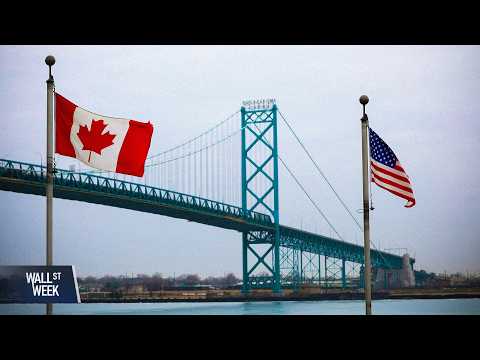
Freeland argued that this would be a major break from Canada’s long-standing position that tariffs outside the free-trade framework are illegal and unacceptable. She said accepting permanent tariffs would be harmful for Canada’s steel, aluminum and auto sectors, but also self-defeating for the United States because those inputs support U.S. manufacturing. She pointed to the Detroit-Windsor auto corridor as especially exposed, since parts cross the border multiple times in a single vehicle.
She also said the arrangement appears to be separate from USMCA rather than an amendment to it, which raises questions about whether any new carve-outs or tariff rules would carry over into broader North American trade talks. Even if the deal is completed, Freeland said it would not erase Canadian resentment over being singled out by Washington.
Key takeaways
- Freeland said the tentative deal would likely block new U.S. tariffs from taking effect on August 19, but not eliminate the existing steel, aluminum and auto tariffs.
- She said Canada appears ready to let U.S. alcohol back into provincial liquor stores and drop some anti-U.S. procurement measures.
- Freeland called acceptance of permanent tariffs on Canadian steel, aluminum, cars and parts a major break from Canada’s historic USMCA position.
- She argued the tariffs would also hurt U.S. manufacturers by raising input costs and damaging the Detroit-Windsor auto supply chain.
- Freeland said the agreement looks separate from USMCA, so its terms may not automatically carry over into the broader trade framework.
Notable quotes
“it seems as if the U.S. and Canada have reached an agreement that will prevent the tariffs that the U.S. announced”
“U.S. booze will go back on the shelves of Canadian liquor stores”
“what Canada is agreeing to, or is on the brink of agreeing to, is that U.S. booze will go back on the shelves”
“Canada apparently will have lower tariffs on steel, aluminum cars and car parts, but tariffs will be in place and Canada will accept the legitimacy of those tariffs”
“I think that is a bad outcome for Canada to have permanent tariffs on our steel, aluminum, cars and car parts, really harmful for those sectors”
How the episode opens
David Westin: This is a story about couples therapy. The U.S. and Canada have been neighbors, allies, and generally friends since Canada first became a country independent of the British Empire, but President Trump has put the relationship in play, particularly when it comes to trade relations.
Chrystia Freeland served as Canada's Deputy Prime Minister, Foreign Minister, and Finance Minister. She is now a special contributor to "Wall Street Week. Having gone to the brink during this week in U.S.-Canada trade relations, we're told that there is a tentative agreement.
What at this point do we know about that agreement? -What we know so far is it seems as if the U.S. and Canada have reached an agreement that will prevent the tariffs that the U.S.
announced, the brand new ones, the Smoot-Hawley ones, from coming into force against Canada. Those tariffs were meant to be applied on the 19th of August, and on the basis of this almost concluded deal, they haven't come into force. Westin: What does it do to the tariffs that have been existing?
For example, you and I have talked before about aluminum and steel. What happens to those separate tariffs? -So we don't know the full outlines of this agreement, but what people are saying, both publicly and people close to the negotiations, is that what Canada is agreeing to, or is on the brink of agreeing to, is that U.S.
booze will go back on the shelves of Canadian liquor stores. Some Canadian provinces had also put in express either buy Canadian or don't buy American provisions into procurement, that those will be lifted as well. When the 232 tariffs against Canada, the ones on steel, aluminum cars, when those first went into effect, Canada imposed retaliation.
Most of that has already been dropped.
From the episode’s captions: roughly the first two minutes, lightly cleaned. Keep watching on YouTube →
Topics
- us-canada trade agreement
- tariffs
- steel and aluminum
- auto parts
- retaliation and retaliation easing
Watch the episode
Watch “Can Canada Still Trust America on Trade?” on YouTube
Summary, takeaways and quote selection by Octagon. Quotes are short excerpts; the full conversation is in the episode.
More from Wall Street Week
-
 Wall Street Week | Nvidia Shakeup, Midwest Stadium Bids, Care Work Gap, India’s Wedding Economy
-
 What American Manufacturers Are Telling the Fed about the Economy
-
 Europe’s Welfare State Faces a Reckoning
-
 How the Blue Wave Could Reshape America’s Economy
-
 Inside Alaska’s Oil Paradox
-
 Wall Street Week | Blue Wave Economic Impacts, European Welfare Woes
Wall Street Week, this episode and its artwork belong to Bloomberg. Octagon is not affiliated with the show; this page is an independent summary.
