
Episode summary
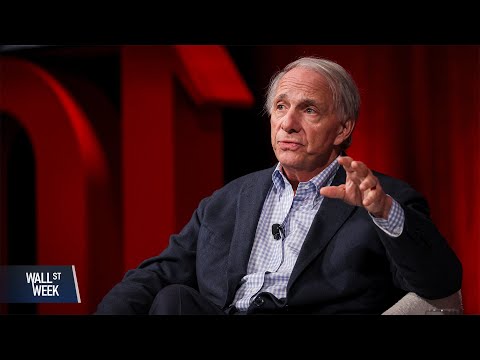
Ray Dalio: 'Expect a Tribute System' as China Influence Grows
 Wall Street Week
· · Hosts: Chrystia Freeland, David Westin · Guests: Ray Dalio
Summary
Ray Dalio argues that markets are still pricing the war in Iran mainly through cash flows rather than fear, even as the conflict could reshape geopolitics, alliances, and the international order. He says investors should “follow the cash,” because stocks and debt are ultimately valued on future earnings and cash generation, not headline risk alone.
Dalio says the deeper story is the changing balance of power between the United States and China. In his view, countries in Asia are recalibrating because they no longer assume the U.S. will reliably defend them, and that is pushing the region toward what he calls a modern “tribute system” centered on China’s growing power. He says China is making substantial money through exports, accumulating financial assets, and expanding influence in areas like robotics and the RMB.
For investors, Dalio says the key response is not prediction but resilience: diversification, liquidity, and gold. He warns that turbulent times can change the value of money itself and says AI could intensify both opportunity and bubble risk. His broader point is that the world order is evolving, and portfolios should be built for that uncertainty rather than for a stable postwar system.
Key takeaways
- Ray Dalio says markets are still trading the Iran war on cash flows, not fear, so investors should follow earnings and money flows.
- Dalio says Asia is recalibrating around China because confidence in the U.S. security guarantee is weakening.
- He expects China’s rising power to produce a “tribute system” style order and a faster global role for the RMB, though not an immediate dollar replacement.
- Dalio says diversification, liquidity, and gold matter more in a turbulent world where the value of money may shift.
- He warns that AI could create big opportunities and bubbles at the same time, increasing the need for a strategic asset mix.
Notable quotes
“markets trade is the present value of future cash flows, by and large. And so if you've got the cash, follow the cash”
“The world is looking at will Iran have the control of the Strait of Hormuz? Will it retain the uranium, the nuclear”
“I think increasingly we're going to see that in the world”
“That's right. Diversification is very valuable. And when I say diversification, uh, I do include, um, uh, gold in that in terms of money”
How the episode opens
We begin with the war in Iran, which seems far from over despite President Trump's wishes. But so far, the war hasn't really bothered the debt and equity markets all that much. Bridgewater founder Ray Dalio has spent a career making long term investments based on his understanding of the geopolitics and the politics of great economic powers, like the US being challenged by others.
Follow the cash. Follow the money. Okay.
There's a reaction. Like wars are bad and wars are bad. But the reality is, uh, markets trade is the present value of future cash flows, by and large.
And so if you've got the cash, follow the cash. So what's happening in the way of changes? Um, what it means for, um, uh, energy in Asia or what it means here and for our cash flows.
But the markets are trading on the basis of the cash flow. So when we came into this period of time, there was a reaction before we had the earnings reports where there was a reaction that, uh, this is a scary thing. Quite often markets will sell off.
At that time, they did sell off. And then we had great earnings estimates. And the reported earnings were much greater than the actual earnings.
So follow the money okay. At the end of the day you're exchanging a um a lump sum payment for a future cash flow. And that's what matters.
What about those longer term trends? I mean, tectonic plates as they were shifting, uh, whether it's monetary with this financial, whether it's geopolitical, uh, how does the war in Iran fit into those sort of long term shifts? Yeah.
It's interesting. Um, if you look at the markets, Pearl Harbor comes imagine that, um, the you see not much effects of initial effect.
From the episode’s captions: roughly the first two minutes, lightly cleaned. Keep watching on YouTube →
Topics
- china influence
- american power perception
- tribute system
- iran war markets
- gold and diversification
Watch the episode
Watch “Ray Dalio: 'Expect a Tribute System' as China Influence Grows” on YouTube
Summary, takeaways and quote selection by Octagon. Quotes are short excerpts; the full conversation is in the episode.
More from Wall Street Week
-
 What American Manufacturers Are Telling the Fed about the Economy
-
 Europe’s Welfare State Faces a Reckoning
-
 How the Blue Wave Could Reshape America’s Economy
-
 Inside Alaska’s Oil Paradox
-
 Wall Street Week | Blue Wave Economic Impacts, European Welfare Woes
-
 The $40 Trillion Problem Washington Won’t Talk About
Wall Street Week, this episode and its artwork belong to Bloomberg. Octagon is not affiliated with the show; this page is an independent summary.
