
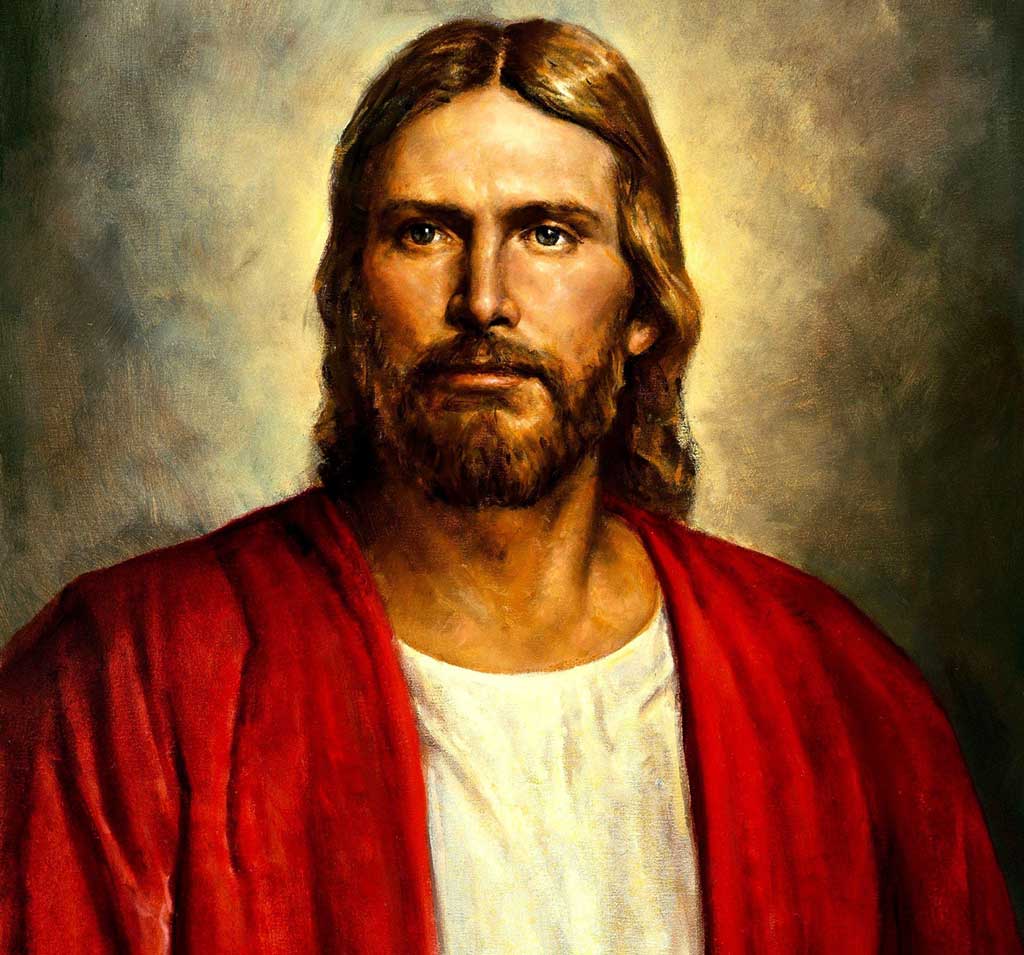
Will Jesus Christ return before 2027?
Short Answer
1. Market Behavior & Drivers
- No: Major Christian bodies officially reject setting specific dates.
- No: Past failed apocalyptic predictions, like 2011, increase societal skepticism.
Who Wins and Why
| Outcome | Market | Model | Why |
|---|---|---|---|
| Yes | 1.3% | 1.9% | There is little expectation for the return of Jesus Christ to occur before 2027. |
Current Context
Sources (26)
- 1Will Jesus Christ return before 2027?polymarket.com
- 2Jesus Return by 2027: Odds & Prediction Market | Prediction Geniuspredictiongenius.io
- 3Will Jesus Christ return before 2027? — 3% Chance (Live)predictionhunt.com
- 4Betting on the Second Coming: What Prediction Markets Say About Jesus Returning Before 2027 | Beeks.aibeeks.ai
- 5People are betting on the second coming of Christ...premierchristianity.com
- 6What is wrong with date-setting for the end times? | GotQuestions.orggotquestions.org
- 7Is it possible to know when Jesus is coming back?gotquestions.org
- 8The End Times (2) -- LCMSprojectwittenberg.org
- 9Why Is Date Setting for Jesus' Return Wrong?bibleproclaimer.com
- 10Matthew 24: When Will These Things Be? - by Mark Hitchcockendtimes.substack.com
- 11Randy Kay: 5 Prophetic Signs The End Times Are Accelerating - Charisma Magazine Onlinemycharisma.com
- 12Are the End Times Upon Us? Israel, the Rapture and the End of Days | CBN Newscbn.com
- 13H. RES. 1226congress.gov
- 14Congressional Recordcongress.gov
- 15Congressional Recordcongress.gov
- 16Congressional Recordcongress.gov
- 17Congressional Recordcongress.gov
- 18Former Chair, U.S. Commission on International Religious Freedom (USCIRF)congress.gov
- 19Written Testimony: Päivi Räsänen U.S. House Judiciary Committee Hearing “Europe’s Threat to Speech and Innovation: Part II” 4 February 2026 My name is Dr. Päivi Räsänen. I have served as a member of the Finnish Parliament for the Christian Democrat Party since 1995, in addition to serving as Minister of the Interior from 2011- 2015. I am also a medical doctor and proud grandmother of twelve. Finland is a democracy that was built on the rule of law and fundamental freedoms. These values matter deeply to me as a European and a Christian. In June 2019, the board of the Evangelical Lutheran Church of Finland announced its official partnership with the LGBT event “Pride 2019” in Helsinki. In response, I expressed my Christian beliefs about marriage and sexuality in a Twitter post. I directed my post to my church leadership, questioning their decision to participate in the Pride event, which I believe contradicts our Christian faith. I added a picture of some Scripture verses from the book of Romans with the post that guided my perspective on this issue. I did so peacefully and respectfully, without targeting or insulting anyone. For this exercise of my free speech, I was investigated by the police and interrogated for more than thirteen hours. The questions from police were shamelessly about the Bible and its interpretation. I was asked, “What is the message of the book of Romans and its first chapter?” and “What do I mean by the words ‘sin’ and ‘shame’?” A joke spread on social media that Päivi Räsänen was once again meeting for a Bible study at the police station. The police asked if I would agree to delete my writings within two weeks. I said no and reasserted my belief in the Bible’s teachings, no matter the consequences. I will not apologize, I explained, for what the Apostle Paul has stated. On 29 April 2021, the Finnish Prosecutor General, Raija Toiviainen, formally charged me with three counts of “agitation against a minority group” for publicly voicing my opinion on marriage and human sexuality in a 2004 pamphlet, for comments I made on a 2019 radio show, and for the tweet. Lutheran Bishop Juhana Pohjola was charged alongside me for publishing my pamphlet for the church. The crime of “agitation against a minority group” falls under the “war crimes and crimes against humanity” section in the Finnish criminal code and can carry up to two years of prison time. I did not insult or call for harm against anyone. I was being criminally charged for simply expressing convictions rooted in my faith and conscience. Twice, Finnish courts unanimously acquitted me. The Bishop and I faced two days of trial at the Helsinki District Court on 24 January and 14 February 2022. In the trial at the District Court, the prosecutor at first stated that the trial would not be an inquisition concerning the Bible. But then she surprisingly targeted the core doctrine of Christianity: the teachings of the Gospel. She claimed that my views amounted to a doctrine that she summarized as “love the sinner, hate the sin.” This doctrine she regarded as insulting and defaming because, according to her, you cannot distinguish between the person’s identity and his or her actions. In this view, if you condemn the act, you also condemn the human being and regard him or her as inferior. This statement clearly goes against both the Christian view of man and common sense. The thought that it is not possible to distinguish between a person’s deeds and the core of their identity is contradictory to our lived reality as well as Gospel truth. On 30 March 2022, the Helsinki District Court unanimously acquitted us, stating that “it is not for the district court to interpret biblical concepts”. The court also ordered the prosecution to pay more than 60,000 EUR in legal costs. The prosecution then appealed the “not guilty” ruling in April 2022 and continued to demand tens of thousands of Euros in fines and that my publications be censored. Unlike many other legal systems, under Finnish law the prosecutor can appeal “not guilty” verdicts all the way to the Supreme Court. On 31 August to 1 September 2023, the Helsinki Court of Appeal heard our case. On 14 November 2023, the court confirmed our acquittal. The prosecutor then appealed again in January 2024. What is evident here is that despite these clear rulings, the state prosecution has continued to relentlessly pursue their charges against us, seeking to make an example out of our case. In April 2024, the Supreme Court communicated that it would hear the case and our case was subsequently heard before our nation’s highest court on 30 October 2025. In the hearing, prosecutors reiterated their claim that my words were “insulting” and that “intent is irrelevant,” and that what matters is how readers interpret the text. The prosecution called for me and Bishop Pohjola to be criminally convicted for “incitement against a group,” for fines to be imposed, and for the tweet and pamphlet to be censored from the internet (the charges for the radio show have been dropped). My hope is that the Supreme Court ruling will affirm the right of every person in Finland to express their beliefs freely, without fear of punishment. A final acquittal by the Supreme Court would establish a strong precedent defending free expression for all, especially in matters of faith and conscience. The Bishop and I are now awaiting the decision of the Supreme Court. Throughout, my defence has been coordinated by legal advocacy group ADF International, led by lawyers Paul Coleman and Lorcán Price, alongside Finnish legal counsel Matti Sankamo, based on the freedoms of speech and religion protected by Finnish, European, and international law. My defence has argued that the right to freedom of speech is a fundamental right protected in all major human rights treaties and is the foundation of a democratic society. Vaguely worded “hate speech” laws undermine this important right by criminalizing speech based on highly subjective definitions of “offense”. This case has never been only about me and the Bishop. It is about whether peaceful expression of deeply held beliefs can be treated as a criminal act in today’s Europe. It is about whether citizens, including clergy and elected representatives, may speak openly on matters of faith and conscience without fear of prosecution. Ultimately, it is about whether it is illegal to say what you believe. It is evident that the meaning of Bible verses should not be up for interpretation in a court room and yet this is exactly what has transpired. A court has no business judging the Bible’s teachings and our right as Christians to uphold and express them. Our prosecution for “hate speech” has turned into a theological trial of what Christian beliefs can and cannot be expressed in Finland. It is incredible that this has happened in a modern European country. Even when courts ultimately acquit, our story shows how the process itself becomes the punishment. We have faced years of investigation, public scrutiny, and legal uncertainty. This creates a chilling effect, not just for Christians, but for everyone who holds views outside a narrow, state-approved consensus. Unfortunately, Finnish authorities have sent the message that all must be careful what they say because the police could come knocking at their door too. Through fear, “hate speech” laws undermine public discourse and drive diverse views from the public square. Censorship is one of the greatest existential threats to today’s democracies in Europe. You do not need to agree with my beliefs to see the danger of criminalizing peaceful speech. When the state controls which ideas and beliefs may be expressed, democracy becomes fragile. My case reveals where this path can lead. Recent developments from the European Union, like the Digital Services Act, make European censorship a worldwide concern. Speech that is lawful today can become criminalized tomorrow. Increasingly, the fight for free speech is focused online, and we are seeing that censorship measures adopted in Europe do not remain confined to Europe. This should concern every person that values freedom. During my ordeal I have been supported by my faith and the thousands of expressions of support I’ve received from around the world, including many from the U.S. Congress. I remain hopeful and I trust that freedom of expression can still be upheld. It is too important to lose. My wish is that Europe, and our democratic partners, remain places where every person can speak openly and live according to their conscience without fear. What has happened to me following a simple decision to post a Bible verse on Twitter six years ago demonstrates that the fight for free speech is no longer theoretical. Moreover, it is not just a fight that is local, but instead one with truly global ramifications. I have considered it a privilege and an honor to defend freedom of speech and religion, which are fundamental rights in a democratic state. Without the criminal charges imposed on me, I would not have had the exceptional chance to share my Christian faith in police stations, courtrooms, and through live broadcasts and press conferences heard around the world. I look forward to the day when the fundamental right to free speech is upheld for all who seek to peacefully express their convictions. I thank you for your commitment to freedom.congress.gov
- 20CONFLICT AND PERSECUTION IN NIGERIA: THE CASE...congress.gov
- 21https://www.congress.gov/119/meeting/house/118015/witnesses/HHRG-119-FA16-Bio-AnagbeB-20250312.pdfcongress.gov
- 22Dems’ Come-to-Jesus Momentcookpolitical.com
- 23Cook Political Report | Non-Partisan Political Analysis for US Elections & Campaignscookpolitical.com
- 24The Case for Trump's Inevitability | Cook Political Reportcookpolitical.com
- 25Many Are Afraid To Say It, but This Is Not a Close Race | Cook Political Reportcookpolitical.com
- 26What to Watch in 2023cookpolitical.com
2. Price Chart
Historical Price (Probability)
3. Market Data
Contract Snapshot
This market is on Polymarket, not Kalshi.
The market resolves to "Yes" if The Second Coming of Jesus Christ occurs by December 31, 2026, 11:59 PM ET. Otherwise, it resolves to "No." The resolution will be based on a consensus of credible sources.
Available Contracts
Market options and current pricing
| Outcome bucket | Yes (price) | No (price) | Last trade probability |
|---|---|---|---|
| Yes | $0.01 | $0.99 | 1% |
Market Discussion
The overwhelming consensus among traders in this prediction market is that Jesus Christ will not return before 2027, reflected by a 98% market-implied probability for "No." This strong sentiment is primarily driven by the perceived absence of confirmed apocalyptic signs, global religious movements, or verified prophetic fulfillments, aligning with historical patterns of unmaterialized end-times predictions. While general comments are present, there is no significant discussion or identifiable arguments provided by traders supporting a "Yes" outcome.
4. Trust Index
Settlement is decided by a token-holder vote.
Integrity risk· Outcome control
Includes the cost to trade: a $1,000 order can't be filled here because the order book is too thin.
Weighted blend with hard caps — a critically weak safety pillar, or a severe trading anomaly, caps the total regardless of the rest. Full methodology · About the Trust Index
5. What is the official doctrinal stance of major global Christian bodies, like the Catholic Church and the World Council of Churches, on setting specific dates for Christ's return?
| Catholic Church's Stance on Predictions | Rejects all attempts to set specific dates for Christ's return (citing Matthew 24:36) [1][2][3] |
|---|---|
| Mainstream Christian Doctrine on Timing | Timing of Christ's return is reserved to the Father's authority and not for human calculation (Acts 1:7, Matthew 24:36) [4][5][6] |
| Ecumenical Collaboration on Eschatology | World Council of Churches and Roman Catholic Church do not engage in predicting the timeline of eschatological events [7] |
Sources (7)
- 1End of the World | Catholic View on the Second Coming...catholic.com
- 2The Holy See - Vatican web sitevatican.va
- 3End of World: What to Look For | Catholic Answers Magazinecatholic.com
- 4What is wrong with date-setting for the end times? | GotQuestions.orggotquestions.org
- 5Is it possible to know when Jesus is coming back?gotquestions.org
- 6Acts_1:7 - Bible Gatewaybiblegateway.com
- 7Communiqué from the Joint Working Group between the World Council of Churches and the Roman Catholic Church Plenary Meeting, 3–5 September 2024 | World Council of Churchesoikoumene.org
6. What specific geopolitical events or technological advancements before 2027 are cited by prominent eschatological commentators as potential 'signs of the times'?
| Primary Signs of the Times | AI and Middle East geopolitical developments cited before 2027 [1][2][3][4][5][6] |
|---|---|
| AI's Eschatological Role | Seen as a tool for global surveillance, deception, and enforcing the 'Beast system' [1][2][3][4][5] |
| Other Key Indicators | Advancements in biotechnology, genetic engineering, UAP encounters, global famine threats, and specific Middle East alliances [7][2][6] |
Sources (7)
- 1Four Signs That Have Never Converged Before and What Happens Nextendtimes.substack.com
- 2Randy Kay: 5 Prophetic Signs The End Times Are Accelerating - Charisma Magazine Onlinemycharisma.com
- 3Too Powerful to Release: What AI Reveals About the End Timesendtimes.substack.com
- 4Is Artificial Intelligence a Fulfillment of End Times Prophecy? – Supernatural Sciencesupernatural-science.com
- 5Nuclear Launch Codes, Power Grids and the Antichrist: Why AI 2027 Changes Everything – Discern Reportdiscernreport.com
- 6Why Three Converging Wars Matter to Every Bible Prophecy Studentendtimes.substack.com
- 7El Niño, Global Food Collapse, and Three Hard Questions About the Tribulationendtimes.substack.com
7. How do scriptural interpretations of Matthew 24 differ between mainstream academic institutions, such as Dallas Theological Seminary, and popular prophecy-focused ministries?
| Academic Dispensational View | Matthew 24 interpreted futuristically, distinguishing 70 AD destruction from Christ's second coming (Dallas Theological Seminary) [1] |
|---|---|
| Popular Prophecy Ministries | Speculative applications, conflating general signs with impending tribulation events [1] |
| Reformed/Evangelical View (Matthew 24:1-34) | Emphasizes historical destruction of Jerusalem as primary fulfillment [2][3][4] |
Sources (4)
- 1For any student of eschatology or dispensationalism, a study of the Olivet Discourse is foundational. However, a quick perusal of those holding to a futurist, dispensational, pre tribulational theology will discover an array of contradictory interpretive options. The freshman or sophomore interpreter may easily become confused. Walvoord notes: It would seem at first glance that illustration and application would not present too many problems of interpretation, and yet in this passage, rather strangely, commentators who are quite similar in their points of view in prophecy, have differed considerably in their exposition of this last portion of Matthew 24. Some special problems of interpretation must be taken into consideration in the study of this chapter. The purpose of this paper is to sort out the options and provide a summary of the strengths and weaknesses of each view as critiqued by others from within the dispensational, futurist community. The goal is to provide a tool to enable both novice and seasoned student to think through the hermeneutical, exegetical, and theological issues. I am personally grateful for the ministry of each of the men whose positions are evaluated in this paper for their contributions to my understanding of Scripture, eschatology, and dispensationalism in numerous areas. Some were professors, others mentors, and still others long time colleagues and friends. Each of us through our developing years and teaching ministries have favorite scholars to whom we look for insight and direction, often relying heavily on them because we have found them to be faithful and true to the Scripture. Most often we find these men to be in close agreement. But in the study of the Olivet Discourse we find that many of our “lifeline” colleagues, who normally agree, hold to disparate and irreconcilable positions. Therefore, we must thoroughly investigate each option and compare and contrast their views. In some cases, our favorites may have failed us. Chafer’s statements echoes my own feelings: At great hesitation, I rise up in opposition to interpretations of men that I’ve known and loved all my life. The great A.C. Gabelein was my very dear bosom friend. I spent many, many hours with him in fellowship and prayer. And so with dear Dr. Ironside also. But both of these men have taught all through their ministry that this is the midnight cry of the church.pre-trib.org
- 2An Interpretation of Matthew 24-25facultyshare.liberty.edu
- 3The Meaning of Matthew 24, Part 2 - Covenant Baptist Theological Seminarycontent.cbtseminary.org
- 4The Olivet Discourse | Tabletalktabletalkmagazine.com
8. What were the societal and media impacts of major failed apocalyptic predictions of the 21st century, such as Harold Camping's 2011 prophecy?
| Major Failed Prediction Year | 2011 [1][2][3][4] |
|---|---|
| Advertising Campaign Budget | $100 million [3][4][1][2] |
| Psychological Impact Theory | Cognitive Dissonance theory [5][6][7][8][9][10] |
Sources (11)
- 1AP Essay: Apocalypse not now - and how we saw itgoupstate.com
- 2How Harold Camping marketed the Rapture - CBS Newscbsnews.com
- 3apocalypse soon: a narrative analysis of broadcast coveragejewlscholar.mtsu.edu
- 4World doesn't end: California prophet had no Plan B | California | The Guardiantheguardian.com
- 5Harold Camping and May 21, 2011: Rationalizations,...digitalrepository.unm.edu
- 6Mayan prophecies: Life after the (non) end of the world - BBC Newsbbc.com
- 7When Doomsday Isn't, Believers Struggle to Copenbcnews.com
- 8What happens when prophecy fails … do the believers still believe? – Skeptical Scienceskeptical-science.com
- 9Why Do Doomsday Believers Double-Down When Prophecy Fails? | Psychology Todaypsychologytoday.com
- 10When Prophecy Failsen.wikipedia.org
- 11Failed Prophecies Are Fatal | International Journal for the Study of New Religionsjournal.equinoxpub.com
9. How have the market odds behaved in other low-probability, high-impact 'fringe' contracts on platforms like Polymarket and Kalshi as their resolution dates approached?
| Long-horizon bias effect | Diminishes as resolution date nears [1][2] |
|---|---|
| Fringe contract price behavior | Terminal price collapse and non-continuous jumps at resolution [3][4][5] |
| Longshot contract payout | More frequent than implied probability suggests [6][7][8] |
Sources (11)
- 1The Trillion-Dollar Hustle: How Prediction Markets and Behavioral Biases Are Rewiring Speculative Financevirlan.co
- 2https://arxiv.org/pdf/2602.19520arxiv.org
- 3Volatility in Prediction Markets: A Structural Approacharxiv.org
- 4Resolution-Aware Perpetual Futures on Binary Prediction Markets: An Empirical Risk-Design Framework Using Polymarket Dataarxiv.org
- 5When Certainty Is Not Worth It: Capital Lock-Up and Settlement Discounting in Prediction Marketsarxiv.org
- 6Longshot Bias in Prediction Markets — Calibration Evidence | SimpleFunctionssimplefunctions.dev
- 7The favorite-longshot bias, explained | Cent Signalscentsignals.com
- 8I spent a few weeks trying to beat Polymarket ten different...reddit.com
- 9THE BET: Twenty-five million dollars says someone in Washington will say the word.thesentinel.network
- 10Do Aliens Exist? Extraterrestrial Life and Technology Oddsvegasinsider.com
- 11Hazard Rate Anomalies in Prediction Market Yield Curves | SimpleFunctionssimplefunctions.dev
10. What Could Change the Odds
Key Catalysts
Key Dates & Catalysts
- Closes: December 31, 2026
Sources (13)
- 1Will Jesus Christ return before 2027?polymarket.com
- 2Will Jesus Christ return before 2027?cryptoslate.com
- 3Jesus Return by 2027: Odds & Prediction Market | Prediction Geniuspredictiongenius.io
- 4Will Jesus Christ return before 2027? | Manifoldmanifold.markets
- 5Jesus Christ Returning Before 2027 Odds: No Clear Favorite Yet | Live Oddspredictioncircle.com
- 6H. RES. 1226congress.gov
- 7Congressional Recordcongress.gov
- 8Crec 2026 02 24 pt1 pgs645 2.htmcongress.gov
- 9https://www.congress.gov/119/bills/hr6278/BILLS-119hr6278ih.htmcongress.gov
- 10Derivative Astrology: The Astrology Technique That Lets You Read Other People's Lives Through Your Chart — Learn AstroHDastrologyhumandesign.com
- 11Derivative Houses Calculator: Turn Any Chart by House and Topic | Augurineaugurine.com
- 12Derivative Housesnoeltyl.com
- 13Derivative Houses - Interwoven With Normal Houses - Skyscript Astrology Forumskyscript.co.uk
