
Episode summary
Are We in a Bear Market? | TCAF 234
 Ask The Compound
· · Hosts: Michael Batnick, Josh Brown · Guests: Jim Lebenthal

Summary
Jim Lebenthal says the market feels strange because investors are digesting real shocks at once: Iran-related energy risk, private credit worries, and growing anxiety about AI disruption. He argues the S&P 500’s mild 5% drawdown hides much deeper damage beneath the surface, with many sectors and prominent stocks already in their own bear markets. Michael Batnick and Downtown Josh Brown push the idea that the market may not need a dramatic capitulation to set up a better forward return; Jim agrees that the damage is broad, but he still thinks profits are growing and that the market can work through it.
A major theme is sentiment versus fundamentals. Jim says people keep comparing every scare to 2008, even when the current issue is more about perspective, bad underwriting, or a temporary oil shock than a systemic collapse. He points to weak but not catastrophic credit spreads, a high VIX that quickly faded, and a market that still has earnings revisions in positive territory. The panel also argues that if oil normalizes, the inflation and confidence hit could be temporary.
The discussion turns dark on AI and labor. Jim worries that recent college graduates are already seeing higher unemployment and that AI may widen the gap before replacement jobs appear. Still, he frames the broader shift as creative destruction rather than permanent collapse, while also saying the biggest risk in tech is not just price compression but whether the huge AI spend produces enough return on capital.
Key takeaways
- Jim Lebenthal thinks the market is “weird” but not broken, with real risks in Iran, private credit, and AI, while profits are still growing.
- He says 40% of the S&P 500 is already in a bear market, even though the index itself is only down about 5%.
- Josh Brown argues the market may not need full capitulation; Jim agrees that a tweet on oil or geopolitics could reset sentiment quickly.
- Jim worries AI could hit recent college graduates first, citing 22-to-27-year-old unemployment at 6% versus 4% overall.
- The panel sees Microsoft as cheaper after its selloff, but the bigger concern is whether massive AI capex will generate enough ROI.
- Jim says comparisons to 2008 are overused and that many current fears are more about availability bias than systemic collapse.
Notable quotes
“The risks are real. The opportunities are there. But I think the reason it feels weird is so many people just got used to you get a downdraft, you come back quickly”
“why is everything that happens compared to 2008? like why can't this just be hey there's some problems instead of”
“there's been really no firing, but there's been no hiring”
“we are building a wall of worry. There is a lot of um people that are getting out of the market”
How the episode opens
Let me talk to you for a minute. Gallagher's is going to slap tonight. — You know, I went to a steakhouse last night, but I didn't eat steak. — What's wrong with you? — I went to Hendrickx and I got not steak. It's
Not really a steak house. — Did you get I mean, did you get lamb chops or did you get like swordfish? There's a big difference. — You would like you would like Hendricks. — Fantastic. — Hendrickx used to be called the George Washington Tavern. And legend has it. It's where he stayed
Before crossing or just the Battle of Brooklyn. — Yeah. actually took place on Long Island. — They didn't have — Am I right? — No, no. They didn't have a name for Long Island yet. It was basically It was just like, "Oh, that's Brooklyn."
And George Washington stayed at this tavern. It's a historic landmark. And there's a restaurant group called the Pole Brothers on Long Island. They own the best restaurants. — And they took this place over. — It used to be these blue-haired old women. That's who ate.
I'm feeling a little dated here. Like you think I'm from the revolutionary. — No, no. I'm just saying. I'm just saying it's kind of a cool place because — Actually did you trade with Washington back in the day on the floor? You got started together.
Did the Labrenthal family raise municipal bond money during the Revolutionary War? No. — Oh, we shared a real we shared a real chat. That's what we know what's good at uh you know what's good at Hendricks? The uh the bone marrow as an appetizer.
We got the hot dogs. I never had those before.
From the episode’s captions: roughly the first two minutes, lightly cleaned. Keep watching on YouTube →
Topics
- stock market volatility
- ai race winners
- private credit risks
- private credit opportunities
- bear market outlook
Watch the episode
Watch “Are We in a Bear Market? | TCAF 234” on YouTube
Summary, takeaways and quote selection by Octagon. Quotes are short excerpts; the full conversation is in the episode.
More from Ask The Compound
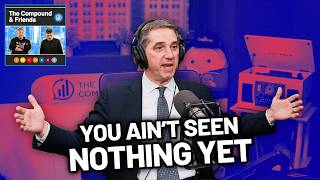


Ask The Compound, this episode and its artwork belong to The Compound. Octagon is not affiliated with the show; this page is an independent summary.
