

About these summaries
Octagon has summarized 101 episodes of Ask The Compound published between Jul 2, 2025 and Nov 6, 2026. The companies discussed most often are Nvidia, OpenAI and SpaceX. Frequent guests include Bill Sweet, Jurrien Timmer and Tom Lee. Each summary lists key takeaways, short timestamped quotes and the companies and tickers mentioned, with a link to the full episode.
Most-mentioned tickers
- NVDA 14
- AAPL 5
- TSLA 5
- AMZN 4
- META 4
- AVGO 2
- HOOD 2
- IVZ 2
- MS 2
- MSFT 2
- OPEN 2
- ORCL 2
- PLTR 2
- SCHW 2
- UBER 2
Most-mentioned companies
- Nvidia 14
- OpenAI 12
- SpaceX 11
- Anthropic 10
- Ritholtz Wealth Management 8
- Apple 5
- Fidelity Investments 5
- Public 5
- Tesla 5
- Amazon 4
- Meta 4
- CoreWeave 3
- Ritholtz Wealth 3
- Rocket Money 3
- The Compound Media, Incorporated 3
Frequent guests
- Bill Sweet 8
- Jurrien Timmer 3
- Tom Lee 3
- Adam Parker 2
- Barry Ritholtz 2
- Denise Chisholm 2
- Eric Balchunas 2
- Jan Van Eck 2
- JC Parets 2
- Joey Fishman 2
- Jonathan Boyar 2
- Nick Maggiulli 2
Episodes
- You Ain’t Seen Nothing Yet | TCAF 267
Dan Clifton argues the post-midterm market reaction is really a policy repricing, not just an emotional swing.
- The Bulls Are Trapped | TCAF 266
Alex Altmann argues that “tactical” investing at Barclays means focusing on the next one to eight weeks, not six to twelve months, and combining quantitative signals with…
- An Economy So Good No One Can Live In It | TCAF 265
Jill Schlesinger argues that Americans are living through a split-screen economy: the top of the income and wealth distribution is doing well, while affordability pressures keep…
- How OpenAI Could Cause a US Recession | TCAF 264
Steve Eisman argued that the AI trade is running into a classic concentration problem rather than a 2008-style financial crisis.
- This Is Where the Rubber Meets the Road | TCAF 263
Jurrien Timmer argued that year-end S&P 500 targets miss the real issue: the market is being driven by earnings, valuation, and the cost of capital, not a headline number.
- Is Gen Z Completely Cooked? | TCAF 262
The conversation centers on AI as both a market story and a social one: huge capital spending, powerful private valuations, and a public debate that often feels more performative…
- People Hate These 5 Stocks But They'll Be Wrong | TCAF 261
Jonathan Boyar argues that buy-and-hold only works when it is really continuous re-evaluation: great businesses can still be bad investments if the starting valuation is too…
- Tom Lee and Dan Ives Explain Everything | TCAF 260
The discussion argues that the market can keep climbing despite higher rates, political noise, and a long list of headline risks because earnings have stayed strong and…
- The Most Interesting Macro Moment of My Lifetime | TCAF 259
Jens Nordvig argues that the macro backdrop is unusually interesting because several large forces are colliding at once: AI-driven capital spending, heavy Treasury supply, a…
- How to Pick Stocks Like Morgan Stanley | TCAF 258
Dan Skelly argued that the market’s resilience is being driven by a durable economic backdrop, unusually strong earnings, and a broadening of leadership beyond the original AI…
- The Four Horsemen of the AI Apocalypse | TCAF 257
Ed Zitron makes the ultra-bear case that the AI boom is being propped up by a dangerously circular flow of money, especially through Nvidia, Microsoft, OpenAI, Anthropic, and the…
- How to Play the Money Game | TCAF 256
Michael Santoli argues that the current market is being driven less by a single story than by several reinforcing forces: strong corporate earnings, heavy capital spending, a…
- It's a bull market and nobody drinks anymore. | TCAF 255
Todd Sohn argues that ETFs have entered a new industrial phase: launch costs are so low that issuers can flood the market with products, and failure is cheap enough to ignore.
- The Man Who Called the Roaring 2020s | TCAF 254
Ed Yardeni argued that the post-pandemic backdrop still supports his “Roaring 2020s” thesis, and he said he does not expect a recession before the end of the decade.
- Why Demand for Compute Is About to Explode | TCAF 253
Alex Kantrowitz argues that AI demand is accelerating so quickly that the market is still underestimating how much compute, cloud capacity, and software spend it will consume.
- Secrets From the Greatest Fund Manager of All Time | TCAF 252
Ron Baron said his firm’s edge comes from staying focused on businesses and people rather than market noise, and from owning companies for years instead of trading around…
- You’re About to See the Real AI Winners Stand Up
Jonathan Thomas framed American Century Investments as a privately held, purpose-driven asset manager with just under $350 billion in assets, where more than 40% of dividends are…
- The Real Ticking Time Bomb | TCAF 250
Michael Cembalest argues that the biggest markets still look fundamentally pro-U.S.: the dollar’s reserve-currency role has not visibly eroded, foreigners are still buying…
- Brian Belski Returns! | TCAF 249
Brian Belski said the market is still bullish, but the next phase should be choppier because earnings growth is likely to slow from the very strong pace investors have already…
- Too Early to Get Off the Wave | TCAF 248
The conversation argues that the market’s AI and semiconductor surge still looks supported by earnings and breadth, even if parts of the trade feel crowded.
- The World You Knew Is Never Coming Back | TCAF 247
Michael Zezas argues that the market regime has changed in a durable way: globalization’s best benefits are behind us, trade barriers are likely to stay higher, and investors…
- Preparing for the Next Capital Loss Cycle | TCAF
Dan Ivascyn argues that the investing backdrop has shifted from a low-rate, low-volatility world to one defined by geopolitical rupture, higher fiscal spending, AI infrastructure…
- Why the Knockout Punch Never Comes | TCAF 246
Brian Levitt argues that the market is still being driven more by earnings and policy than by a true bubble setup.
- The Recession Signals Are All Wrong | TCAF 245
The discussion centered on why the economy still looks resilient even as parts of the labor market soften and inflation risks reappear.
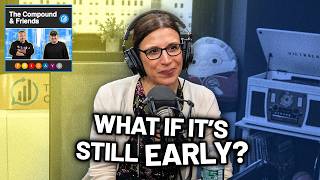
- What if It's Still Early? | TCAF 244
Denise Chisholm argues that the AI spending boom looks more like a broad corporate capex cycle than a bubble.
- Why Memory Is a Bubble but Nvidia Isn’t | TCAF 243
The conversation centered on whether the current market is still in the early innings of an AI and semiconductor boom, or whether investors are getting carried away by a few…
- Nasdaq Euphoria is Hitting its Limit | TCAF 242
The conversation centered on the AI capex boom and whether the market is beginning to exhaust the easiest part of the Nasdaq trade.
- The Investor Utopia is Here | TCAF 241
The conversation starts with a broad read on a strange market backdrop: the major indexes keep making highs even as many individual stocks suffer sharp drops, which the host and…
- How to Find 100 Bagger Stocks
The conversation centers on how to identify rare stock-market winners by first eliminating the far larger universe of companies that are unlikely to compound for decades.
- Why Nvidia is Going to 10 Trillion Dollars | TCAF 239
The guests argued that software is still under pressure, but the move is less about today’s revenue and more about how AI changes pricing power, margin assumptions, and the…
- Why Bubble Talk is Totally Wrong | TCAF 238
Ankur Crawford argues the AI buildout is still early, not a bubble, because demand for compute is expanding faster than investors’ linear models can capture.
- Stocks Took the Stairs Down and the Elevator Up | TCAF 237
The discussion centers on why equities barely flinched after a major geopolitical scare, even as oil, yields, and rate-cut expectations moved sharply against risk assets.
- Why Gas Prices Can’t Wreck the Market | TCAF 236
The conversation centers on why the market has largely shrugged off the oil spike tied to the war, even as WTI jumped and Brent hit its highest level since 2008.
- These are Cheap Stocks with Catalysts | TCAF 235
Jonathan Boyar argued that the market’s recent volatility has created real value opportunities, especially in large-cap growth names that have seen dramatic multiple compression.
- Are We in a Bear Market? | TCAF 234
Jim Lebenthal says the market feels strange because investors are digesting real shocks at once: Iran-related energy risk, private credit worries, and growing anxiety about AI…
- A Sit-Down With the CEO of Charles Schwab | TCAF 233
Charles Schwab CEO Rick Wurster argued that the firm’s growth is being driven by putting clients and advisers first, with the advisor channel gaining assets faster than retail.
- True or False - Private Credit Is This Generation’s Subprime | TCAF 232
The conversation centers on a market that feels chaotic but is still being supported by liquidity, passive flows, and policy backstops.
- Data Centers Are the New Fracking | TCAF 231
The conversation argues that the AI trade is moving from enthusiasm to backlash, not because users have stopped adopting the tools but because households are connecting AI to…
- Looks Like a Bull Market, Feels Like a Crash | TCAF 230
Man Group’s outlook for 2026 centers on high uncertainty, slower global growth, and a modest U.S. recession as the base case, driven by fragile pillars: AI capex spending and…
- The Baddest Hedge Fund in the World | TCAF 229
The episode argues that the current market is pricing uncertainty faster than fundamentals, with AI-driven fears hammering public companies even when the disruptive winners are…
- What to Buy in the Momentum Stock Slaughterhouse | TCAF 228
John Mowrey argues that the recent selloff in software and momentum names is less about a broad market breakdown and more about a violent valuation reset inside a crowded, highly…
- What Tom Lee's Worried About in 2026 | TCAF 227
Tom Lee argues 2026 looks a lot like 2025: a strong first part of the year, a meaningful drawdown later, and then a strong recovery.
- Stop Ruining My Perfectly Good Bear Market | TCAF 226
Jeremy Grantham argues that the post-2009 advance has effectively been several bull markets stitched together: first the recovery from the crisis, then the buyback era, then the…
- These Are the Stocks to Buy In 2026 | TCAF 225
JC Parets argues that the market is still in a bull phase and that investors should pay more attention to what price action is confirming than to what economists, journalists, or…
- Is the Stock Market Overvalued?
The episode argues that today’s stock market can look expensive only if you ignore how much the market itself has changed.
- It's not 1929, but it might be - Andrew Ross Sorkin | TCAF 224
Andrew Ross Sorkin argues that today is not 1929, even if the comparison is tempting.
- Should You Buy a House Right Now?
The episode argues that housing is a bad short-term investment right now, but not necessarily a bad homebuying decision if the buyer plans to stay put.
- Welcome to 2026 | TCAF 223
The conversation centered on which beaten-down stocks might rebound in 2026, with the host and guests sorting through turnaround candidates in apparel, software, consumer brands…
- What if the Stock Market Falls 30%?
The hosts and Eric Balchunas argue that for most investors, a Bitcoin ETF is the simpler and often cheaper way to get Bitcoin exposure than buying the coin directly.
- Why Paramount Should Beat Netflix | TCAF 222
Bill Cohan frames the Warner Bros.
- 10 Things Every Stock Market Investor Needs to Know
The host and a guest focus on practical investing habits: automate contributions, think in terms of the whole portfolio, and simplify account aggregation so it is easier to see…
- We're About To Print Dow 50,000 | TCAF 221
The discussion centers on how the market is behaving near Dow 50,000, why the rally still feels tied to AI, and why that story may be shifting from pure narrative to proof.
- How Much Longer Will the Bull Market Last?
Jurrien Timmer argued that the current cyclical bull market began in October 2022, even if the broader secular bull market could be dated to 2009 or 2013 depending on how…
- The Man Who Made Trading Cool Again | TCAF 220
Robinhood’s origin story is framed as a product of both the global financial crisis and the mobile revolution: Vlad Tenev said he and his co-founder started with quantitative…
- Why Does Gen Z Love Roth So Much?
The episode centered on housing affordability, with the host arguing that 2026 could bring some softening but probably not a nationwide crash.
- Why oil could be next year’s gold | TCAF 219
Peter Boockvar argues that the latest AI selloff looks less like a market-wide bubble and more like a rapid sorting of winners and losers.
- What is Return Stacking?
The episode centers on how return stacking uses modest leverage to combine traditional stocks and bonds with diversifiers like managed futures, gold, or long-short strategies.
- The Case for a Year-End Melt-Up | TCAF 218
Nvidia’s earnings were the catalyst for a broader argument that the AI trade still has room to run.
- Advice for Someone Who's Lost Half Their Net Worth
The episode centers on what to do after taking on too much risk, especially when a portfolio has been concentrated in volatile names and bought with leverage.
- Quality in the Streets, Momentum in the Sheets | TCAF 217
The conversation centers on a market rotation away from the biggest AI and momentum winners and toward quality, healthcare, energy, financials, and other lower-profile parts of…
- How Do You Fix the Housing Market?
The episode focuses on three practical planning questions: whether a given portfolio allocation is reasonable, how to evaluate insurance-linked retirement products, and whether a…
- Eric Jackson and the Search for the Next 100 Bagger | TCAF 216
The hosts and Eric Jackson spent most of the conversation on how OpenAI’s recent moves have changed the public-market AI trade.
- Do I Own Too Much Tech?
The hosts frame the episode around a simple question for long-horizon investors: if AI spending is a bubble, should that change how much risk you take?
- What Did the Fed Actually Say? | TCAF 215
Stephanie Roth argued that the tech capex boom is still in its early innings and is likely to keep supporting growth.
- How to Time the AI Bubble
The episode argues that a rules-based trend-following approach can be a workable way to ride an AI bubble higher while creating an off-ramp if the market turns.
- Jim Cramer Absolutely UNLOADS On Stage, Make Popcorn Now
Jim Cramer argues that his biggest contribution to financial media was making the stock market intelligible and accessible to individual investors, not just professionals.
- It’s Only a Bubble If You Panic | TCAF 214
The episode centers on whether the recent bankruptcies tied to private credit are a sign of broader systemic trouble or just isolated failures.
- What is the Dave Ramsey Portfolio?
The hosts focus on practical portfolio questions around outperformance, retirement spending, diversification, and college savings.
- Inside the Gold and Silver Mania | TCAF 213
Bill Baruch argued that the market is still being driven by earnings, even as pockets of speculation around retail favorites and non-profitable tech get a lot of attention.
- Is It Time to Take Some Profits?
Josh Brown argues that big gains in stocks should not automatically trigger profit-taking unless the investor knows what the position is for.
- Retail Investors Just Plowed $100 Billion Into Stocks. THIS MONTH. | TCAF 212
Scott Nations argues that retail speculation has become a permanent feature of modern markets, not a temporary craze.
- Why Is Gold Outperforming the Stock Market?
Jurrien Timmer argued that the S&P 500’s extreme concentration may not be a temporary distortion but a durable feature of the market, because large winners can stay dominant for…
- Fidelity's Quant Boss Reveals Her Top 3 "Desert Island" Stock Market Indicators
Denise Chisholm argues the stock market’s setup is still constructive because the data she watches does not look like an economy or market at a classic top.
- How Peter Lynch Became The Greatest Fund Manager Of All Time | TCAF 211
Peter Lynch argued that the core of successful investing is still simple: know what you own, write down why you own it, and be willing to hold through volatility when the…
- How Do You Invest in a Bubble?
The host frames the AI boom as a potential bubble and argues that even if investors believe a bubble is forming, there is no clean way to time the exit.
- How to Earn Stock Market Returns With Half the Risk | TCAF 210
Steve Romick argues that long-term investing should start with risk management, not return chasing.
- Where Should I Put Cash After the Fed Rate Cut?
The episode focused on how a lower Fed funds rate changes the tradeoffs for cash holders, and the hosts argued that moving cash into a Roth IRA usually adds complexity without…
- How to Become a Super Trader | TCAF 209
Tom Sosnoff argues that trading success comes less from forecasting markets and more from thinking like a contrarian, managing size, and understanding probabilities.
- Is It Time to Buy Bonds?
The episode focuses on practical asset-allocation and tax-planning questions: whether bonds are finally attractive again, when a young service member should start investing, when…
- $1.5 Trillion Money Manager Jenny Johnson Speaks Out | TCAF 208
Jenny Johnson said Franklin Templeton’s edge comes from its roots in democratizing access through advisers, a broad platform of public and private markets, and a culture built on…
- How Will the $84 Trillion Wealth Transfer Play Out?
The episode centers on how to think about concentration, cash, and timing across a few different life stages.
- The Truth Behind Private Equity’s Megaboom | TCAF 207
The conversation centers on the rapid expansion of private markets into wealth management, with Michael Sidgmore arguing that the space is now a roughly $25 trillion pool across…
- Is This a Bubble?
The episode centers on whether today’s U.S. stock market is in a bubble, and the host argues that valuations are undeniably high but require more context than a simple comparison…
- How to Make Money in the Bull Market for Electricity | TCAF 206
Jan Van Eck argues that the market is underestimating how much AI will change the economy, especially through electricity demand, data-center buildout, and the companies that…
- How Can I Buy a Porsche For Under $30k?
The episode first tests whether historical S&P 500 return data are still useful even though investors could not actually buy the index in its early decades.
- Tom Lee Says It's Still Early | TCAF 205
Tom Lee argued that the market is still early in a bull cycle, not late, because the S&P 500 can absorb repeated macro shocks without breaking trend.
- How Can I Triple My Net Worth in 5 Years?
The episode focuses on how much a young saver can realistically grow a portfolio in four to five years, and the answer is that savings rate matters far more than portfolio…
- Does the Stock Market Know Something We Don’t? | TCAF EP204
The discussion centered on why stocks keep rising despite a noisy macro backdrop.
- Millionaire Financial Goals
The hosts field listener questions on what to do after reaching millionaire status, arguing that the real work shifts from accumulation to deciding how much flexibility, risk…
- The Week We All Found Out | TCAF 203
The conversation centered on two big market stories: the Trump administration’s push to bring private equity, private credit, real estate, and crypto into 401(k) plans, and the…
- Markets Are Crazy. Is This the New Normal?
The episode centered on whether today’s stock-market swings are a new normal or just a familiar pattern showing up faster.
- Why Valuations Don't Matter | TCAF 202
The conversation centered on how the Fed, valuations, and the AI trade are shaping market leadership.
- How To Be Rich
Nick Maggiulli argues that wealth is best understood as a ladder, not a single number, and that the boundaries between middle class, upper middle class, and upper class should…
- Meme Stocks or Manipulation? | TCAF 201
The episode centers on whether the OpenDoor surge and other meme-stock moves amount to market manipulation or just a reflexive, euphoric tape.
- What’s the Best Time to Invest?
The episode argues that the “best time” to invest is often during a weak or ugly market, especially for people who are dollar-cost averaging rather than sitting on a lump sum.
- Stocks Break Out All Over The World | TCAF 200
JC Parets argues that the most useful market work starts with positioning, not headlines: he says his TrendLabs newsletter looks for where “everybody’s wrong,” because extreme…
- What’s the Perfect Level of Wealth?
The host argues that the “perfect” level of wealth is not billionaire territory, but a range where money stops being a source of stress without becoming a full-time burden.
- Why the Stock Market Goes Higher in the Second Half | TCAF 199
The discussion centered on why stocks recovered so quickly from the spring selloff and why the second half of the year still looks constructive.
- How Does the Big Beautiful Bill Impact Your Taxes?
The episode centered on how the new “big beautiful bill” changes taxes, but the main answer was that most people will see little difference because the 2017 Tax Cuts and Jobs Act…
- When Will the AI Bubble Pop? | TCAF 198
The conversation argues that the market is still in the early-to-middle stages of a bull run powered by AI, even after a sharp run from the April lows and a series of scary…
- Should You Invest in Stocks at All-Time Highs?
The host argued that the April selloff was a normal and even useful correction, not proof that the market was broken.























Ask The Compound, its episodes and artwork belong to The Compound. Octagon is not affiliated with the show; these pages are independent summaries.
