
Episode summary
Banks Are Starting To Panic...
 Eurodollar University
· · Hosts: George Gam, Jeff Snider
Summary
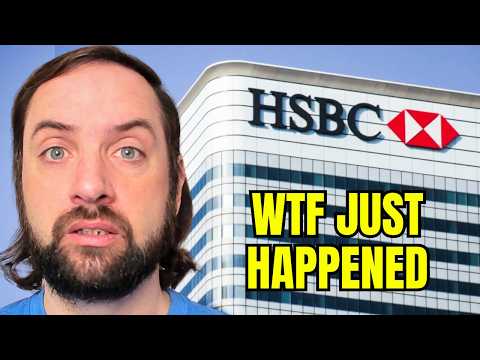
HSBC’s 32% rise in pretax profit did not reassure investors, because interest income missed expectations and management sounded less upbeat about the benefit of higher rates than the market wanted. The host argues that this is the first sign that the clean story about rising rates helping banks is breaking down: banks need good borrowers, not just higher policy rates, and weaker economic conditions can reduce loan demand while raising credit risk.
The broader evidence from Europe points the same way. The host says banks are tightening lending standards, reducing loan availability, and at the same time buying more government bonds, with nearly 30 billion euros added in September. ECB survey data are cited to show that access to finance deteriorated even as firms reported slightly lower financing needs, creating a wider funding gap in the real economy.
France is presented as the clearest warning. Consumer confidence fell to its lowest level since 2013, business activity unexpectedly contracted in October, and the spread between French and German yields widened to its highest since the Euro crisis in 2011. The host argues that political unrest is not the cause of the weakness but a symptom of nearly two decades of stagnation, with banks reacting more realistically than officials who focus on marginally positive GDP.
Key takeaways
- The host says HSBC’s 32% pretax profit increase masked weaker interest income and less enthusiasm about higher rates.
- European banks are tightening credit while buying government bonds again, with nearly 30 billion euros added in September.
- ECB survey data show a net 5% of firms saw reduced access to bank loans while only 2% reported lower financing needs, widening the financing gap.
- France’s consumer confidence fell to its lowest since 2013, while assessments of past living standards hit the weakest level since the series began in 1972.
- The host argues that French political turmoil is exposing a long-running credit and growth problem, not creating it.
Notable quotes
“HSBC's interest income fell short of expectations and the bank offered far less enthusiasm than investors expected about the supposed benefits of higher interest rates”
“They're tightening lending standards, reducing the availability of loans, and creating a growing financing gap in the real economy”
“the spread between French and German yields reached its widest since the Euro crisis in 2011”
“the ECB's latest survey on the access to finance of enterprises, a net 46% of firms reported higher bank interest rates, up from 42% in the previous quarter”
“These are products of the silent depression”
How the episode opens
HSBC reported a 32% increase in pre-tax profit earlier this week and investors responded by dumping the stock as much as 7 and a half%. That sounds strange until you look at what was missing. HSBC's interest income fell short of expectations and the bank offered far less enthusiasm than investors expected about the supposed benefits of higher interest rates.
Goldman Sachs analysts called the result slightly disappointing, warning that the improved rate environment may provide less benefit than previously anticipated. And that is our first clue. The second comes from the rest of Europe's banks.
They're tightening lending standards, reducing the availability of loans, and creating a growing financing gap in the real economy. At the same time, they're buying government bonds again, nearly 30 billion euros in September alone, even as the ECB continues threatening higher interest rates. Then there is France.
Political chaos has spilled into violent riots. Consumer confidence has collapsed. Business activity unexpectedly, using our quotes here, contracted in October.
French government bonds have suffered historic turbulence and the spread between French and German yields reached its widest since the Euro crisis in 2011. Yet, if you listen to politicians and central bankers, the economy doesn't seem so bad. GDP is still slightly positive where we heard that before.
And that's the problem. Officials are hyperfocused on whether GDP is barely above or below zero. Banks are focused on whether borrowers will actually repay their loans.
And the consumers in France with collapsing confidence don't need a GDP report to tell them what has happened to their economy. What has happened is France has been shedding jobs for two years. The European system as a whole has been suffering under a credit and monetary and banking environment for going on two decades.
Banks know the difference because they have to put money at risk inside that environment.
From the episode’s captions: roughly the first two minutes, lightly cleaned. Keep watching on YouTube →
Topics
- european bank stress
- hsbc earnings
- bond market france
- missing warning signs
- banking panic
Companies and tickers mentioned
- HSBC
- HSBC
Watch the episode
Watch “Banks Are Starting To Panic...” on YouTube
Summary, takeaways and quote selection by Octagon. Quotes are short excerpts; the full conversation is in the episode.
More from Eurodollar University
-
 Commodity Markets Are Preparing for Something
-
 Baby Food Prices Just Revealed a Dark Truth About the U.S. Economy
-
 You Won’t Believe What the Bond Market Just Did
-
 IKEA Just Sent a TERRIFYING Warning About Consumer Spending
-
 China’s “Government-Backed Companies Are Missing Payments. How Bad Is China’s Debt?
-
 WTF Just Happened To Global Markets
Eurodollar University, this episode and its artwork belong to Jeff Snider. Octagon is not affiliated with the show; this page is an independent summary.
