
Episode summary
Hear from Strategy award winner Farouki Majeed on staying in the top 2% for 10 years

Summary
Farouki Majeed argues that the market backdrop is increasingly fragile: valuations are historically high, downside risk is rising for both equities and credit, and the next downturn may arrive even if there is no outright recession. He says his team is responding by trimming equity exposure, keeping fixed income somewhat underweight, holding more cash, and maintaining an opportunistic sleeve that includes gold. He also thinks the post-COVID regime shift matters because the old assumptions around U.S. Treasuries and stock-bond diversification no longer hold in the same way.
He ties that caution to a long career through crises, from the Latin American debt crisis and Brady bonds to Black Monday, the Asian crisis, and the 2022 bond drawdown. That history informs his emphasis on risk awareness, liquidity, and being ready for the next crisis before it becomes obvious. He says the fund’s 2021 decision to underweight both stocks and bonds helped reduce losses in 2022.
Majeed also explains how Ohio has quietly expanded infrastructure, private credit, and co-investments through an opportunistic bucket, while keeping private equity focused on middle-market buyouts. He says good governance and a strong internal staff are central to implementation, and that the fund’s structure lets it move quickly without relying heavily on outside consultants.
Key takeaways
- Majeed says Ohio sees greater downside risk ahead for both equities and credit because valuations are historically high.
- He says the fund is trimming equities, staying somewhat underweight bonds, holding about 3% cash, and adding opportunistic exposures like gold.
- He says infrastructure has grown from about 7.5% toward a 10% target because it is less cyclical than real estate and can deliver steadier income.
- Majeed says private equity has risen from 8% to 14% of the portfolio, focused on middle-market and small-market buyouts rather than mega-funds.
- He says strong internal governance and staff expertise let the fund source, diligence, and execute co-investments quickly without multiple consultants.
Notable quotes
“I have a feeling that we are all sitting on the edge of a precipice”
“we will face much greater downside risk going forward not only for equities but for credit as well”
“We are currently at about 7 and a half and we want to get to about 10%. In uh infrastructure that is one of our favorite asset classes at the moment”
“So at the end of 2021 uh we went short or underweight equities and bonds both”
“I think good governance is um not only a good thing to do it's a leading practice as people would say, but it also can enhance returns”
How the episode opens
I have a feeling that we are all sitting on the edge of a precipice. I certainly think that uh we will face much greater downside risk going forward not only for equities but for credit as well because we're at you know historically high valuations and we've been building up our infrastructure allocation and so that's where that is going. We are currently at about 7 and a half and we want to get to about 10%.
In uh infrastructure that is one of our favorite asset classes at the moment.
Do you have a favorite kind of infrastructure investment or do you have a philosophy on what would work well in this economy? Yeah, I think uh infrastructure certain types of infrastructure are much less um prone to uh GDP risks in the sense that they are uh they are not as cyclical as uh real estate. So we're able to execute on that pretty well and we've done some quite interesting co-investments in the infrastructure space.
What are what are some of the more interesting ones? I mean, top 2% of public pension funds for the past 10 years and of course the top two in private equity. Tell me some of the success stories that you've had and and how you're handling private equity in this current market. I know you touched on it a little bit already.
So, um, as I mentioned, I mean, we have a good team right across the board. We have a good private equity team as well has been in place for now as long as I've been there. So, it's a very steady team.
The only thing I've had to do is to direct them in certain ways and to enhance some of the um due diligence and scoping capabilities, you know, finding some new opportunities and new JPS and um and uh enhancing our allocations.
From the episode’s captions: roughly the first two minutes, lightly cleaned. Keep watching on YouTube →
Topics
- private equity
- earnings performance
- market outlook
- asset allocation
- real estate infrastructure
Watch the episode
Summary, takeaways and quote selection by Octagon. Quotes are short excerpts; the full conversation is in the episode.
More from Markets Group
-
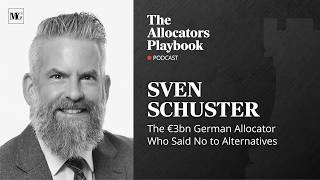 The €3bn German Allocator Who Said No to Alternatives
-
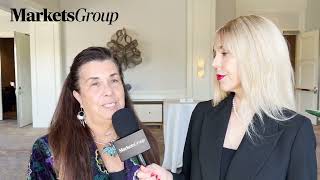 RE West 2026: Valerie Red Horse Mohl of the California Endowment Spoke to Courtney McQuade
-
 RE West 2026: Steve Biggs of The Mather Group Spoke to Courtney McQuade
-
 RE West 2026: Martha Delgado of Saint Francis Foundation Spoke to Courtney McQuade
-
 Two Stints as Interim CIO: Howard Hodel on Risk, Rebalancing and Reassuring the Board
-
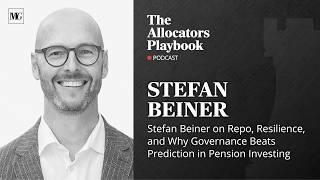 Stefan Beiner on Repo, Resilience, and Why Governance Beats Prediction in Pension Investing
Markets Group, this episode and its artwork belong to their owners. Octagon is not affiliated with the show; this page is an independent summary.
