
Episode summary
Bloomberg Wealth: Rob Wallace
 The David Rubenstein Show
· · Hosts: David Rubenstein · Guests: Rob Wallace
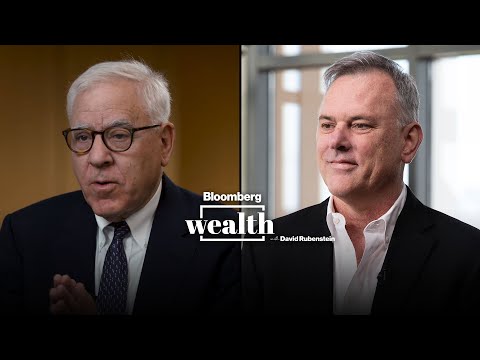
Summary
Rob Wallace describes Stanford Management Company’s mission as supporting both current students and future generations, and says the endowment now sits at about $50 billion. Since taking over in 2015, he has reshaped the portfolio into a more concentrated strategy, cutting external relationships from 300 to about 85 and keeping roughly 70% in equities. He says the endowment needs strong absolute returns because Stanford spends about 5% to 5.5% of assets each year to fund the university, and the portfolio’s long-run return has been about 10%.
Wallace argues that private equity, venture capital and distressed assets have been the strongest performers, but scale makes it harder for Stanford to access the most attractive early-stage opportunities. He says the best venture firms often have limited capacity, so Stanford sometimes helps create new firms to secure access. He also sees artificial intelligence as a major investment opportunity and a source of disruption, especially for software businesses that may be disintermediated.
He stresses humility about macro forecasting, saying recessions are possible but not certain, and that the bigger job is updating investment assumptions as the global economy fragments. Wallace links his investing style to his unusual path from ballet to endowment management: discipline, curiosity, patience and first-principles thinking shaped both careers.
Key takeaways
- Stanford Management Company now oversees about $50 billion and has reduced its external manager roster from 300 to about 85, according to Rob Wallace.
- Wallace says Stanford needs roughly 9% returns before inflation, because the endowment distributes about 5% to 5.5% of assets annually to the university.
- He says private equity, including venture capital, growth equity and buyouts, has been the best-performing bucket over his tenure.
- Wallace views AI as both an opportunity and a risk, especially for software businesses that may be disrupted.
- He says the biggest challenge is scale: Stanford is too large to fit easily into the most capacity-constrained early-stage venture funds.
Notable quotes
“It gets harder as you get bigger”
“The best performing asset classes have been venture capital”
“I think there will be some, um, some disintermediation of some types of software businesses”
“Find the people that you respect, that you enjoy, um, and that you can learn from it”
How the episode opens
We want to be very impactful for the current generations of students and scholars that are here right now at Stanford. But we we want to be equally as impactful for all future generations of students and scholars. Find the people that you respect, that you enjoy, um, and that you can learn from it.
He now runs one of the largest university endowments. And Stanford management CEO Rob Wallace says his previous job as a professional ballet dancer prepared him well for the pressures of managing money. Stepping on onto the stage of a major opera house in front of 3 or 4000 people to do a hard ballet is probably the most acute pressure I've ever felt in my life.
Wallace spent 16 years dancing on some of the world's biggest stages, including the Kennedy Center and the Metropolitan Opera. He retired at 32, enrolled at Yale as a freshman, graduated summa cum laude, and never looked back at Yale. Walsh interned for David Swensen, the pioneer of modern endowment investing, who quickly took him under his wing and as Wallace planned to get an MBA.
Swensen had another idea. David Swensen said to me, you're too old to get an MBA. If you stay and work here full time, I think I can give you a lot of opportunities to learn and grow as an investor and grow he did.
After five years at Yale's endowment office, Wallace moved to London to run the investment firm Alta Advisors, a role he held for 11 years before Stanford came calling. I wasn't broadly known what I had done in London, but it was not among the subset of the investment community that knew a lot about endowments. Today, Wallace oversees Stanford's endowment at approximately $50 billion.
It's the fourth largest endowment in the country, behind Harvard, the University of Texas System, and Yale.
From the episode’s captions: roughly the first two minutes, lightly cleaned. Keep watching on YouTube →
Topics
- stanford endowment
- asset allocation
- artificial intelligence
- global economy
- long-term investing
Companies and tickers mentioned
- Stanford Management Company
Watch the episode
Watch “Bloomberg Wealth: Rob Wallace” on YouTube
Summary, takeaways and quote selection by Octagon. Quotes are short excerpts; the full conversation is in the episode.
More from The David Rubenstein Show
-
 Strauss Zelnick on GTA VI, Take-Two's Turnaround and AI | The David Rubenstein Show
-
 Rubenstein on the Anthropic IPO, Nvidia CEO Scandal, GTA VI
-
 Bridgewater CEO Nir Bar Dea on AI Investing, Markets and Leadership | The David Rubenstein Show
-
 David Rubenstein on New Book, “Speaking of America”
-
 Santander's Ana Botin on US Growth, Debt, AI and the Global Economy | The David Rubenstein Show
-
 J&J CEO Joaquin Duato on Obesity, Cancer and AI | The David Rubenstein Show
The David Rubenstein Show, this episode and its artwork belong to Bloomberg. Octagon is not affiliated with the show; this page is an independent summary.
