
Episode summary
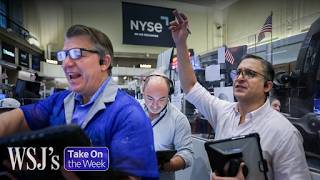
What SpaceX's IPO Really Tells Us About the Market | WSJ’s Take On the Week
 The Journal
· · 34 min · Hosts: Telis Demos, Miriam Gottfried · Guests: Owen Lamont

Summary
SpaceX’s debut framed a larger debate about whether mega-cap IPOs and fast index inclusion are signs of an overheated market. The shares priced at $135, opened at $150, and kept rising, while the hosts noted that the deal was the biggest IPO ever and that retail demand was strong even though less than 5% of the company was initially sold. They also pointed out that some investors got more shares than expected, which can sometimes be a red flag, even if the stock still holds its pop.
Owen Lamont argued that the rush to add mega-cap IPOs to indexes early is defensible in some cases but not great for retail investors, especially when float is tiny and the company is unprofitable. He said the main concerns are float, seasoning periods, and whether the first trading price is really an honest equilibrium price. He expects a wave of giant IPOs would be a bad sign for the market, but he also cautioned that SpaceX alone does not yet prove a bubble.
The episode also covered the S&P 500’s decision not to change its rules to admit SpaceX sooner, and the hosts previewed Kevin Warsh’s first Fed meeting, where the more interesting questions may be about balance sheet policy and the Fed’s forecasting process.
Key takeaways
- Owen Lamont said a wave of giant IPOs would suggest the market is overvalued, but one IPO alone is not enough to call a bubble.
- Lamont argued that tiny float and lack of profitability make IPO pricing less reliable and can create chaos for index funds.
- The hosts said SpaceX’s retail demand was strong, but surprisingly large retail allocations have historically been a warning sign.
- The S&P 500 kept its normal profitability and seasoning rules, so SpaceX was not fast-tracked into the index.
- Lamont said the best way for a passive investor to avoid bubble risk is to own less stock, rebalance, or use a target-date fund.
Notable quotes
“Research has suggested that it is a bad idea to buy any IPO and it is especially a bad idea to buy an unprofitable IPO”
“the biggest IPO ever. And you would have expected maybe because it floated such a relatively small amount of its stock in the deal, less than 5%”
“there has not been a lot of IPOs in the United States in the past 3 years, mega cap or otherwise”
“I would say that I don't think anybody should be super confident that we're in a bubble or the the market's overvalued”
“The shares priced at $135 and they opened at 150. So, we got an 11% pop right out of the gate”
How the episode opens
Research has suggested that it is a bad idea to buy any IPO and it is especially a bad idea to buy an unprofitable IPO. And it is also probably a bad idea to buy an IPO with a small float. Many of the new IPOs are going to like check those boxes.
Hi Telis. — Hi Miriam. — So, this is a really exciting day. It's SpaceX IPO day when we are recording right now. The shares priced at $135 and they opened at 150. So, we got an 11% pop right out of the gate and as of this recording they were continuing to surge higher.
I would argue that that's exactly what they were probably aiming for. Let's look at the long-term averages for IPOs. If you take IPOs going all the way back to 1980 and this is of course thanks to Jay Ritter at the University of Florida's data.
He's the benchmark guru of IPO data. The average pop across all IPOs is about 19%. So, you know, if SpaceX ends up there at the end of the trading day, uh that would be totally unaverage across all IPOs.
And in fact, it would be better than big IPOs. Big IPOs, companies with um uh larger kind of annual sales when they go public, they tend to have smaller pops, right? Uh the number for companies with over $500 million in inflation-adjusted kind of annual sales, uh the average pop is about 10%.
And this is a big IPO. This is the biggest IPO ever. — And you would have expected maybe because it floated such a relatively small amount of its stock in the deal, less than 5% at least in the initial sale. We'll see where it ends up after the banks exercise their green shoe, which look it up.
From the episode’s captions: roughly the first two minutes, lightly cleaned. Keep watching on YouTube →
Topics
- spacex ipo
- ipo risk
- index inclusion
- fed meeting
- ipo bubble signals
Companies and tickers mentioned
- TSLA
- SpaceX
- Tesla
- Acadian Asset Management
- Anthropic
- OpenAI
Watch the episode
Watch “What SpaceX's IPO Really Tells Us About the Market | WSJ’s Take On the Week” on YouTube
Summary, takeaways and quote selection by Octagon. Quotes are short excerpts; the full conversation is in the episode.
More from The Journal
-
 Nvidia Built Its AI Empire on Jensen Huang. What Happens Without Him? | WSJ Tech News Briefing
-
 What Happens When Everyday Investors Buy the Dip? | WSJ’s Take On the Week
-
 How North Korean Hackers Pulled Off a $6.3 Billion Crypto Heist
-
 Why Apollo’s CEO is Betting Billions on a 'Global Industrial Renaissance' | WSJ Leadership Institute
-
 Tech Stocks and AI Bonds Are Tumbling. Is the AI Trade in Trouble? | WSJ’s Take On the Week
-
 Why Anthropic Needs $100B More to Keep Growing | WSJ Tech News Briefing
The Journal, this episode and its artwork belong to The Wall Street Journal & Spotify Studios. Octagon is not affiliated with the show; this page is an independent summary.
