

About these summaries
Octagon has summarized 70 episodes of The Journal published between Jan 4, 2026 and Nov 8, 2026. The companies discussed most often are OpenAI, Anthropic and Meta. Frequent guests include Almar Latour, David Wainer and Monica Guerra. Each summary lists key takeaways, short timestamped quotes and the companies and tickers mentioned, with a link to the full episode.
Most-mentioned tickers
- GOOG 8
- GOOGL 8
- META 7
- MSFT 5
- NVDA 5
- WMT 5
- AMZN 4
- JPM 4
- MS 4
- AAPL 3
- GS 3
- MCD 3
- MU 3
- TSLA 3
- AVGO 2
Most-mentioned companies
- OpenAI 9
- Anthropic 8
- Meta 6
- Microsoft 5
- Nvidia 5
- SpaceX 5
- Walmart 5
- Alphabet 4
- Amazon 4
- Apple 3
- Dow Jones 3
- Goldman Sachs 3
- Google 3
- JPMorgan Chase 3
- McDonald's 3
Frequent guests
- Almar Latour 2
- David Wainer 2
- Monica Guerra 2
Episodes
- What Happens When Everyday Investors Buy the Dip? | WSJ’s Take On the Week
Retail investors have become a major market force, and the guests argue that they now matter as much for liquidity and sentiment as institutions do.
- How North Korean Hackers Pulled Off a $6.3 Billion Crypto Heist
Binance’s international exchange was hit by what the reporters say became the largest crypto heist in history, with North Korean hackers siphoning off $6.3 billion in about 20…
- Why Apollo’s CEO is Betting Billions on a 'Global Industrial Renaissance' | WSJ Leadership Institute
Marc Rowan argues that Apollo is positioned for a “global industrial renaissance” driven by AI, data centers, energy infrastructure, defense and reindustrialization.
- Tech Stocks and AI Bonds Are Tumbling. Is the AI Trade in Trouble? | WSJ’s Take On the Week
AI-related credit markets have become the main worry as tech stocks soften, but the conversation argues that the selloff is more about financing conditions than a sudden collapse…
- Why Anthropic Needs $100B More to Keep Growing | WSJ Tech News Briefing
Anthropic’s S-1 framed the company as an unusual AI business: it is building frontier models while explicitly warning that the technology could pose catastrophic risks to society.
- Michael Dell on the 3,000-Pound Liquid-Cooled Racks Powering AI Data Centers
Michael Dell argues that Dell has become a major AI infrastructure supplier because it has spent decades building servers, storage, and enterprise systems, and now sits at the…
- How AI Regulation Could Help the Public—and Investors Too | WSJ’s Take On the Week
The episode argues that AI regulation is likely inevitable, but not soon enough to rely on a weak Congress and constrained agencies.
- Gayle King Sleeps Just Four Hours a Night. How Does She Do It? | The Journal
Gayle King says her CBS Mornings schedule is built around a 3:24 a.m. alarm, three snoozes, and a reality she has reluctantly accepted.
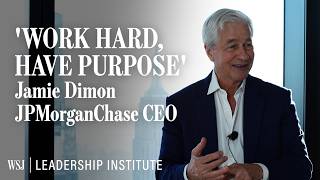
- Jamie Dimon on the Biggest Risks Facing the Global Economy | WSJ Leadership Institute
Jamie Dimon argues that JPMorgan Chase’s Security and Resiliency Initiative is more than a patriotic gesture: it is a practical response to fragile supply chains, weak industrial…
- Why the Midterm Elections Are So Pivotal for Bonds | WSJ’s Take On the Week
Higher inflation and a sharp move in bond yields frame the episode’s central argument: markets are trying to price both a hotter policy path from the Fed and a possible slowdown…
- How Does Apple’s Siri Compete in an Agentic World? | WSJ Tech News Briefing
The discussion centers on whether Apple’s Siri can become a real AI agent while Apple keeps its privacy-first approach.
- Why Multimillionaire Suze Orman Still Won’t Eat Out | The Journal
Suze Orman argues that money discipline matters more than convenience, even for people with substantial wealth.
- Why Ludwig Göransson Keeps His Oscars on the Bottom Shelf | The Journal
Ludwig Göransson says his mornings depend on where he is in a project, but when he can, he wakes around 5:40, hikes Griffith Park with his dog Barbara, then comes home for black…
- Why Cash Is King in the Era of Higher Interest Rates | WSJ’s Take On the Week
Higher interest rates are changing how investors think about cash, bonds, real estate, private equity, and bank deposits.
- UPS CEO on People-First Leadership and the Future of Logistics | WSJ Leadership Institute
UPS CEO Carol Tome describes how she came out of retirement after the board concluded the existing leadership team was not ready for the job.
- Is This the Last Quarterly Earnings Season? | WSJ's Take On the Week
Rising Treasury yields and a weakening appetite for new listings set the backdrop for the episode.
- Why Queen Máxima is Urging Leaders to Prioritize Financial Health | WSJ Leadership Institute
Queen Máxima argues that financial inclusion is only the starting point: the real goal is financial health, meaning people can handle daily cash flow, absorb shocks, and plan for…
- Making Sense of Sky-High Treasury Yields | WSJ’s Take On the Week
The episode argues that the surge in the 10-year Treasury yield to 5% is being driven mainly by shifting expectations for Fed policy, sticky inflation, and a higher term premium…
- Inside FedEx’s AI Strategy: Why the CEO and CIO Must Move in Lockstep | WSJ Leadership Institute
FedEx’s leaders argued that AI strategy has to be driven from the top, with the CEO setting direction and the CIO turning it into execution.
- Will Real Estate Protect Your Portfolio if the AI Bubble Bursts? | WSJ’s Take On the Week
Real estate is presented as a potential portfolio buffer if the AI trade unwinds, but the episode argues that the sector’s current setup is being driven more by interest rates…
- A Breakthrough Cancer Vaccine Fueled a Biotech Rally. Can It Last? | WSJ’s Take On the Week
Biotech has rallied hard, with the XBI up about 70% over the past year versus about 20% for the S&P 500, and David Wainer argued that the move has been driven by a mix of policy…
- Dow Jones CEO on AI Disruption, Media Trust and the Future of News | WSJ Leadership Institute
Dow Jones has shifted from a print-dependent newsroom into a higher-margin information business built around news, proprietary data, analytics and convening power.
- How AI Speculation Is Fueling the Small-Cap Stock Rally | WSJ’s Take On the Week
The hosts focus first on the coming jobs report and the next CPI release, arguing those data points will be unusually important for the Federal Reserve’s September meeting under…
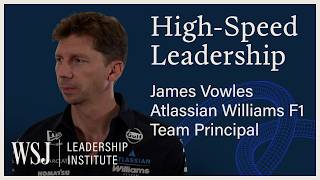
- James Vowles on Rebuilding Atlassian Williams F1 Team | WSJ Leadership Institute
James Vowles says Atlassian Williams F1 is in a long rebuild, with championship contention targeted for 2030 and 2028 meant to be the year the team is viewed as a serious threat.
- What Fed Chair Kevin Warsh’s Jackson Hole Debut Means for Nervous Markets | WSJ’s Take On the Week
The episode centers on Kevin Warsh’s first Jackson Hole speech as Fed chair and the market unease around his effort to move away from explicit forward guidance.
- How to Make Inflation Work for Your Portfolio | WSJ’s Take On the Week
The conversation centers on whether inflation is truly under control and what that means for bond investors.
- Why This OpenAI Investor Isn’t Worried About Its $800B Valuation | The WSJ Money Interview
Vinod Khosla says his approach to risk was shaped by arriving in the U.S. from India in 1976 with little money, no network, and a willingness to start over.
- How AI Spending Is Fueling the Economy Overall | WSJ's Take On the Week
Ohsung Kwon argues that the AI capex boom is not just a story about a few megacap tech names; it is helping drive the broader U.S. economy.
- Why Oil Prices Could Hit a Breaking Point by Year End | WSJ’s Take On the Week
The episode argues that the oil market is being driven by a geopolitical shock that may outlast the latest flare-up in the Middle East, but that the bigger macro risk is still…
- The Buried $150B Bet Inside the Top 20 U.S. Stocks | WSJ’s Take On the Week
The episode argues that investors may already have meaningful indirect exposure to private companies through the public stocks they own, especially the largest U.S. names.
- How This $150B+ Wall Street Strategy Could Lower Your Taxes | WSJ’s Take On the Week
Tax-aware long-short is presented as a souped-up version of tax-loss harvesting that combines direct indexing, leverage, and short selling to generate losses while still aiming…
- Are Corporate Earnings in a Bubble? This Quarter Is a Test | WSJ’s Take On the Week
Corporate earnings are the focus because analysts have pushed S&P 500 second-quarter EPS growth estimates up 3.4%, the biggest upward revision since Q1 2021.
- Can Hot Consumer Companies Like Oura and Whoop Make Good IPOs? | WSJ’s Take On the Week
The episode argues that hot consumer wearables like Oura and Whoop may be attractive products, but they are hard to defend as long-term standalone public companies.
- The True Cost of AI Hidden in Big Tech's Financials | WSJ’s Take On the Week
The discussion argues that the biggest AI hyperscalers may look far more profitable than they really are because standard free cash flow calculations miss part of the cost of…
- What SpaceX's IPO Really Tells Us About the Market | WSJ’s Take On the Week
SpaceX’s debut framed a larger debate about whether mega-cap IPOs and fast index inclusion are signs of an overheated market.
- Why NYU's 'Valuation Guru' Says Musk's SpaceX Isn't Worth $1.77T
SpaceX’s planned IPO is the centerpiece of a broader boom in giant private-company listings, but the company has taken an unusual route by proposing a single $135-a-share price…
- Why This Ex-Trump Economist Says the Fed Needs to Raise Interest Rates | WSJ’s Take On the Week
Joe Lavorgna argues the Fed is still behind the curve because inflation has stayed above target for years and is now being pushed higher again by a Middle East energy shock…
- From Walmart to Wall Street: Who is Really Winning in This Economy? | WSJ’s Take On The Week
The episode frames the economy as split between a booming capital-expenditure cycle and a weak consumer.
- Billionaire Investor on the Data Center Boom and Oil's Breaking Point | WSJ’s Take On the Week
Semiconductor stocks are powering the latest AI trade, with the hosts arguing that investors have shifted from the companies using AI to the chipmakers selling the picks and…
- Josh Brown’s ‘HALO’ Stocks Strategy: Investing in What AI Can’t Replicate | WSJ’s Take On the Week
The episode centers on a shift in market leadership as investors move toward companies with “heavy assets” and away from businesses whose moats could be eroded by AI.
- Prediction Markets: Investing, Gambling or a Haven for Insider Trading? | WSJ’s Take On the Week
The hosts argue that the Magnificent Seven are looking less dominant even as they keep spending heavily on AI infrastructure.
- Why This Economist Says Immigration Crackdown is Reshaping U.S. Job Growth | WSJ’s Take On the Week
Airline earnings are the first market story this week, with Alaska, Southwest, United and American all reporting against a surge in jet fuel costs.
- Why Carson Block Says AI and Passive Investing Could Break the Stock Market | WSJ’s Take On the Week
Carson Block argued that the biggest market risk is not Iran, oil, or private credit, but AI’s potential to reshape employment and then force a market repricing.
- McDonald’s CEO on Going Viral, Choosing Chicken and the Fast-Food Wars | WSJ’s Bold Names
McDonald’s CEO Chris Kempczinski says his viral tiny-bite burger clip became a useful test of how a consumer brand should behave online: lean in, let the internet react, and use…
- Hinge CEO Explains the Dating App's Strategy for a $1B Year | WSJ’s Bold Names
Hinge’s new CEO, Jackie Jantos, says the company is built around a simple premise: help people get off the app and into a date.
- How Emerging-Market Bonds Can Hedge Against U.S. Market Volatility | WSJ’s Take On the Week
The episode argues that recent oil spikes and the Iran conflict are best read through market pricing: oil around $90 suggests investors do not expect a full loss of production…
- The Five Step ‘Algorithm’ Driving Tesla’s Success | WSJ’s Bold Names
Jon McNeill argues that Tesla’s growth came from a five-step operating system he and Elon Musk developed to solve problems faster and avoid locking in bad processes too early.
- Will High Oil Prices Kill Demand? Why JPMorgan Says Book Your Travel Now | WSJ’s Take On the Week
The hosts argued that the Fed’s decision to stay on hold, combined with higher oil prices, is keeping stagflation worries alive even if Jerome Powell said the current environment…
- Why Southwest Finally Ditched Open Seating and ‘Bags Fly Free’ | WSJ's Bold Names
Southwest Airlines is remaking its business model around assigned seating, bag fees, extra legroom, and broader product tiers, and Bob Jordan argues the changes are being driven…
- Why a Closed Strait of Hormuz Is a ‘Smoking Risk’ for Global Markets | WSJ’s Take On the Week
The episode focuses on the Strait of Hormuz as the central market risk in the Middle East conflict, arguing that any hard closure would hit energy, shipping, fertilizer, and…
- This Ex-Navy SEAL Built a $5B AI Drone Company for Modern Warfare | WSJ's Bold Names
Brandon Tseng says Shield AI was built around a simple conviction he formed after leaving the Navy SEALs: AI and autonomy would become central to warfare.
- Is Bitcoin Still 'Digital Gold'? How Investors See It Now | WSJ's Take On the Week
Bitcoin no longer trades like “digital gold,” according to Marion Laboure of Deutsche Bank.
- The AI Agent in Your Pocket: Qualcomm’s CEO on the Future of Mobile | WSJ’s Bold Names
Qualcomm CEO Cristiano Amon argues that AI will change mobile computing as fundamentally as the smartphone once changed the PC era.
- The Inflation Debate That Will Shape the Fed’s Plans for Interest Rates | WSJ's Take On the Week
Rob Kaplan argued that the tariff ruling was less disruptive than markets might have feared because the administration was prepared with replacement authorities and the net…
- Inside Zillow’s Pivot to Become a ‘Housing Super App’ | WSJ’s Bold Names
Zillow CEO Jeremy Wacksman says the housing market is “depressed” because affordability is being squeezed by high prices, elevated mortgage rates and, above all, a shortage of…
- Could AI Disruption Fears Trigger a Software M&A Boom? | WSJ's Take On the Week
The episode argues that the market is overpricing the risk that AI will wipe out business software, even though cloud and SaaS stocks have sold off sharply.
- Why Cigna’s CEO Is Confident We Can Fix U.S. Healthcare | WSJ’s Bold Names
David Cordani argues that mental and physical health are inseparable and that employers are central to improving access, especially because many workers first encounter care…
- The Consumer Shock From Tariffs Isn't Over. When Will Prices Peak? | WSJ’s Take On the Week
Frances Donald argues that the U.S. economy is no longer best understood as a single cycle.
- Can IBM Beat Microsoft and Google in the Quantum Computing Race? | WSJ's Bold Names
IBM CEO Arvind Krishna argues that quantum computing is still a few years from commercial use, but that the company is positioned to lead because it is already building the…
- Why This VC Says AI and Robotics Will Put Every Human Job at Risk | WSJ's Take On the Week
The hosts opened with the market’s reaction to Kevin Warsh’s nomination for Fed chair, arguing that investors still do not know whether he would behave like a hawk or a dove.
- ‘We Sell Scarcity:’ How Lamborghini Continues to Stay So Cool | WSJ’s Bold Names
Lamborghini CEO Stephan Winkelmann says the brand’s core strategy is scarcity: the company sells about 10,000 cars a year, keeps a long order book, and treats each vehicle as a…
- Will the Next Jobs Report Reveal the Real Cost of AI on Employment? | WSJ’s Take On the Week
Gold’s record surge is framed as a sign of deeper unease about the global economy, with the host and a guest arguing that geopolitical shocks, shifting views on the dollar, and…
- How SAP’s CEO Is Remaking the Tech Giant for the AI Era | WSJ’s Bold Names
Christian Klein argues that SAP’s 2020 pivot to the cloud was a necessary self-disruption, even though the market punished the move with a 20% one-day drop in the share price.
- The Risks Behind the Expected $5.3T AI Data Center Funding Boom | WSJ’s Take On the Week
Chevron and Exxon are navigating very different oil strategies as the market weighs Venezuela, U.S. pressure for cheaper oil, and each company’s recent stock performance.
- How Athletic Brewing Sells Beer for a Post-Alcohol Generation | WSJ’s Bold Names | WSJ's Bold Names
Bill Shufelt argues that non-alcoholic beer is no longer a niche novelty but a fast-growing category built around changing health habits, socializing patterns, and better product…
- Why This Morgan Stanley Exec Says Tariffs Will Be Struck Down | WSJ's Take On the Week
Netflix’s upcoming earnings are framed as a key checkpoint on its Warner Bros.
- How Corning Is Using Trump’s Tariffs to Its Advantage | WSJ's Bold Names
Corning’s case is that its long-standing habit of making and controlling more of its own supply chain has suddenly become an advantage in an era of tariffs and industrial policy.
- HBO’s ‘Industry’ Creators on What It's Really Like on Wall Street | WSJ's Take On the Week
HBO’s Industry creators Mickey Down and Konrad Kay argue that the show works because it starts from the bottom of finance: ambitious junior people trying to gain power inside a…
- Affirm CEO on Why ‘Buy Now, Pay Later’ Beats Credit Cards | WSJ's Bold Names
Max Levchin argues that buy now, pay later is not a gimmick but a cleaner version of consumer credit.
- The 2025 Wrap Up: Tariffs, AI and Key Market Trends for 2026 | WSJ's Take On the Week
AI demand was the dominant market force in 2025, with memory and storage suppliers Western Digital, Seagate and Micron among the year’s biggest winners.















The Journal, its episodes and artwork belong to The Wall Street Journal & Spotify Studios. Octagon is not affiliated with the show; these pages are independent summaries.
