
Episode summary
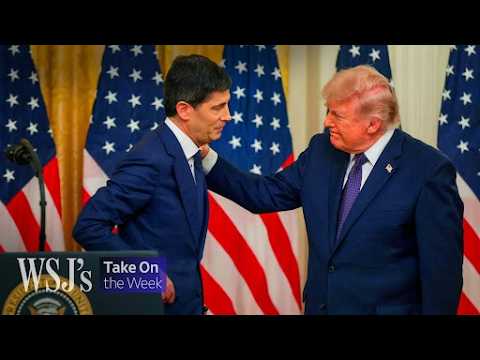
Why This Ex-Trump Economist Says the Fed Needs to Raise Interest Rates | WSJ’s Take On the Week
 The Journal
· · Hosts: Telis Demos, Aaron Back, Miriam Gottfried · Guests: Joe Lavorgna
Summary
Joe Lavorgna argues the Fed is still behind the curve because inflation has stayed above target for years and is now being pushed higher again by a Middle East energy shock, sticky services prices, and a long lag from earlier fiscal stimulus. He says the recent Iran-related disruption is not just about oil: it feeds through transportation, plastics, manufacturing, airfare and other commodity-linked costs, making a quick return to 2% unlikely.
He also says the Fed’s next move is more likely to be a hike than a cut, even if policymakers wait in the near term. Lavorgna puts core and headline inflation at roughly the low-3% area now and says a move toward 3.5% would justify roughly 100 basis points of hikes. He thinks inflation expectations matter here, especially if they become unanchored, and he argues that low jobless claims and still-solid economic data reduce the case for easing.
On AI, Lavorgna says the build-out may be disinflationary over a multi-year horizon, but in the short term it can raise demand for capital, lift the neutral rate, and keep monetary policy tighter. He expects Kevin Warsh to be pragmatic and hawkish enough to support higher rates, while being careful about the Fed balance sheet and trying to preserve independence under President Trump.
Key takeaways
- Lavorgna says inflation has been above the Fed’s target for five years and the recent Middle East shock makes a quick return to 2% unlikely.
- He expects the Fed’s next move to be a hike, possibly late in the year, because inflation expectations are rising and the economy is still holding up.
- He argues that if inflation rises from roughly 2.5% to 3.5%, the Fed would need about 100 basis points of hikes to offset it.
- Lavorgna sees AI as potentially disinflationary over years, but in the short term as an inflationary force because it boosts capital demand and may raise the neutral rate.
- He thinks Kevin Warsh will be pragmatic and somewhat hawkish, but unlikely to try aggressively shrinking the Fed balance sheet in the near term.
Notable quotes
“inflation, which has been above the Fed's target for 5 years, and even if you look at the last couple of years”
“I would love rates to come down. It's just not credible right now for that to happen”
“the Fed's next one is likely to be a hike, and it's unlikely it's going to be just one or two moves”
“the AI benefits are much more tangible. You could see it. So I do think it'll work”
How the episode opens
I would love it the Fed could cut interest rates. People are certainly suffering, lower income consumers are certainly hurting. The gas situation is a problem. Mortgage affordability or housing affordability is very low and Parker's rates are high. So, I would love rates to come down. It's just not credible right now for that to happen.
Hey everyone, I'm Telis Demos. This week I'm joined by Aaron Back, editor of Heard on the Street. Welcome, Aaron. — Hello. — Today we're going to have a big conversation about the economy, inflation, the Fed. And we're going to do that with Joe LaVorgna. He is the America's chief economist at SNBC, and he was also formerly a counselor to Treasury Secretary Scott Bessent. Joe, welcome to the show.
Thank you. Glad to be here.
So, like we said, you were recently advising the Trump administration. Now you're back on Wall Street. And of course, the big kind of political news in the economy is that uh Kevin Warsh is now in his chair as the uh Trump administration's chosen Fed chair.
Uh but you recently wrote uh in one of your one of your first notes back back in the the sort of the private sector, uh you wrote that the Fed has an inflation problem. What do you mean by that?
I wrote I actually is is a one piece I I've written. I've tried to be much more selective. So, thank you for reading it. And got a lot of good feedback. — Now it's an event when you write something.
That's right. Well, a little bit, yeah. You either either write all the time and constantly or just do these bespoke one-off pieces. And uh obviously I'm very happy to be back at uh at SNBC.
From the episode’s captions: roughly the first two minutes, lightly cleaned. Keep watching on YouTube →
Topics
- fed inflation problem
- interest rate hikes
- inflation expectations
- energy shock
- ai productivity and inflation
Companies and tickers mentioned
- SMFG
- SMBC
Watch the episode
Summary, takeaways and quote selection by Octagon. Quotes are short excerpts; the full conversation is in the episode.
More from The Journal
-
 Nvidia Built Its AI Empire on Jensen Huang. What Happens Without Him? | WSJ Tech News Briefing
-
 What Happens When Everyday Investors Buy the Dip? | WSJ’s Take On the Week
-
 How North Korean Hackers Pulled Off a $6.3 Billion Crypto Heist
-
 Why Apollo’s CEO is Betting Billions on a 'Global Industrial Renaissance' | WSJ Leadership Institute
-
 Tech Stocks and AI Bonds Are Tumbling. Is the AI Trade in Trouble? | WSJ’s Take On the Week
-
 Why Anthropic Needs $100B More to Keep Growing | WSJ Tech News Briefing
The Journal, this episode and its artwork belong to The Wall Street Journal & Spotify Studios. Octagon is not affiliated with the show; this page is an independent summary.
