
Episode summary
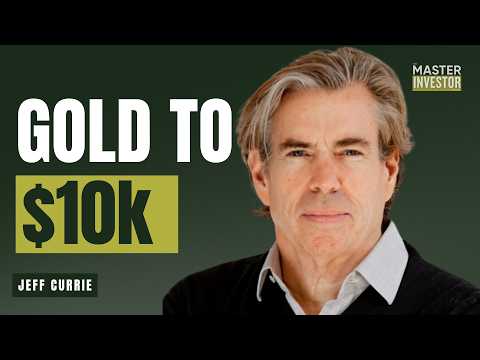
Forget Tech: Why Hard Assets Will Win The Decade | Jeff Currie
 The Master Investor Podcast With Wilfred Frost
· · 59 min · Hosts: Wilfred Frost · Guests: Jeff Currie
Summary
Jeff Currie argues that the decade is being shaped by financial repression, sovereign debt stress and a renewed preference for hard assets over financial assets. He says the recent rise in long-term yields reflects the pressure of funding large public debts, and that policymakers are trying to suppress yields rather than let markets clear. In his view, that effort weakens currencies over time and makes gold, energy and other commodities the better stores of value.
Currie is most forceful on gold, saying he would rather own gold than the dollar or pound sterling and that central-bank de-dollarization, especially in emerging markets, keeps demand structurally supported. He ties his $10,000 gold call to a broader shift away from dollar assets after sanctions and financial pressure convinced reserve holders to diversify. He is similarly bullish on energy, pointing to years of underinvestment, refinery bottlenecks and product shortages as reasons diesel and gasoline remain tight even when crude eases.
He also extends the case to agriculture, critical minerals and uranium, arguing that weather shocks, war and logistics bottlenecks are compounding supply problems. Currie dismisses Bitcoin as a substitute for gold, but says digital ledger technology could matter more for AI agents than for humans. His broader conclusion is that investors should own the basket of hard assets rather than try to time one commodity at a time.
Key takeaways
- Currie says financial repression and debt servicing pressures are pushing governments to suppress yields, which he thinks is bullish for hard assets.
- He argues gold remains attractive versus the dollar and pound sterling because sanctions risk and de-dollarization are driving reserve holders toward bullion.
- Currie says energy is supported by years of underinvestment, refinery shortages and tight diesel markets, not just crude prices.
- He expects agriculture to benefit from war, weather shocks and choke-point disruptions across grain and shipping routes.
- Currie’s preferred approach is to own the basket of hard assets, not pick single commodities, because different segments of the complex can lead at different times.
Notable quotes
“What's going to protect you in that kind of environment? It's going to be owning the hard assets”
“This is like we're in like the second or third inning of it”
“Don't try to to get too fancy in these hard assets and you know I like to call it halo hard asset local operations”
How the episode opens
There's only one thing you call that is they didn't like the price that the market was providing. And in any other terminology, I call that financial repression. They want the yields lower.
And the reason why we pounded the table on gold. We have financial repression. It creates inflationary pressures.
It's intentionally done to lower the value of that debt. So the debt holders want out. What's going to protect you in that kind of environment?
It's going to be owning the hard assets. We have a problem in diesel and that's an affordability problem. And we just go back to our problem on interest rates.
Interest rates that 10 years sets mortgages. It's an affordability problem. Um and we think about gasoline prices retail.
So everybody's thinking about oh oil's at 94 and it's not at 150. You're 189 on diesel. You have an affordability problem.
So it's not something we're waiting for. It's here. Welcome to the Master Investor podcast with me, Wilfred Frost, where we celebrate and learn from the success of the greatest investors, business leaders, and politicians in the world, giving you, our listeners, an edge.
The Master Investor podcast is sponsored by the World Gold Council, BMY Investments, LEG, and Interactive Brokers. Please do remember the views expressed in this podcast are for general information purposes only. Nothing in the podcast constitutes a financial promotion, investment advice, or a personal recommendation.
More on that in the show notes. My guest today is Jeff Curry. He's one of the world's foremost experts on commodities.
He spent three decades at Goldman Sachs building and then leading their commodities team. He left Goldman in 2024, spent two years at Carlile before deciding to go out on his own. He's the founder of Rail Macro and of ABAX Markets.
From the episode’s captions: roughly the first two minutes, lightly cleaned. Keep watching on YouTube →
Topics
- commodities supercycle
- gold and de-dollarization
- energy over tech
- bitcoin critique
- recession risk and hard-asset rotation
Companies and tickers mentioned
- GS
- XOM
- CVX
- COP
- BP
- SHEL
- TTE
- Goldman Sachs
- Exxon Mobil
- Chevron
- ConocoPhillips
- BP
- Shell
- Total
- Saudi Aramco
Watch the episode
Watch “Forget Tech: Why Hard Assets Will Win The Decade | Jeff Currie” on YouTube
Summary, takeaways and quote selection by Octagon. Quotes are short excerpts; the full conversation is in the episode.
More from The Master Investor Podcast With Wilfred Frost
-
 What 400 Years of Financial Manias Teach Us About Today | Edward Chancellor
-
 Big Tech Selloff: Dan Niles on What Happens Next
-
 Picking Private Market Winners: SpaceX, Anthropic & Stripe | Maggie Fanari
-
 How to Profit When Cycles Turn – Django Davidson on Capital Cycle Investing
-
 The Bond Pivot: Jim Bianco on Why it’s Time to Start Buying Bonds
-
 Michael Hartnett: I coined “Mag7” - Here’s What Ends Their Run
All The Master Investor Podcast With Wilfred Frost episodes →
The Master Investor Podcast With Wilfred Frost, this episode and its artwork belong to Paradine Productions. Octagon is not affiliated with the show; this page is an independent summary.
