
Episode summary
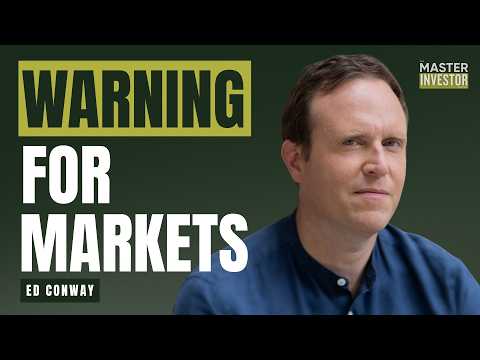
If Global Trade Breaks, It’s Worse Than 2008 | Ed Conway
 The Master Investor Podcast With Wilfred Frost
· · 1 hr 3 min · Hosts: Wilfred Frost · Guests: Ed Conway
Summary
Ed Conway argues that global trade is being tested by war, tariffs, geopolitics and higher borrowing costs at the same time, and that markets may still be underestimating how fragile the system is. He says the world economy is far more integrated than in 1914, so a breakdown in trade would be more damaging than the Global Financial Crisis, even if the system has also shown surprising resilience through workarounds, rerouting and ship-to-ship transfers.
The conversation turns to Trade World, which traces how bread, wool, cotton and cars reveal the hidden infrastructure of globalization. Conway says Britain’s rise came through textiles and industrial innovation, but also through protectionism, espionage and repeated resistance to new technology. He uses the history of wool, cotton and the red flag rule to show that today’s debates over AI, reshoring and tariffs are part of a long pattern.
He argues that offshoring hollowed out industrial regions and helped fuel political backlash in the US and UK. Yet he also stresses that trade does not simply stop when barriers rise; it adapts, which may keep inflation elevated while preventing the worst-case collapse many fear.
Key takeaways
- Ed Conway says a breakdown in the global trading system would be worse than the Global Financial Crisis because trade now touches “everything.”
- Conway argues that bond yields are rising because investors are reassessing fiscal sustainability, geopolitics and the long-run assumptions behind globalization.
- He says Britain’s industrial rise was built on wool and cotton, but also on protectionism, industrial espionage and resistance from vested interests.
- Conway links offshoring to the hollowing out of industrial regions and the political rise of Trump and Brexit-era anti-establishment sentiment.
- He says trade barriers may raise costs and inflation, but trade itself tends to adapt rather than stop entirely.
Notable quotes
“If we were to have a kind of breakdown in the global trading system, god forbid, it would make the financial crisis look like a walk in the park because this is everything”
“the nature of the global economy is fundamentally different now to how it was before”
“It's not implausible that if things go go south from here, people will look back and and say this this was the foothills for for another world war”
“Trade doesn't just stop when a trade barrier is put in place. It adapts and it evolves”
“we created across the world right now we created this monoulture where basically almost all cotton apart from sea island cotton”
How the episode opens
You've got two serious kinetic wars happening in the Gulf and in Ukraine. And in a sense, they're bleeding into each other in various different ways. It's not implausible that if things go go south from here, people will look back and and say this this was the foothills for for another world war.
The thing that I'd say which is different this time around, the nature of the global economy is fundamentally different now to how it was before. You didn't have supply chains that genuinely bestowed the globe back in the 19 you know in 1914s. Our our degree of integratedness integration rather is so much greater now than ever before in history.
If we were to have a kind of breakdown in the global trading system, god forbid, it would make the financial crisis look like a walk in the park because this is everything. Um, all of which is why I I think and I hope that world leaders would be conscious of that when they're as as Trump and she are going to have their their meetings. But the stakes are seriously high.
Welcome to the Master Investor podcast with me, Wilfred Frost, where we celebrate and learn from the success of the greatest investors, business leaders, and politicians in the world to give you, our listeners, the edge. The Master Investor podcast is sponsored by Else, Interactive Brokers, the World Goal Council, and BMY Investments. Please do remember the views expressed in this podcast are for general information purposes only.
Nothing in the podcast constitutes a financial promotion, investment advice, or a personal recommendation. More on that in the show notes. My guest today is Ed Conway.
He's the economics and data editor at Sky News, regular columnist for the Times and Sunday Times, and author of The Summit, the biggest battle of the Second World War fought behind closed doors, of material world, and now most recently, Trade World, which came out just a couple of weeks ago.
From the episode’s captions: roughly the first two minutes, lightly cleaned. Keep watching on YouTube →
Topics
- global trade breakdown
- just-in-time supply chains
- tariffs and geopolitics
- bond yields and qt
- global yields and hedge funds
Companies and tickers mentioned
- Sky News
Watch the episode
Watch “If Global Trade Breaks, It’s Worse Than 2008 | Ed Conway” on YouTube
Summary, takeaways and quote selection by Octagon. Quotes are short excerpts; the full conversation is in the episode.
More from The Master Investor Podcast With Wilfred Frost
-
 What 400 Years of Financial Manias Teach Us About Today | Edward Chancellor
-
 Big Tech Selloff: Dan Niles on What Happens Next
-
 Picking Private Market Winners: SpaceX, Anthropic & Stripe | Maggie Fanari
-
 How to Profit When Cycles Turn – Django Davidson on Capital Cycle Investing
-
 The Bond Pivot: Jim Bianco on Why it’s Time to Start Buying Bonds
-
 Forget Tech: Why Hard Assets Will Win The Decade | Jeff Currie
All The Master Investor Podcast With Wilfred Frost episodes →
The Master Investor Podcast With Wilfred Frost, this episode and its artwork belong to Paradine Productions. Octagon is not affiliated with the show; this page is an independent summary.
