
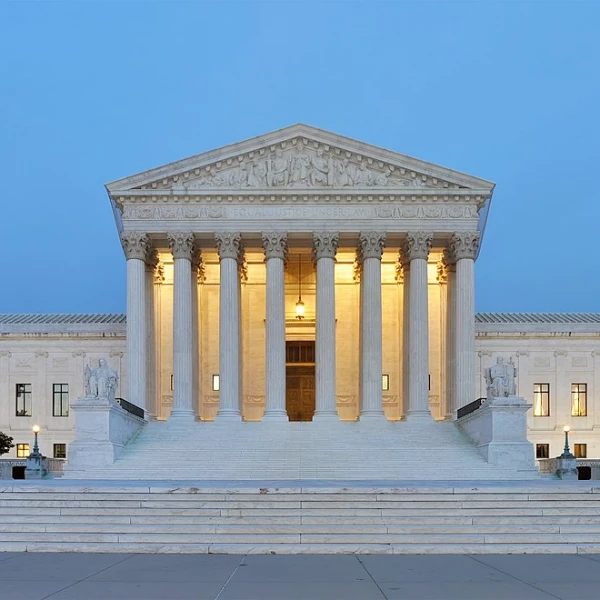
Will SCOTUS bar counting mail ballots after Election Day?
Short Answer
1. Market Behavior & Drivers
- SCOTUS decision expected by late June or early July 2026.
- RNC argues federal law mandates mail ballot receipt by Election Day.
- March 2026 oral arguments signal a likely ban on grace periods.
- Many states' mail ballot grace periods face significant SCOTUS risk.
- Late-arriving mail ballots in 2020 and 2022 showed a Democratic lean.
- Market expectation for a SCOTUS ban surged on May 27, 2026.
Current Context
Sources (7)
- 1Justices seem ready to overturn state law allowing for late-arriving mail-in ballots | SCOTUSblogscotusblog.com
- 2Can mail-in ballots be counted after election day? - Harvard Law School | Harvard Law Schoolhls.harvard.edu
- 3What could the Supreme Court’s decision in Watson v. RNC mean for mail voting? • Bipartisan Policy Centerbipartisanpolicy.org
- 4Blog | Mail-In Ballot Grace Periods in Hands of SCOTUS in Mississippi Case Watson v. RNC - Law Forwardlawforward.org
- 5Supreme Court appears skeptical of laws counting mail-in ballots after Election Day | WHQRwhqr.org
- 6Supreme Court Arguments Involved Misleading Claims About Mail Ballots | Brennan Center for Justicebrennancenter.org
- 7Supreme Court skeptical of allowing states to count mail ballots that arrive after Election Day | Cascadia Daily Newscascadiadaily.com
2. Price Chart
Historical Price (Probability)
3. Significant Price Movements
Notable price changes detected in the chart, along with research into what caused each movement.
📈 May 27, 2026: 10.0pp spike
Price increased from 67.0% to 77.0%
Outcome: Before August 2026
4. Market Data
Contract Snapshot
The market resolves to YES if the Supreme Court, in Watson v. Republican National Committee, rules before August 1, 2026, that federal election-day statutes preempt state laws allowing post-election day receipt and counting of mail ballots cast by Election Day. Conversely, the market resolves to NO if this specific ruling does not occur by August 1, 2026, when the market closes. The outcome will be verified from the Supreme Court, and insider trading is prohibited.
Market Discussion
Traders are debating the likelihood of the Supreme Court prohibiting states from counting mail ballots received after Election Day, especially following recent oral arguments. Arguments for "Yes" emphasize signals from the conservative majority during the hearings, which strongly suggested they would bar such practices. Conversely, "No" arguments point to the absence of explicit federal laws prohibiting states from counting post-Election Day ballots, allowing states discretion, though a notable market jump towards "Yes" occurred after the oral arguments.
5. Which states' election laws for the November 2026 cycle are most exposed to a broad SCOTUS ruling against mail-in ballot grace periods?
| States/DC with grace periods | 14 states and the District of Columbia (as of May 2026) [1][2][3] |
|---|---|
| SCOTUS ruling expected | Late June or early July 2026 [4] |
| Probability of ruling against grace periods | ~70-75% [5][6] |
Sources (6)
- 1Many states count mail ballots that arrive after Election Day. Those grace periods could go away | Chattanooga Times Free Presstimesfreepress.com
- 2KUOW - Many states — including WA — count mail ballots that arrive after Election Day. Those grace periods could endkuow.org
- 3Supreme Court skeptical of allowing states to count mail ballots that arrive after Election Day • Statelinestateline.org
- 4Justices seem ready to overturn state law allowing for late-arriving mail-in ballots | SCOTUSblogscotusblog.com
- 5Will SCOTUS bar counting mail ballots after election day?lines.com
- 6SCOTUS bars counting mail ballots after election day? Pre... 2026 | Polymarketpolymarket.com
6. What legal precedents and historical election practices support Mississippi's defense of its five-day mail ballot grace period?
| Mississippi Mail Ballot Grace Period | Five days [1][2][3] |
|---|---|
| States with Mail Ballot Grace Periods (as of 2026) | 30 states (plus DC and three U.S. territories) [4][5] |
| Mississippi's 'Election Day' Argument | Day ballots are cast, not received [1][2][3] |
Sources (5)
- 1Can mail-in ballots be counted after election day? - Harvard Law School | Harvard Law Schoolhls.harvard.edu
- 2The Supreme Court tackles the fate of late mail-in ballots | Constitution Centerconstitutioncenter.org
- 3Myths Around Election Day Deadlines: What the Civil War Teaches Us About Absentee Voting | Constitutional Accountability Centertheusconstitution.org
- 4Supreme Court Arguments Involved Misleading Claims About Mail Ballots | Brennan Center for Justicebrennancenter.org
- 5Table 11: Receipt and Postmark Deadlines for Absentee/Mail Ballotsncsl.org
7. How do the Republican National Committee's arguments against grace periods compare with the Solicitor General's arguments in *Watson v. RNC*?
| RNC's core argument | Federal statutes establish national deadline for ballots to be received by Election Day [1][2] |
|---|---|
| RNC's case focus | Preemption of state laws allowing grace periods in Watson v. RNC [1][3] |
| Solicitor General's role | Weighed in on interpretation of federal election statutes as amicus curiae [4][3] |
Sources (4)
- 1Blog | Mail-In Ballot Grace Periods in Hands of SCOTUS in Mississippi Case Watson v. RNC - Law Forwardlawforward.org
- 2What could the Supreme Court’s decision in Watson v. RNC mean for mail voting? • Bipartisan Policy Centerbipartisanpolicy.org
- 3Extended Absentee Ballot Receipt Deadlines: Watson v RNC | U.S. Vote Foundationusvotefoundation.org
- 4Watson v. Republican National Committee (Election Law) (24-1260) | SCOTUSblogscotusblog.com
8. What data exists on the volume and partisan lean of late-arriving mail ballots counted in key swing states during the 2020 and 2022 elections?
| 2020 Mail-in Ballot Shift | Favored Democratic candidates ("blue shift") [1][2] |
|---|---|
| Late Ballot Volume Data | No definitive universal figure across all swing states [3] |
| SCOTUS Challenge Impact | Could affect 14 states and D.C. regarding mail-in ballot receipt deadlines [4][3] |
Sources (5)
- 1THE BLUE SHIFT IN THE 2020 ELECTIONelectionlab.mit.edu
- 2How Policy Influenced the Partisan Divide over Voting by Mail | Elections Performance Indexelections-blog.mit.edu
- 3Supreme Court skeptical of allowing states to count mail ballots that arrive after Election Day • Statelinestateline.org
- 4Justices seem ready to overturn state law allowing for late-arriving mail-in ballots | SCOTUSblogscotusblog.com
- 5Measuring lost votes by mail - PMCpmc.ncbi.nlm.nih.gov
9. What core legal arguments from the March 2026 oral arguments in *Watson v. RNC* signal a forthcoming ban on mail ballot grace periods?
| Case & Oral Argument Date | Watson v. RNC (March 2026) [1][2][3][4][5] |
|---|---|
| RNC Legal Stance | Federal law requires ballot receipt by Election Day [1][2][3][4] |
| State Grace Period Duration | Up to five days after Election Day [1][6][2][7][3] |
Sources (7)
- 1LIVE BLOG: Supreme Court hears GOP case that could decimate mail-in voting - Democracy Docketdemocracydocket.com
- 2Watson v. Republican National Committee | Supreme Court Bulletin | US Law | LII / Legal Information Institutelaw.cornell.edu
- 3Supreme Court Likely to Divide Closely in Watson over Whether States May Count Ballots Received after Election Day in Federal Elections; Key Justices Don't Tip Hands - Election Law Blogelectionlawblog.org
- 4Watson v. Republican National Committee | Constitutional Accountability Centertheusconstitution.org
- 5Watson v RNC: The Supreme Court's Conspiracy-Brained Justices Are Ready to Limit Mail-In Voting | Balls and Strikesballsandstrikes.org
- 6The Supreme Court tackles the fate of late mail-in ballots | Constitution Centerconstitutioncenter.org
- 7What could the Supreme Court’s decision in Watson v. RNC mean for mail voting? • Bipartisan Policy Centerbipartisanpolicy.org
10. What Could Change the Odds
Key Catalysts
Key Dates & Catalysts
- Expiration: August 01, 2026
- Closes: August 01, 2026
