
Episode summary
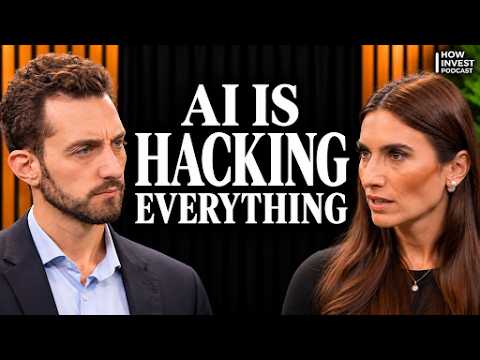
Cybersecurity CEO on AI Agents Gone Rogue, the Next Cybersecurity Crisis, and the AI Arms Race
 How I Invest With David Weisburd
· · Hosts: David Weisburd · Guests: Sanaz Yashar
Summary
AI is changing cybersecurity from a slower, human-led patching game into a fast, agentic contest over attack chains. Sanaz Yashar argues that AI scanners now find zero-days every day, exploit kits can appear before fixes, and the old model of scanning, ticketing, and patching is too slow for threats that move faster than human response.
Her core claim is that defenders need to shift from vulnerability management to prevention. Rather than trying to fix everything, companies should use AI to map attack paths, identify the single node that collapses a chain, and automate remediation where possible. She says many firms still do not trust autonomous security enough to let it act without a human gatekeeper, even though the economics of the AI arms race are pushing them there.
Yashar also argues that the next major cyber crisis is likely to come from AI-weaponized actors or AI agents, possibly from smaller states or even lone actors, and that the world may only fully react after a major collateral event. In the meantime, she says the practical response is visibility, prevention, and coalition-building across security teams, vendors, insurers, and governments.
Key takeaways
- Sanaz Yashar says AI has compressed the zero-day cycle so much that exploit kits can exist before a fix is released.
- She argues that cybersecurity has to move from patching vulnerabilities to preventing attack paths and collapsing chains.
- Yashar says many companies still do not trust autonomous security enough, even though human-in-the-loop operations are too slow and expensive.
- She expects a major cyber incident caused by AI-weaponized threat actors or AI agents, but says the timing could be months or years away.
- Yashar says existing tools can often mitigate up to 90% of vulnerabilities, but the remaining 10% is where attack chains become dangerous.
Notable quotes
“Today AI scanners finding zero days every day and there is like exploit kit like that weaponized vulnerability is existing before the fix comes out right it's because of the AI”
“I think the time of patch and scan all of it is completely over. Um it's about time that you do it surgical and you do it like very smart”
“I think it's going to get much worse before it gets better. I cannot put a timeline timeline on that right”
Topics
- ai-driven cyberattacks
- ai security limitations
- zero-day vulnerabilities
- ai agents for cybersecurity prevention
- nation-state cyber warfare
Companies and tickers mentioned
- Zafran Security
- Anthropic
- FireEye
Watch the episode
Summary, takeaways and quote selection by Octagon. Quotes are short excerpts; the full conversation is in the episode.
More from How I Invest With David Weisburd
-
 Baylor Endowment on Rethinking Venture Capital, Concentrated Portfolios, and Power of Compounding
-
 Hunter Walk: Why Venture is Getting Harder, Picking Great Founders, and Investing Against Consensus
-
 True Anomaly’s Even Rogers on Space Warfare, China’s Military Advantage, and the Defense Tech Boom
-
 Finding the Next Anthropic, Quantifying Venture Capital, and the Science of Picking Winners
-
 Why 95% of AI Projects Fail, Anthropic still at $2T?, and Why AI Is Still in the First Inning
-
 Peter Thiel's 27-Year Partner on the AI Bubble, the Venture Capital Crisis, and the PayPal Mafia
How I Invest With David Weisburd, this episode and its artwork belong to David Weisburd. Octagon is not affiliated with the show; this page is an independent summary.
