

Podcast summaries
How I Invest With David Weisburd
About these summaries
Octagon has summarized 186 episodes of How I Invest With David Weisburd published between Jan 2, 2026 and Nov 11, 2026. The companies discussed most often are AlphaSense, Anthropic and OpenAI. Frequent guests include Ron Biscardi, Deepak Sindwani and Scott Voss. Each summary lists key takeaways, short timestamped quotes and the companies and tickers mentioned, with a link to the full episode.
Most-mentioned tickers
- GS 7
- META 4
- COIN 3
- DKNG 3
- HOOD 3
- MS 3
- AMZN 2
- ARES 2
- BAC 2
- CG 2
- JEF 2
- JPM 2
- PLTR 2
Most-mentioned companies
- AlphaSense 66
- Anthropic 26
- OpenAI 25
- SpaceX 18
- Juniper Square 15
- Andreessen Horowitz 6
- Anduril 4
- Bain Capital Ventures 4
- Goldman Sachs 4
- J.P. Morgan 4
- Meta 4
- Robinhood 4
- AngelList 3
- Cambridge Associates 3
- Coinbase 3
Frequent guests
- Ron Biscardi 3
- Deepak Sindwani 2
- Scott Voss 2
Episodes
- True Anomaly’s Even Rogers on Space Warfare, China’s Military Advantage, and the Defense Tech Boom
Even Rogers argues that space has become a real warfighting domain, not a futuristic abstraction, and that China has built a meaningful lead by investing in space weapons and…
- Finding the Next Anthropic, Quantifying Venture Capital, and the Science of Picking Winners
Jerry Ye argues that venture capital is becoming more measurable by combining talent signals, alternative data, and CRM records into a single operating system.
- Why 95% of AI Projects Fail, Anthropic still at $2T?, and Why AI Is Still in the First Inning
Joseph Coyne argues that enterprise AI is still early because most companies have not yet built the data infrastructure, security, and operating habits required to make it work.
- Peter Thiel's 27-Year Partner on the AI Bubble, the Venture Capital Crisis, and the PayPal Mafia
Jack Selby argues that venture capital has become structurally distorted: too much money chased too few late-stage AI deals, while too little capital reaches the rest of the…
- Why Venture Is Eating Public Markets, Picking Great VCs, and the AI Boom w/Brijesh Jeevarathnam
Brijesh Jeevarathnam argues that venture capital is still a business of information asymmetry, but the market has become far more crowded and segmented.
- Federated Hermes CEO on $400 Billion in Cash, the Private Markets Boom, and AI
Christopher Donahue argues that cash is not a dead asset but a source of financial flexibility: it keeps investors from being forced sellers, lets them meet obligations, and…
- Gavin Ezekowitz on AI Valuations, Asymmetric Returns, and Why Great Investors Fail
Gavin Ezekowitz argues that in early, long-duration technology cycles, investors should not assume the first apparent winner will dominate.
- Anthropic at $2 Trillion? The AI Bubble, and Why the Best Startups Always Look Overvalued
Matthew Harris argues that AI investing is moving from a broad boom into a consensus market, where a few “anointed” winners attract most of the capital and everyone pays up for…
- David Breach on AI Agents, the Future of SaaS, and the $3 Trillion Opportunity
David A. Breach argues that AI is not making enterprise software uninvestable; it is creating a new phase of software value creation.
- The Next Anthropic, Sequoia’s Edge, and the New Rules of Venture
Erik Syvertsen argues that venture capital behaves less like a single asset class and more like two: seed investing, where the main challenge is getting into the right rounds…
- $2 Trillion Investor on AI Portfolio Risk, Finding Top Funds, and Preparing for a Downturn
Tim McCusker argues that advising on nearly $2 trillion matters less for scale than for perspective: NEPC sees how different missions, spending needs, and governance structures…
- Leo Polovets on the End of Software, the AI Infrastructure Boom, and Humanoid Robots
Leo Polovets argues that AI is making software abundant, which shifts venture opportunity toward physical industries where incumbents are still slow, fragmented, and…
- Nelson Mills on Building a $100 Billion Company, Autonomous Weapons, and the Future of Defense
Nelson Mills argues that undersea autonomy has finally reached an inflection point because AI, navigation, communications, and manufacturing have improved enough to make…
- John Borthwick on AI Agents, the Death of Apps, and the Future of Software
John Borthwick argues that AI is making the founder more important, not less, because the cost of building technology is falling toward zero and the job is shifting from coding…
- Steven Rosenblatt on Steve Jobs, Great Founders, and the AI Revolution
Steven Rosenblatt argues that the best founders are not just visionary storytellers but people with unusually deep conviction, granular detail, and the ability to attract…
- Ethan Thornton: The 22-Year-Old Building a $3.7 Billion Defense Company
Ethan Thornton says Mach Industries was built around a single mandate: develop asymmetric technology that helps the U.S. and its allies punch above their weight class.
- Will Robbins on Elon Musk, AI & the Future of Silicon Valley
Will Robbins argues that AI is changing the economics of company formation so dramatically that venture capital is being forced to rethink how it sizes seed rounds, how it…
- Doug Beyer on Raising Capital, LP Psychology & GP Stakes
Douglas Beyer argues that the biggest gap in private markets is not a lack of capital for established franchises, but a shortage of flexible capital for emerging managers.
- Nnamdi Okike on Billionaires, Founder Psychology & the Venture Capital Bubble
Nnamdi Okike argues that venture capital is less about mystical instinct and more about a repeatable process built from experience, founder analysis, and market timing.
- Why AI Will Destroy Traditional Business Moats
SC Moatti argues that AI is changing which competitive moats matter, and that many traditional SaaS advantages are weakening.
- How AI is Changing the Private & Public Markets
Warren Gibbon argues investors should re-underwrite the case for private markets rather than assume they will keep outperforming public equities.
- AlphaSense’s Chris Ackerson on AI, Wall Street & the Future of Finance
Chris Ackerson argues that AI is not eliminating finance jobs so much as changing where human effort goes.
- $24 Billion Investor on Private Credit, Market Bubbles & Generating Alpha
Theodore L. Koenig argues that private credit grew because banks became too constrained, especially after the financial crisis pushed leveraged lending out of the regulated…
- Silicon Valley Founder on AI, Trillion Dollar Startups & Founder Psychology
Marty Kausas argues that Pylon was started less from a mission to “change the world” than from a genuine love of building.
- Goldman Sachs’ Michael Bruun on AI, Private Equity & The War for Talent
Michael Bruun argues that private equity is being reshaped less by technology itself than by the people who can deploy it.
- Dr. V on AI, Market Bubbles & Finding the Next Anthropic
Vaibhav Agrawal argues that venture capital is being reshaped by the scale of private markets, the speed of AI change, and a much more active liquidity environment.
- Michael Green on Peter Thiel, SpaceX, and Inefficient Markets
Michael Green argues that markets are driven less by fundamentals than by transactions and flows, and that passive investing is not passive at all because index funds must trade…
- $242B Investor on AI, Market Bubbles & How the Best Investors Build Portfolios
Peter Hecht argues that the right way to think about portfolio construction is through underlying risk, not the number of holdings.
- $23B Investor on Warren Buffett, Compounding & Playing the Long Game
Michael Fisch traces American Securities from a $71.4 million first fund in 1994 to $23 billion in AUM by staying focused on U.S. industrial and related services businesses.
- What 30,000 Founder Meetings Taught Me About AI, Judgment & the Top 0.1%
Byron Ling argues that at the seed stage, pedigree matters far less than traits that are hard to fake: a chip on the shoulder, second-level thinking, clear communication…
- Notre Dame’s Former CIO on Sequoia, Venture Capital & Concentration
Scott Malpass argues that the best investment outcomes start with alignment: between the institution, its board, and the investment team, and between a manager’s incentives and…
- Defense CEO on Elon Musk, Hypersonic Missiles & the Future of Defense
Bryon Hargis argues that U.S. defense is increasingly a manufacturing problem, not just a technology problem.
- Founding CIO of Berkeley Endowment on Track Records, Contrarian Investing & First-Time Funds
John-Austin Saviano argues that most GPs overrate track record and underrate what institutional LPs actually need to see: the investment process, the decision makers, and whether…
- $11B Investor on Risk, Relationships & Compounding
Jack Purcell argues that Ridgemont Equity Partners is built less on deal selection than on incentive design.
- $31B Investor on AI Infrastructure, Private Equity, and Secondaries
Stuart Waugh argues that the biggest AI opportunity is not in AI companies themselves but in the infrastructure that makes AI possible: power generation, transmission, data…
- Ben Black on Why Venture Capital Is Broken, the Rise of Secondaries, and Taking VC Public
Benjamin Black argues that venture capital has outgrown the old model of a 10-year blind pool fund.
- Standard Metrics CEO on AI, Venture Capital & the Future of Investing
AI is already changing how venture firms work across the full investing cycle, from sourcing and diligence to portfolio management and back-office operations.
- $20B Investor on Risk, Uncertainty & Adaptability
Alec Litowitz argues that the real edge in investing comes from distinguishing risk, where probabilities can be modeled, from uncertainty, where no reliable model exists yet.
- Why the World’s Biggest Investors Are All Investing in Data Centers
Joel Holsinger argues that the biggest edge in private credit and asset-based finance is scale.
- Why Every VC Is Suddenly Investing in Defense
Defense has become a mainstream venture theme because macro conflict is rising, government budgets are huge, and a few breakout companies proved the sector could produce…
- Why Reputation Matters More Than Fund Returns
Lex Suvanto argues that AI is making media the first layer of diligence for LPs and wealth allocators, because large language models surface third-party validated sources before…
- This VC Firm Is Being Run by AI Agents
Footwork has rebuilt its venture process around AI agents rather than layering AI onto existing workflows.
- AI Will Create a New Generation of Investment Firms
Thomas Scriven argues that AI will reshape investment firms less as a software upgrade than as an organizational redesign.
- Why Most Venture Capital Firms Aren't Built for AI
Andre Retterath argues that venture capital can be automated in the right places, but not replaced in the parts that require judgment.
- $3.6B Investor on Relationships, Contrarian Bets & Compounding
Rick Heitzmann argues that venture outcomes are built less on brand or capital than on compounding relationships, especially in a dense market like New York.
- Why the Best Investors Ignore Silicon Valley
Jason Koenig argues that the best opportunities are often hidden in plain sight, especially in overlooked industrial businesses far from Silicon Valley and New York.
- Why Venture Capital Is Chasing Trillion-Dollar Companies
Scott Voss argues that venture capital is a power-law business where a tiny set of outliers drive almost all returns, so investors have to accept losses as the cost of backing…
- Why Only a Handful of Venture Firms Will Win
Aram Verdian argues venture capital has become a winner-take-all market because returns are extremely concentrated.
- Why AI Won't Transform Most Enterprises for 10 Years
Sushanth Raman argues that AI will not transform most Fortune 500 companies overnight because enterprise adoption is constrained by organizational change, legacy infrastructure…
- Why AI Has Made Venture Capital Harder (Not Easier)
Michael Gilroy argues that AI has made venture capital harder because it has lowered the barriers to starting companies while flooding every trend with more founders, more…
- Why This Billionaire Family Office Doesn't Rebalance Its Portfolio
Scott Abookire argues that taxable investors are often measuring the wrong thing when they focus on pre-tax performance instead of what ultimately compounds after taxes.
- Why the Best-Performing Funds Stay Small
Stephen Ketchum argues that excess capital hurts investment performance because it pushes managers to force marginal ideas into portfolios.
- Who Will Actually Make Money From AI?
Lucas Swisher argues that the biggest AI winners will not be found by betting on a single model or a single application, but by understanding where durable advantages compound…
- The Biggest Lesson From Interviewing $10 Trillion of Investors
The host argues that the real compounding force in finance is not capital but relationships, reputation, access to information, and proximity to excellence.
- Why 95% of Outcomes Come From 5% of Inputs
Anthony Pompliano argues that the biggest investing edge comes from recognizing that outcomes follow power laws: a very small number of ideas, companies, and people drive most of…
- How to Find the Next $1 Trillion Startup Before Anyone Else
General Catalyst’s seed strategy is built on the idea that the earliest investments reveal the next major market themes, deepen founder relationships, and can still generate the…
- $1 Trillion Investor on the Future of Venture Capital
Miguel Luina argues that venture and growth have become too large a part of private markets to ignore: they now represent 31% of private markets, so skipping the asset class is…
- Why the Best Venture Capital Funds Stay Small
Elizabeth Weil argues that venture capital works best as a network business, not a scale business.
- The Future of Compute, Data Centers, and AI
Kush Bavaria argues that AI compute is becoming a national strategic commodity, comparable to oil or electricity, and says it needs a liquid market that can let buyers hedge…
- Russ d'Sa on AI, Jobs, and the Future of Work
Russ D’Sa argues that voice AI is becoming a major computer interface because it is faster, more natural, and now good enough to handle real work.
- What Separates the Top 1% of Allocators
The guest argues that the best allocators are defined less by raw intelligence than by a persistent desire to learn, humility, and the ability to keep updating beliefs when new…
- How Top LPs Pick Venture Funds
Jamie Rhode argues that venture LPs often make emerging managers look interchangeable by screening them through the same templates: prior firm, network, thesis, track record, and…
- What the Best Investors Actually Optimize For
The conversation argues that the best investors optimize less for raw IQ or near-term fees and more for learning speed, humility, and relationships.
- Jason Pritzker on Family Offices, Venture Capital, and Long-Term Investing
Jason Pritzker argues that the Pritzker family’s edge has always been less about finding the perfect deal and more about choosing the right partners, then holding businesses long…
- $17 Billion Family Office on Alternative Assets, Taxes, and Private Markets
Ron Albahary argues that managing wealthy taxable clients is less about finding heroic investments and more about controlling behavior, taxes, and decision quality.
- Ron Rofé on AI, Founder Obsession, and Venture Returns
Ron Rofé argues that venture returns come from backing exceptional founders, not from chasing whatever sector is most crowded.
- $6 Billion Investor on Data Centers, AI & the Next Trillion-Dollar Companies
Rob Stephens argues that power, not capital, is becoming the key constraint in AI and technology, which is pushing investors to blur the old boundaries between venture capital…
- The Future of Investing: AI, Expert Networks, and Access to Information
Matt Wells argues that investors are no longer constrained by a lack of information; they are constrained by the difficulty of turning overwhelming data into conviction.
- Billion-Dollar PE Firm on Complexity, Alpha, and Corporate Carve-Outs
Josh Adams says OpenGate Capital has built its edge by leaning into complex, unloved, multi-jurisdictional businesses, especially corporate carve-outs and orphaned assets.
- $70 Billion LP on Venture Capital, Compounding, and Manager Selection
Jeff Diehl argues that venture investing is mostly about access and patience, not prediction.
- What a $1.3 Trillion Investor Thinks About SpaceX, OpenAI & Anthropic
Matt Witheiler argues that a wave of giant private companies, especially SpaceX, OpenAI, and Anthropic, could reopen the IPO window and restore growth to public markets.
- CEO of Commonfund on Venture Capital, Power Laws & the Future of IPOs
Mark Anson argues that venture capital is less about buying access with the biggest check and more about earning access through trust, responsiveness, and knowledge-sharing.
- Blumberg Capital's David Blumberg on AI Agents, Venture Capital, and the Next Fortune 500 Companies
David Blumberg argues that agentic AI is still in the first inning, but it will reshape how white-collar work gets done by automating repetitive tasks like logging in, security…
- $3.3 Billion Investor on Private Markets, Liquidity, and the Next IPO Boom
Ravi Viswanathan argues that venture capital has changed structurally because companies stay private much longer while fund lives have not changed.
- A16Z's Partner on Real Estate, Taxes, and Building Wealth
Jeff Bramel argues that real estate and broader real assets are compelling for wealthy and taxable investors because they can provide diversification, cash flow, and structural…
- How Billionaire Family Offices Actually Invest
Eric Becker argues that the biggest gap in traditional wealth management is not access to investments, but the lack of an integrated platform for founders before and after a…
- Why the Best Fund Managers Rarely Raise More Capital
Luke Sarsfield argues that Ridgepost Capital’s model is built around alignment more than asset gathering: the firm takes all of the management-fee stream but leaves most carried…
- Why LPs Keep Selling Their Highest-Quality Funds
Ryan Levitt argues that LP secondaries have historically outperformed traditional buyouts while carrying less downside risk because the worst secondary outcomes are still often…
- Midas List VC: Why Most VCs Miss the Biggest Companies
Niko Bonatsos argues that the biggest venture profits are made before a category is named, when only the earliest founders and first investors can capture the upside.
- The $3 Trillion Liquidity Problem in Venture Capital
Jared Carmel says venture capital is now dealing with a liquidity problem rather than a funding problem: roughly $2.7 trillion is locked in venture funds past their 10-year life…
- Why Tax Alpha Beats Stock Picking
Tax-aware investing is becoming more important because investors are sitting on gains and looking for ways to reduce friction without changing their long-term objectives.
- Why Smart Investors Fear Liquidity Crises
Doug Hanly argues that liquidity is not idle cash but the portfolio’s “supply depots,” giving the Louisiana State Police Retirement System stability and the ability to buy when…
- Beautifully Inefficient Markets: Where Real Alpha Still Lives | Raphael Schorr
Raphael Schorr argues that the best opportunities are in markets that are inefficient but still durable enough to support repeatable alpha.
- Why the Best VC Investments Look Wrong Early
Maya Bakhai argues that the best venture outcomes usually look wrong at first because they are built before a category becomes obvious.
- Midas List VC: Why Anthropic Has a Secret Moat
Hans Tung says he chose Anthropic over OpenAI because he saw a stronger feedback loop, especially in the developer ecosystem around Claude.
- What Taxable Investors Still Get Wrong About Capital Markets
Shang Chou argues that tax alpha matters because investors ultimately spend after-tax dollars, while most portfolio construction still optimizes for pre-tax returns.
- Where’s the Alpha In Venture Capital in 2026?
Ryan Moore explains why he shifted from primary venture investing to secondaries after more than two decades: seed liquidity can now take 15 to 20 years, and he sees secondary…
- Sovereign 2.0: How Mubadala Capital Is Reinventing the $430B Playbook
Oscar Fahlgren argues that Mubadala Capital’s edge comes from doing large, complex deals that many competitors avoid.
- The Family Office Betting on Humanity’s Future
L.R. Fox argues that capital should be used to shape the future immediately, not parked until later for philanthropy.
- How She Got Peter Thiel to Anchor Her First Fund (Without Pitching Him)
Keri Findley described Tacora Capital as a credit strategy built around illiquidity rather than conventional risk.
- Stanford GSB Professor on the Incentives that Drive VC Managers
The episode argues that venture and private equity outcomes are driven less by headline fees than by the incentives embedded in fund terms and governance.
- The Next $50 Trillion Market in AI
Daniel Jacker argues that the next major AI wave is not just digital intelligence, but the missing data layer for the physical world.
- $90B Limited Partner on Why Venture Capital is Changing
Nolan Bean says venture capital should be treated as an access class, not a broad asset class: the real edge comes from getting into the right managers, not simply owning more…
- How Capital One Beat The Banks | Nigel Morris
Nigel Morris traces Capital One back to a contrarian bet: he and Rich Fairbank believed credit cards could be built with an information-based strategy, even when big banks…
- Why Venture Capital is Changing for Good
Ian Sigalow argues that venture capital is not a broad asset class but a form of manager selection, where a small number of firms consistently get access to the few companies…
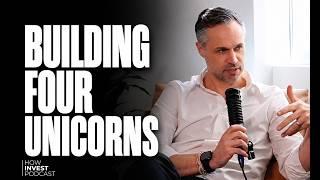
- The Hardest Lessons I Learned Building 4 Unicorns
Errik Anderson argues that the real breakthrough in biotech is not simply more capital, but better infrastructure for innovation.
- What Charlie Munger Taught Me About Venture Capital
Jamie Montgomery argues that venture capital is less about squeezing price and more about choosing the right long-term partner.
- The Woman Behind the World's Top GP Brands | Jen Prosek
Jennifer Prosek argues that branding in financial services has moved from irrelevant to essential.
- CalSTRS CIO: Where Do You Invest $390 Billion Today?
CalSTRS is positioning a $390 billion portfolio for a world shaped by AI, deglobalization, defense spending, and the energy transition.
- Why Co-Investments Are Taking Over Private Equity
Co-investments are being driven by a larger private equity market, slower blind-pool fundraising, slower distributions, and bigger deal sizes that force GPs to look for capital…
- Building a $6.5 Billion Real Estate Empire
Darren Fisk says Forum Investment Group’s biggest edge came from acting during the 2008 financial crisis with discipline rather than panic.
- Why Most VCs Misunderstand Peter Thiel’s Power Law
Eric Scott argues that venture capital works better as disciplined investing than as a hunt for mythical unicorns.
- Why Biotech Is Struggling in Today’s Market (and the Future of Healthcare)
David Berry argues that biotech returns are structurally getting worse even as science keeps advancing.
- JD Vance’s Co-Founder on Space Defense, Hard Tech, and Solving Hard Problems
Colin Greenspon argues that the best venture outcomes come from being first-principles driven, mission-driven, and deliberately non-mimetic.
- Andreessen Horowitz’s Family Office on Why Traditional Wealth Managers are Conflicted
Michel Del Buono argues that wealth management and investment management are not the same business: the former often rewards relationships and asset gathering, while the latter…
- How Family Offices Quietly Build Generational Wealth
Terence Thompson argues that a single-family office has an edge because it can concentrate attention on one capital base, avoid co-mingled liquidity conflicts, and run a more…
- Built to Scale: The J.P. Morgan Growth Playbook
Paris Heymann argues that J.P. Morgan’s edge in venture and growth investing is not just capital, but a platform built around its scale as a buyer of technology.
- Why “Boring” Private Equity Beats Venture Capital
Monty Yort argued that private equity outperformance comes less from finding a one-off star deal than from repeating a disciplined playbook better over time.
- Why this $26B CIO Outperforms His Peers
Mark Steed argues that super forecasting is not a side tool at AZ Public Safety Personnel Retirement System, but the operating system for investing $26 billion.
- $7 Billion CIO: Why the Endowment Model is Changing
Karen Welch says the core lesson from Stanford’s endowment is that investing is fundamentally about people: internal team quality, external manager relationships, and the…
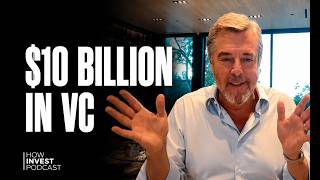
- How I Raised $10 Billion in Venture Capital
Scott Painter says the $270 million take-private of TrueCar was the hardest capital raise of his career because it combined fundraising with defending a turnaround, explaining…
- What Billionaires are Investing into Today (April 2026)
Douglas Evans argues that ultra-high-net-worth families should invest more like institutions: with long horizons, tolerance for illiquidity, and a framework built around…
- The Death of the 60/40 Portfolio (And What Comes Next)
Chaya Slain argues that the real gap for affluent families is not access to standard public-market products, but the ability to source, diligence, and structure private and…
- Why Venture Secondaries are Changing the Venture Landscape
Jamie Melzer argues that venture secondaries became unusually attractive in 2022 and 2023 because interest rates jumped from near zero to 5 plus% while private-market valuations…
- Why VC is Changing Forever ($150 Billion LP)
Scott Voss argues that venture and private markets are being reshaped by scale, structure, and timing more than by any single hot theme.
- Why Family Offices Should Avoid 60/40 Portfolios
Damien Bisserier argues that the best portfolio for ultra-high-net-worth families is built for consistency, not for a single big bet on US stocks.
- How Legora Became the Fastest Growing Enterprise Company Ever
David Eckstein says Legora has reached $100 million in revenue in 18 months by focusing on a narrow wedge in legal workflows and using AI to expand the market rather than just…
- How I Invest $9 Billion into VC & Private Equity
Christopher Vogt argues that AI is both a material risk and a major opportunity across portfolios.
- We’re Already Inside the Singularity | Dr. Alex Wissner-Gross
Alex Wissner-Gross argues that the technological singularity is not ahead of us as a single event but already underway, with AGI plausibly present by the summer of 2020 and…
- The Private Equity Firm of 2030 (What it Looks Like)
Private equity is shifting from a mostly fund-raising and product distribution business toward a more technology-enabled performance business, but Sam Tidswell-Norrish argues…
- Why Family Offices Are Replacing Venture Capital
Shane Neman argues that family offices are increasingly well positioned to compete with venture capital because they can invest personal capital, move faster, and offer founders…
- Texas Tech CIO: How We Find Asymmetric Bets
Tim Barrett argues that the best opportunities often sit just below the headline fear, which is why Texas Tech is willing to look at office assets even as most investors are…
- Why a $19B Allocator Is Betting on Lower Middle Market Buyouts
Alex Abell argues that lower middle market buyouts have a structural edge over large private equity funds because the opportunity set is fragmented, less crowded, and still large…
- Why Family Offices Must Go Risk-On or Go Broke
Nathan Cooper argues that family offices only survive across generations if they stop treating capital as something to preserve passively and instead concentrate risk where they…
- The Biggest Mistake Fund Managers Make
Ron Biscardi argues that capital is not scarce; what is scarce is investor conviction, which takes time to build because LPs need to know the people, the process, and the…
- EuropeanKid: The $32B Future of Influencer Marketing
Aris Yeager argues that influencer marketing is shifting away from expensive celebrity posts and toward activating hundreds or thousands of nano and micro creators who already…
- How Oaktree Is Positioning $223 Billion for a Credit Cycle Shift
Danielle Poli says Oaktree’s Global Credit strategy is built to give clients one-stop access to the firm’s credit platform, with a diversified mix of core income and…
- The #1 Reason LPs Reject Funds Before Looking at Track Record
Jorge Felippe says Almulla rejects many funds before track record because alignment, governance, and growth discipline matter first.
- $7B CIO: The Right Way to Invest in Emerging Markets
Robert Koenigsberger argues that emerging markets are not inherently a trap; investors fail because they approach the asset class passively, late, and with too little conviction.
- What Happens When AI Replaces Investment Analysts?
Chaz Englander argues that Model ML was born from a family office need: consolidating messy investment updates, reporting, and monitoring across many formats into something usable.
- Inside the $100B Continuation Vehicle Boom
Single asset continuation vehicles are presented as a private equity structure built around the companies sponsors already know best.
- How The University of Cambridge Built Their Privates Portfolio
Sam Sturge said Cambridge rebuilt its private equity program around a simple mission: preserve and grow the endowment for centuries, with a 4% distribution rate and a target…
- How Billionaires Build Their Portfolios
Jonathan Dane argues that family-office advice breaks down when large banks mix custody, products, and recommendations under one roof.
- How $70 Billion Actually Gets Deployed in Private Markets
Jennifer Mink says IPS, with roughly $70 billion in assets under advisement, tries to improve portfolio outcomes by combining public and private assets in ways that lower total…
- Why Most LPs Have No Idea What’s in Their Portfolio
Arch supports about 550 clients and says it has $405 billion in assets on the platform, positioning itself as an operating system for private markets rather than a simple…
- Where to Find Alpha in the Private Markets
Jeff Collins argues that Cloverlay’s edge comes from pursuing “uncorrelated private assets” in corners of the market where dispersion of returns is wide and selection matters…
- Why Investors Are Buying Stakes in Investment Firms Themselves
GP stakes are minority equity investments in the operating businesses of alternative asset managers, not in the funds themselves.
- The Biggest Mistake Investors Make When Building a Venture Portfolio
Michael P. Larsen argues that longevity is a real edge in venture and private markets because it gives LPs patience, perspective, and enough “game film” to see which decisions…
- Why Family Offices are Focused on Tax Aware Strategies
Andrew Berman argues that private real estate can generate meaningful after-tax outperformance when it is structured for taxable investors rather than for generic pre-tax returns.
- How Family Offices Design Portfolios for 30-Year Outcomes
Zach Wainwright argues that the biggest edge in public markets is often not stock selection but how capital is structured, taxed, and held over time.
- Why ‘Quality Over Quantity’ Is Keeping You BROKE
Grant Cardone argues that success is built by multiplying effort, not refining in private.
- Why Most Private Equity Portfolios Are Built Wrong
Roger Vincent argues that portfolio construction is the most underrated driver of private equity returns, especially for endowments and other long-term allocators.
- Why the Endowment Model Doesn’t Work for Taxable Investors
Taxable private investors cannot simply copy the endowment model, because cash flows, taxes, liquidity needs, and family objectives change the portfolio construction problem.
- He Refuses to Back Founders Without This Trait (It’s Not IQ)
David Hornik argues that venture investing is built less on raw intelligence or aggression than on uncompromising ethics, trust, and long-term reputation.
- Why Private Equity Funds Won’t Sell Their Best Assets
Continuation vehicles are growing fast because they solve a basic mismatch in private equity: fund lives are often arbitrary, while the best assets may still have room to compound.
- What should LPs Do When There is No DPI?
The central argument is that private markets have entered a prolonged liquidity drought, and LPs need to stop assuming distributions will revert to historical norms.
- Why Most VCs Firms will Die by 2030
Camilo Acosta argues that AI is moving beyond copilots into agentic systems that combine prediction, judgment, and action, eventually replacing large parts of human workflows.
- Why LPs Should Borrow — Not Sell — Their Best Funds
Yuval Rooz argues that the real promise of tokenization is not speculative crypto exposure, but lower-friction market infrastructure for private and public assets.
- Why Size Is Breaking the Venture Capital Model
Glenn Solomon argues that venture capital has become a barbell market: roughly $350 billion went into venture rounds in 2025, but about $250 billion of that flowed into rounds…
- Can VCs Actually Pick Winners?
Eric Bahn argues that at the pre-seed stage, venture is mostly about observing execution velocity rather than trying to infer destiny from pedigree.
- Will Vertical AI Disrupt OpenAI, Anthropic, and Grok?
Nick Beim argues that the most compelling AI opportunities are increasingly in vertical applications, not broad horizontal platforms.
- Why “Low Risk” Portfolios Blow Up | Neuberger Berman CIO
Jeff Blazek argues that the right way to think about portfolio risk is not standard deviation but drawdown: how far an asset can fall, how long it can stay underwater, and…
- The Kelly Criterion and the One Rule That Keeps Investors Alive
Ari Levy frames his investing style around probability theory, risk control, and the Kelly Criterion rather than prediction.
- The Illiquidity Premium Is Dead
Larry Kochard argues that the core of durable endowment investing is not heroics in crises but preparation before them: clear governance, a disciplined investment policy…
- Why Generating Alpha is So Damn Hard
Alpha is framed as the opposite of the movie version of brilliance: it is usually hard, boring, and low-status work.
- How I Raised $100 Billion w/Rahul Moodgal
Rahul Moodgal says fundraising has become materially harder even after crossing $100 billion, because institutions are constrained by liquidity needs, portfolio resets, and macro…
- Why Institutional LPs Are Moving Into Lower Middle Market PE
Peter Elliot Rothschild argues that RF Investment Partners was built to solve a simple problem in the lower middle market: most firms arrive with a preset solution, while RF…
- How Family Offices Think About Illiquidity, Taxes, and Compounding
Jeffrey Fulk traces his path from golf professional to hedge funds, saying his break into finance came through a chance connection at Signet Capital Management.
- Why We Stay Small While Others Chase Bigger Funds
The guest argues that running an investment firm becomes far more time-consuming than people expect, because the operational load of managing teams, fundraising, and multiple…
- Advisory Boards & LPACs: A Complete Masterclass for GPs
Matt Curtolo argues that advisory structures only work when the GP defines the job first: LP advisory committees, boards of advisors, and independent advisors serve different…
- Former CIO of CalSTRS: The Decision That Took a Pension From $100B to $350B
Christopher J. Ailman argues that CalSTRS’ biggest performance driver was governance, not brilliance: the board delegated broad authority to staff, giving the investment team…
- Why AI Agents Will Quietly Replace 80% of Investment Teams
Ali Ansari argues that micro1 sits in the “human intelligence” layer of AI: it vets PhDs, professors, and industry experts to generate the new data frontier model labs need for…
- Why AI Is Still in the ‘Toy Phase’ (and What Breaks It Out) | Brian O'Malley
Brian O'Malley argues AI is starting to move beyond the early “toy phase,” but it still has a long way to go before people trust it with meaningful decisions and real dollars.
- Why Some Family Offices Quietly Outperform Institutions
Michael Phipps frames New Republic Partners as a conflict-minimized, open-architecture multifamily office built to give families institutional resources without…
- Inside GEM: How a $12.5 Billion Platform Selects Outlier Funds
Kate Simpson says GEM, a $12.5 billion platform founded in 2007, has expanded from a discretionary OCIO business into more targeted alternatives work, including venture investing.
- How the Former CalPERS CIO Built a High-Performance Investment Culture
Nicole T Musicco describes moving from Ontario Teachers’ Pension Plan to CalPERS as a chance to bring a Canadian-style governance model and total portfolio mindset to the largest…
- Incentives, Not Intuition: How VC Really Works
Brian O’Malley argues that consumer investing is still one of venture’s biggest opportunities because these startups solve everyday needs for millions of Americans, often with…
- How LPs Decide Who Gets Funded | Narayan Chowdhury
Narayan Chowdhury argues that venture today feels unusually untethered because the market is full of one-off extremes, from giant compensation packages to trillion-dollar…
- Private Credit Is Changing (Here's What's Next)
Rakesh Jain argues that private credit secondaries exist to solve a simple problem: investors need liquidity and portfolio rebalancing in an asset class that has grown large and…
- Inside a PE Fund Ranked #1 in IRR, DPI, and TVPI
Renovus Capital Partners said it raised $875 million in a difficult fundraising market by combining timing, a strong exit record, and a strategy that resonated with LPs: buying…
- What Separates Top-Decile Fund Managers | Chris Brimsek
Chris Brimsek argues that the biggest difference between enduring investment firms and those that stumble is not deal skill, but how they build culture, transfer judgment, and…
- Where LPs Should Look for Venture Alpha
Abe Othman argues that venture capital cannot be analyzed as one market: seed, Series A, and Series B-plus behave like different asset classes because their return distributions…
- How Jeff Schwartz Built a $1B Fund by Going “Horizontal”
Jeff Schwartz says Corbel Capital Partners was built around a market gap he saw in the lower middle market: small business owners who wanted capital for acquisitions, buyouts…
- The New VC Exit Strategy
The discussion centers on how venture capital is increasingly using secondaries as an intentional exit path, not a distress signal.
- Why Billionaires Invest Differently w/Robert Blabey
Robert Blabey argues that family offices are a distinct investing ecosystem because many have institutional-scale capital without institutional-scale resources.
- How AI will Affect Financial Markets
Richard Socher argues that AI’s economic impact will come less from hype than from infrastructure, data quality, and timing.
- Why LPs are Investing into Independent Sponsors
TIFF’s private market platform is built around two businesses: an OCIO service for institutions and standalone private equity and venture capital strategies, with the latter…
- I Raised $450M in 4 Months... Then Said No to More | Deepak Sindwani
Wavecrest capped its third fund at $450 million, even after raising it in four months, because Deepak Sindwani argued that staying on strategy matters more than gathering more…
- The Tsunami of Pain Facing Venture Capital
Trey Ward argues that the biggest venture problem is not that every startup is bad, but that many capital-intensive companies are being cut off before they have a real chance to…
- The Art of Quiet Compounding as an Investor
Mark Sotir argues that the best private equity is really owner-style business building: buy companies, hold them, improve operations, and stay focused on downside protection…
- Why Size Becomes the Enemy of Venture Returns
Logan Allin says venture capital breaks when liquidity disappears because the asset class depends on a virtuous circle of exits, recycling capital, and clear marks.
- What Separates the Top 1% of GPs
Joshua Browder argues that DoNotPay proves a venture-backed company can still be built to profit, with a tiny 14-person team, hundreds of thousands of customers, and dividend…
- Why the Best GPs Refuse to Raise More Capital
Deepak Sindwani argues that Wavecrest’s edge comes from discipline, not scale.
- Why Investing Looks Different at $70B | Britt Harris
Britt Harris argues that scale changes investing in ways that go far beyond lower fees.
- Does Grit Actually Matter in a GP — or Is It Just a Good Story?
Larsen Jensen argues that deliberately choosing hard things is one of the best ways to build resilience, judgment, and long-term advantage, both in elite performance and in…
- Why LPs Say No Until it's Too Late
Brett Hillard argues that the main bottleneck in alternatives is infrastructure and behavior, not access to products.
































































How I Invest With David Weisburd, its episodes and artwork belong to David Weisburd. Octagon is not affiliated with the show; these pages are independent summaries.
