
Episode summary
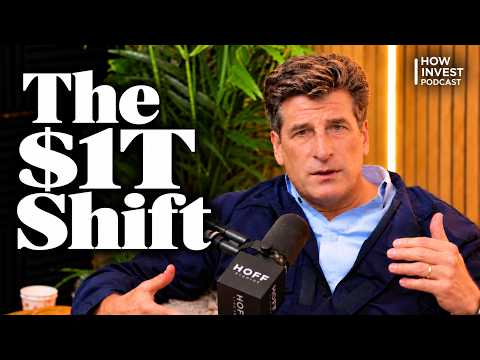
John Borthwick on AI Agents, the Death of Apps, and the Future of Software
 How I Invest With David Weisburd
· · 1 hr 16 min · Hosts: David Weisburd · Guests: John Borthwick
Summary
John Borthwick argues that AI is making the founder more important, not less, because the cost of building technology is falling toward zero and the job is shifting from coding to steering. He says the best founders now need emotional attachment, adaptability, and the ability to survive repeated setbacks, which is why he probes them with questions like why they named their company what they did. He also says betaworks has always been more product-first than pattern-matching-driven, preferring close proximity to real products and real users over abstract founder heuristics.
He explains why betaworks chose a venture studio model and later added a fund structure: it wanted to do “power entrepreneurship” in related theses, run small thematic accelerator camps, and still be able to write pre-seed checks when a good company appears outside a camp cycle. Borthwick says this structure helped betaworks get early conviction in areas like conversational interfaces and AI agents, including Hugging Face and Granola. In his telling, the Hugging Face team was unusually thoughtful about narrow first use cases, then moved deeper into models as the stack changed.
Borthwick’s broader view of AI is optimistic but not naïve. He believes open and closed models both need to exist for a resilient ecosystem, and he is more worried about near-term security failures, sandbox breaches, and infrastructure weak points than about an abstract existential takeover. He says AI was “discovered” rather than invented, compares the current moment to Y2K-style plumbing work, and thinks white-collar workers should become deep users of the technology to stay antifragile.
Key takeaways
- John Borthwick says founder quality matters more in AI because builders are becoming steerer-operators of increasingly cheap tools and agents.
- betaworks runs small thematic camps plus pre-seed investing, with typical camp checks of $500,000 and pre-seed checks of about $750,000.
- Borthwick says he looks for emotional attachment to the problem, often by asking founders why they named the company what they did.
- He believes open and closed AI models must coexist to create a resilient stack, including local, cloud, and verticalized models.
- Borthwick is more concerned about practical security failures than existential AI risk, calling the current wave a Y2K-like infrastructure problem.
Notable quotes
“The cost of building technologies as a technology is trending towards zero”
“I think that now it's probably founder is a little bit higher or relative higher. getting to know the founder has become more important to me over time”
“I want to live in a world where we have amazing closed models that are complemented by open source alternatives”
“What keeps me up at night is the sort of more immediate short-term risks which are like here here and now that we need to actually deal with”
How the episode opens
The cost of building technologies as a technology is trending towards zero. 5 years ago, 10 years ago, founders were decidedly builders. They were engineers.
They were in the code. They were building. Now they are more often than not sort of steering uh a set of technologies, a set of agents, a set of AI tools towards sort of a goal.
I shipped code this year. I've like built apps myself this year, right? It's extraordinary what you can do.
The power of creation is now at so many more people's fingertips.
You were reportedly the first investor in Hugging Face, which sold for $13 billion to Nvidia. When you talk about founders are now more about steering products and they're managing all these agents, how would you define that skill that you're looking for? John, you've been investing in technology for over two decades.
What have you changed your mind on the most recently? From the outset, I've always been very sort of product driven, product first. I think that the balance between product and founder has shifted a bit.
If you were to say that, you know, thesis, product, founder, uh, was the stack for me, um, you know, 20 years ago, I think that now it's probably founder is a little bit higher or relative higher. getting to know the founder has become more important to me over time.
Why? — I think that the technology is like we're living in an extraordinary time and the pace at which technology is advancing is like unlike anything I think in human history and the kind of founders that you need who can that you want to back who can really sort of take companies through their various stages of evolution.
From the episode’s captions: roughly the first two minutes, lightly cleaned. Keep watching on YouTube →
Topics
- ai agents
- death of apps
- founder importance
- venture studio model
- open vs closed ai models
Companies and tickers mentioned
- betaworks
- Giphy
- Dots
- bitly
- TweetDeck
- Tumblr
- Kickstarter
- Hugging Face
- Medium
- Anchor
- Gimlet
Watch the episode
Watch “John Borthwick on AI Agents, the Death of Apps, and the Future of Software” on YouTube
Summary, takeaways and quote selection by Octagon. Quotes are short excerpts; the full conversation is in the episode.
More from How I Invest With David Weisburd
-
 Hunter Walk: Why Venture is Getting Harder, Picking Great Founders, and Investing Against Consensus
-
 True Anomaly’s Even Rogers on Space Warfare, China’s Military Advantage, and the Defense Tech Boom
-
 Finding the Next Anthropic, Quantifying Venture Capital, and the Science of Picking Winners
-
 Why 95% of AI Projects Fail, Anthropic still at $2T?, and Why AI Is Still in the First Inning
-
 Peter Thiel's 27-Year Partner on the AI Bubble, the Venture Capital Crisis, and the PayPal Mafia
-
 Why Venture Is Eating Public Markets, Picking Great VCs, and the AI Boom w/Brijesh Jeevarathnam
How I Invest With David Weisburd, this episode and its artwork belong to David Weisburd. Octagon is not affiliated with the show; this page is an independent summary.
