
Episode summary
Finding the Next Anthropic, Quantifying Venture Capital, and the Science of Picking Winners
 How I Invest With David Weisburd
· · 58 min · Hosts: David Weisburd · Guests: Jerry Ye
Summary
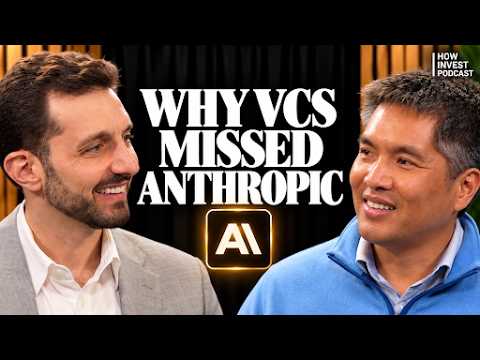
Jerry Ye argues that venture capital is becoming more measurable by combining talent signals, alternative data, and CRM records into a single operating system. He says the strongest early signals often come from who joins a startup, especially when talented people leave top companies for a new venture, and he points to Anthropic as a case where hiring quality and lower churn showed strength before it was broadly recognized.
He also makes the case that consumer and fintech startups can be tracked from the outside using credit card panels, web traffic, and retention data. In his view, a 3% to 5% sample of U.S. card spend can reveal real revenue trends, and that helped surface companies like Grammarly before they were widely understood. Hedge funds have long used these tools, he says, while most venture firms are still underusing them.
The other major theme is financing structure. Jerry Ye argues that user acquisition financing fits post-product-market-fit companies better than equity or venture debt because it matches repayment to revenue generation and avoids dilution. He also says firms and LPs should measure access, sourcing, and decision quality directly from emails, calendars, and CRM data instead of relying on narrative track record.
Key takeaways
- Jerry Ye says talent data can show a startup’s strength years before the market catches up, citing Anthropic’s hiring quality and lower churn versus OpenAI.
- He argues that a 3% to 5% sample of U.S. credit card and debit card spend can surface revenue inflections and retention for consumer startups.
- Ye says Grammarly’s cohort performance and high retention made it visible early, and later supported a $1 billion user acquisition financing facility.
- He believes user acquisition financing is a better fit than venture debt for post-PMF companies because repayment is tied to revenue, not a fixed schedule.
- Ye says LPs should evaluate venture managers by joining CRM, email, and calendar data to actual deal outcomes, rather than relying on reputation alone.
Notable quotes
“Anthropic was hiring people with more in terms of competed types signals like better schools, better experience and on average that actually had them surpassing open AI”
“You need KPIs like what a true north star and it has to be objective that's in a way that's grounded by data”
“you're literally talking about a 3 to 5% sample of all US credit card and debit card spend, right”
“we saw a company that was inflecting and not only was it inflecting, you saw really high retention rates which were similar to what you would see in a SAS company”
How the episode opens
This anthropic signal before anthropic became anthropic today. What exactly were you seeing in the data? — Anthropic was hiring people with more in terms of competed types signals like better schools, better experience and on average that actually had them surpassing open AI.
A lot of venture capitalists have been trying to quantify which founders are going to be most successful at the very early stage. What do we know today about what kind of founders succeed?
This really depends on the sector. I remember like an early study that showed PhDs and enterprise tended to have better outcomes, right? So domain experience if your particular niche for your sector requires that domain expertise, but that doesn't really matter at all for consumer companies, right?
Where you might have a very strong pedigree founder and team, but you don't have traction and traction in that case is actually super important. Let's say that you were advising a CEO of one of the top multi-stage venture capital firms, one of these top 15 firms, and the CEO was bought in of the firm and they wanted to institute data in the deepest level within their firm on every part of the stack. How would you advise them to execute on that strategy?
You need KPIs like what a true north star and it has to be objective that's in a way that's grounded by data. One of the interesting factors that we see in the startup ecosystem today is these trunch rounds. Sequoia will come in at a billion dollar valuation and then startups will raise another round at $2 billion almost a couple weeks later. What do you think about these trunch rounds?
It's pretty interesting. — Jerry, you've spent most of your career trying to make venture capital quantifiable.
From the episode’s captions: roughly the first two minutes, lightly cleaned. Keep watching on YouTube →
Topics
- quantitative venture capital
- talent/employee signals
- alternative data
- customer retention and revenue trends
- non-dilutive financing
Companies and tickers mentioned
- BITKRAFT Ventures
- Anthropic
- OpenAI
- Grammarly
Watch the episode
Summary, takeaways and quote selection by Octagon. Quotes are short excerpts; the full conversation is in the episode.
More from How I Invest With David Weisburd
-
 Hunter Walk: Why Venture is Getting Harder, Picking Great Founders, and Investing Against Consensus
-
 Peter Thiel's 27-Year Partner on the AI Bubble, the Venture Capital Crisis, and the PayPal Mafia
-
 Why Venture Is Eating Public Markets, Picking Great VCs, and the AI Boom w/Brijesh Jeevarathnam
-
 Federated Hermes CEO on $400 Billion in Cash, the Private Markets Boom, and AI
-
 Gavin Ezekowitz on AI Valuations, Asymmetric Returns, and Why Great Investors Fail
-
 Anthropic at $2 Trillion? The AI Bubble, and Why the Best Startups Always Look Overvalued
How I Invest With David Weisburd, this episode and its artwork belong to David Weisburd. Octagon is not affiliated with the show; this page is an independent summary.
