
Episode summary
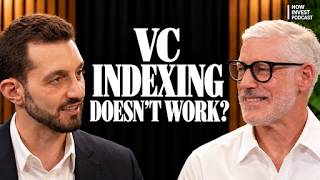
Why Venture Is Eating Public Markets, Picking Great VCs, and the AI Boom w/Brijesh Jeevarathnam
 How I Invest With David Weisburd
· · 1 hr 6 min · Hosts: David Weisburd · Guests: Brijesh Jeevarathnam

Summary
Brijesh Jeevarathnam argues that venture capital is still a business of information asymmetry, but the market has become far more crowded and segmented. He says the number of active venture firms has risen from about 500 in 2006 to roughly 4,000 today, while the number of venture-backed startups and total capital have also expanded sharply. That makes the job of selecting managers harder, even as the best firms still stand out by seeing opportunities before consensus and attracting founders who have many choices.
He says Adams Street looks for three things in managers: the team, the investment strategy, and the track record, with the first two often more important than backward-looking returns. Within the team, he emphasizes chemistry, complementary skills, and an X factor he describes as a chip on the shoulder. He also argues that great venture firms win by becoming trusted “founder whisperers,” and that strong LP-GP relationships create access to better information, earlier.
On markets, Brijesh says venture is increasingly “eating” public markets because much of the value creation now happens privately before companies ever list. He says 7% of venture-backed companies generate all the gains, and that private-market exposure is becoming a necessary complement for long-term investors. On AI, he thinks the cycle is still early, with demand for compute exceeding supply and major company formation still ahead.
Key takeaways
- Brijesh says venture has gone from about 500 firms in 2006 to roughly 4,000 today, making manager selection much noisier.
- He says the best venture managers combine a strong team, a clear investment strategy, and a track record, but the first two matter most for future results.
- He says Adams Street values managers with a chip on their shoulder because motivation and resilience can separate great VCs from merely good ones.
- He says venture capital is eating public markets because the biggest value creation now happens privately before IPOs or M&A.
- He says AI is still in the early innings, with demand for compute outstripping supply and more company creation still to come.
Notable quotes
“Venture is an information asymmetry business. We have confidential information within our core walls that we only share with ourselves”
“A great venture capital manager is somebody who can see around corners and kind of see and think about the world in a way that seems um completely non-obvious”
“What we're looking for beyond that is we're looking for a few things. One is the chemistry and the level of uh complimentarity between the team”
“Our reup on a venture fund begins the day after we commit to the current one”
“we think venture is not a luxury now for institutional investors. It is a necessary complement, a necessary addition to the public books or the public equity exposure”
How the episode opens
Venture is an information asymmetry business. We have confidential information within our core walls that we only share with ourselves, the investment team, that we can leverage to get to the best companies one or two steps earlier. — How do you know early on whether a venture capitalist is a founder whisperer?
A canonical example that people talk about might be El Gil. He wrote the growth handbook and he's very revered as a kind of a mentor and a company builder. They have enough founder trust and confidence in company building chops from before to still end up early on the cap.
What ending of the AI boom are we in? I don't think a single person has told me it's kind of post the fifth inning. It's still broadly kind of first half in people's consensus.
I like to sometimes go back and watch uh a presentation or a new product release from OpenAI or on topic and see what those very smart people Sam Alman Dario say and what I find interesting is with the passage of time even they cannot kind of quite foresee where this is all going right I talked to USV benchmark they're raising their growth funds for the first time they believe that power loss still exists at the growth stage do you think power loss could still really exists at that late stage of a company. It depends on so Brash you've spent over 20 years evaluating the very top private equity and venture capital managers first at common fund now at Adam Street. If you had to summarize what makes a great venture capital manager, what would that be?
A great venture capital manager is somebody who can see around corners and kind of see and think about the world in a way that seems um completely non-obvious.
From the episode’s captions: roughly the first two minutes, lightly cleaned. Keep watching on YouTube →
Topics
- venture capital manager selection
- lp relationships
- information asymmetry
- venture capital vs public markets
- ai due diligence
Companies and tickers mentioned
- Adams Street Partners
- Juniper Square
Watch the episode
Summary, takeaways and quote selection by Octagon. Quotes are short excerpts; the full conversation is in the episode.
More from How I Invest With David Weisburd
-
 Hunter Walk: Why Venture is Getting Harder, Picking Great Founders, and Investing Against Consensus
-
 True Anomaly’s Even Rogers on Space Warfare, China’s Military Advantage, and the Defense Tech Boom
-
 Finding the Next Anthropic, Quantifying Venture Capital, and the Science of Picking Winners
-
 Why 95% of AI Projects Fail, Anthropic still at $2T?, and Why AI Is Still in the First Inning
-
 Gavin Ezekowitz on AI Valuations, Asymmetric Returns, and Why Great Investors Fail
-
 Anthropic at $2 Trillion? The AI Bubble, and Why the Best Startups Always Look Overvalued
How I Invest With David Weisburd, this episode and its artwork belong to David Weisburd. Octagon is not affiliated with the show; this page is an independent summary.
