
Episode summary
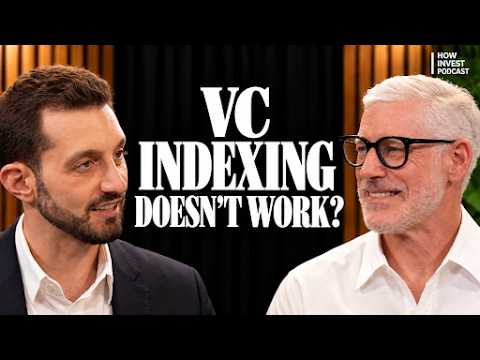
Gavin Ezekowitz on AI Valuations, Asymmetric Returns, and Why Great Investors Fail
 How I Invest With David Weisburd
· · 1 hr 13 min · Hosts: David Weisburd · Guests: Gavin Ezekowitz
Summary
Gavin Ezekowitz argues that in early, long-duration technology cycles, investors should not assume the first apparent winner will dominate. He uses Anthropic as the example: BFA backed it at a $17 billion valuation after the FTX bankruptcy sale, with the view that the company had a strong chance to become one of the major AI platforms rather than the only winner. He says the same framework applies to AI more broadly, where the real work is judging the team, the milestones, and the range of possible outcomes rather than pretending revenue forecasts are precise.
He also says BFA’s exposure to OpenAI, SpaceX, and Anthropic came through GP relationships, not by sitting on the cap table directly. That leads to his broader point that venture is about convexity, not indexing. In his view, the asset class only works if investors accept that most bets will not be home runs, while a few can drive the result, so pacing, position sizing, and diversification across funds matter more than trying to time every entry.
Gavin is skeptical of “capital magnet” founders as a standalone thesis, but he acknowledges that exceptional fundraisers can create a flywheel if they also have integrity, talent, and execution. He emphasizes that great managers need both people and process, and that venture firms themselves must be run like businesses, especially as generational firms face succession and ownership-transition risk.
Key takeaways
- Gavin says BFA invested in Anthropic at a $17 billion valuation because it looked like a credible second major AI winner, not because anyone could model the exact outcome.
- He believes AI underwriting should focus less on precise revenue forecasts and more on team quality, milestones, and the range of possible future states.
- Gavin says venture capital should be treated as a convexity asset class, where the goal is a few asymmetric winners, not steady benchmark-like returns.
- He argues pacing and sizing matter as much as stock selection, because investors need enough dry powder and diversification to survive bad vintages.
- Gavin says capital-magnet founders can work, but only if fundraising power is paired with integrity and execution.
- He thinks smaller, well-networked venture managers can still outperform if they have strong taste, process, and access to early signals.
Notable quotes
“When you're very early in a long cycle, people try to predict who the eventual winner will be. And most often it's not that company”
“our view was quite simple. They look like they've got you know a tremendous shot at being the other company or one of the other major companies”
“Venture capital is not treasuries. It is not the S&P 500, it is not real estate, it is not private equity”
“you need to have the right portfolio construction. So, you need to be diversified”
“you have to really understand the role of venture capital in your portfolio”
How the episode opens
When you're very early in a long cycle, people try to predict who the eventual winner will be. And most often it's not that company. It's not Yahoo. There are multiple winners or they could be different leaders. And so it has turned out with Anthropic. Our view is quite simple. They look like they've got a tremendous shot at being the other company or one of the other major companies.
You were recently sitting down with top 10 fund with you said that they look for companies that are capital magnets. Do you agree with this strategy? — I would observe over my entire 30-year career in the investment world there are really special people that can accumulate capital, that can generate investor confidence. They are not always honest people. They're not always good people. Occasionally they're exceptional at all of these things and they're wonderful entrepreneurs. But this is certainly there is a pattern that we can observe over time that it is not a terrible strategy.
So Gavin, you're one of a small group of investors that are in OpenAI, SpaceX, and Anthropic. How did you become investor in all three companies?
Well, it started out with Anthropic. And then we built some momentum largely with our LPs of saying that these are generational companies and subsequent investments in first of all in SpaceX, XAI, SpaceX, OpenAI. And you know, I think along the way what we began to recognize was that not only were these likely to be generational companies.
We didn't expect the kinds of returns that you would have had obviously. Um but then investors want to own these in their portfolio, right? That they didn't and they had very few ways of accessing those companies.
And it was really an out it was an output of relationships that we had with GPs that gave us the confidence because of you know, obviously we're not on the cap table and any of those three names.
From the episode’s captions: roughly the first two minutes, lightly cleaned. Keep watching on YouTube →
Topics
- ai valuations
- venture capital fund structure
- private market investing
- portfolio construction
- power-law returns
Companies and tickers mentioned
- Anthropic
- OpenAI
- SpaceX
- BFA Global Investors
- Juniper Square
- AlphaSense
Watch the episode
Summary, takeaways and quote selection by Octagon. Quotes are short excerpts; the full conversation is in the episode.
More from How I Invest With David Weisburd
-
 Hunter Walk: Why Venture is Getting Harder, Picking Great Founders, and Investing Against Consensus
-
 True Anomaly’s Even Rogers on Space Warfare, China’s Military Advantage, and the Defense Tech Boom
-
 Finding the Next Anthropic, Quantifying Venture Capital, and the Science of Picking Winners
-
 Why 95% of AI Projects Fail, Anthropic still at $2T?, and Why AI Is Still in the First Inning
-
 Peter Thiel's 27-Year Partner on the AI Bubble, the Venture Capital Crisis, and the PayPal Mafia
-
 Why Venture Is Eating Public Markets, Picking Great VCs, and the AI Boom w/Brijesh Jeevarathnam
How I Invest With David Weisburd, this episode and its artwork belong to David Weisburd. Octagon is not affiliated with the show; this page is an independent summary.
