
Episode summary
Stanford GSB Professor on the Incentives that Drive VC Managers
 How I Invest With David Weisburd
· · Hosts: David Weisburd · Guests: Ilya Strebulaev
Summary
The episode argues that venture and private equity outcomes are driven less by headline fees than by the incentives embedded in fund terms and governance. Ilya Strebulaev says the difference between 2 and 2.5, or 20% and 30% carry, cannot be judged in isolation; what matters is the base, the structure over time, and how those terms change a manager’s willingness to take risk. He emphasizes that higher carry can push managers toward riskier behavior, which may or may not improve risk-adjusted returns depending on the strategy and the fund manager.
A second theme is that LPs often misunderstand persistence. Strebulaev argues that what looks like skill can be distorted by style drift, especially when successful firms expand into new stages or sectors with different people making the decisions. He urges investors to focus on the underlying team, the key person provision, and whether the fund’s strategy is actually the same strategy that produced past results.
On portfolio construction, he says venture can be highly attractive, but diversification must be done differently than in public markets. LPs should think carefully about correlation across managers and strategies, not just about picking individual names. He also highlights follow-on investing as a critical decision point and cites escalation of commitment as a bias that can cause VCs to double down on bad bets.
Key takeaways
- Ilya Strebulaev says 30% carry can create meaningfully more risk-taking than 20% carry because carry is an option-like payoff.
- He argues LPs should evaluate future net performance, not just past gross performance, when judging whether a manager deserves better terms.
- He says style drift can destroy apparent persistence when a successful firm expands into new stages, sectors, or geographies with different people.
- He believes correlation across venture managers is a bigger portfolio issue than many LPs realize, and that 15 to 25 relationships may be a better framework for large investors.
- He says the most important venture decisions often come after the initial check, because follow-on investing is where escalation of commitment can hurt returns.
Notable quotes
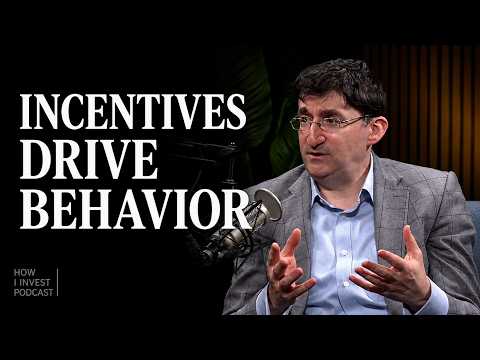
“incentives drive behavior and incentives of your incentives drive behavior but also incentives of fund managers that you invest in”
“You should not think about whe the future performance is a function of past performance because you really care about future net performance”
“persistence tends to disappear and there's a special name for it. It's called style drift”
“the biggest decision decision you're going to make about this company is not whether to invest in series A in this company or not, but whether to follow up on your investment”
How the episode opens
IA, you're the David S. Loel professor at Stanford at the GSP at the business school. You're leading researcher on private equity. Right before we started recording, I asked you about 2 and a half and 30 and which part of that LP should negotiate on and you told me neither. Why is that?
Well, you asked me a slightly different question. You asked me whether um what is the difference between 2 and 13 to 20.
Okay. How many basis points in PME? Okay.
And my response was we you can calculate or you can estimate the basis points but that really will not help smart investors because typically you do not choose between 2 and a half 30 and 220. You typically really given what you have and you're then a price taker or you can negotiate and then you at least partial price maker. And so the question is if you're a price taker do you walk away or not?
Or if you're a price maker you can negotiate and then if you can negotiate negotiate on what? And from this point of view 2 and a half and 30 is not very helpful because the question is well two and a half of what? It turns out that whether it's two or two and a half is less important than if it is two and a half two of the committed capital of the invested capital of the managed capital some combination and specifically where they changes over time.
For example, uh other things equal, I definitely would prefer 2 and a half of the um committed capital that goes into managed capital after year five compared to one and a half, forget about two, one and a half of committed capital for 10 + 3 years.
From the episode’s captions: roughly the first two minutes, lightly cleaned. Keep watching on YouTube →
Topics
- venture capital incentives
- carry and risk taking
- lp vs gp decision bias
- venture portfolio diversification
- style drift
Watch the episode
Watch “Stanford GSB Professor on the Incentives that Drive VC Managers” on YouTube
Summary, takeaways and quote selection by Octagon. Quotes are short excerpts; the full conversation is in the episode.
More from How I Invest With David Weisburd
-
 Hunter Walk: Why Venture is Getting Harder, Picking Great Founders, and Investing Against Consensus
-
 True Anomaly’s Even Rogers on Space Warfare, China’s Military Advantage, and the Defense Tech Boom
-
 Finding the Next Anthropic, Quantifying Venture Capital, and the Science of Picking Winners
-
 Why 95% of AI Projects Fail, Anthropic still at $2T?, and Why AI Is Still in the First Inning
-
 Peter Thiel's 27-Year Partner on the AI Bubble, the Venture Capital Crisis, and the PayPal Mafia
-
 Why Venture Is Eating Public Markets, Picking Great VCs, and the AI Boom w/Brijesh Jeevarathnam
How I Invest With David Weisburd, this episode and its artwork belong to David Weisburd. Octagon is not affiliated with the show; this page is an independent summary.
