
Episode summary
The Future of Investing: AI, Expert Networks, and Access to Information
 How I Invest With David Weisburd
· · 34 min · Hosts: David Weisburd · Guests: Matt Wells
Summary
Matt Wells argues that investors are no longer constrained by a lack of information; they are constrained by the difficulty of turning overwhelming data into conviction. He says generalized AI is often overconfident, can be wrong at meaningful rates, and is not enough for high-stakes decisions unless it is grounded in trusted source data and able to cite where its answers came from.
The conversation centers on expert calls, channel checks, and transcript libraries as the remaining sources of information alpha. Matt says expert calls evolved from informal “know a guy” sourcing into scalable research systems, and that the real edge comes from combining differentiated ground-level intelligence with broader market data. He argues that one call is rarely enough, but patterns across many calls can reveal sentiment, supply-chain signals, and whether management’s public story matches reality.
He also makes the case that AI will change investing workflows more than it replaces judgment. In his view, analysts will spend less time on manual data crunching and more time as verifiers, workflow builders, and thesis testers. That shift should leave more time for the human side of investing: relationship-building, asking for the mandate, and making better decisions under uncertainty.
Key takeaways
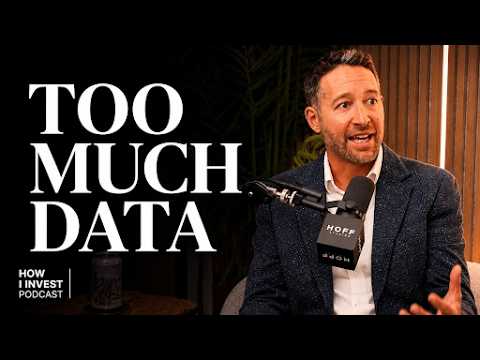
- Matt Wells says the real problem is not data scarcity but decision paralysis from too much data and too little conviction.
- He argues that generalized AI can be misleading in investing unless it is grounded in trusted sources and can cite its work.
- Matt says expert calls and channel checks still matter because they capture the “messy reality” that filings and earnings calls miss.
- He says the biggest funds spend millions annually on channel checks, but AI is helping democratize that process for smaller investors.
- Matt expects analysts to shift from spreadsheet builders to verifiers and workflow designers as AI automates more of the research stack.
Notable quotes
“I think all of us, right? If you're making a decision, buying a new car, anything, you have plenty tabs open, right”
“the term that I use is like decision grade AI. And that's AI that's grounded in you know, reliable source data, not just general training data”
“there is some information that does give you an edge, but it's that not generic information. It's not what everybody has access to”
“the best investors go out there and say, "Tell me what I'm missing. Tell me why I'm wrong. Disprove this thesis that I have”
“The real future value in an analyst is somebody that can understand how to automate a lot of these tasks”
How the episode opens
Last time we chatted, you said that investors are drowning in data and starving for conviction. What did you mean by that?
It goes beyond investors. I think all of us, right? If you're making a decision, buying a new car, anything, you have plenty tabs open, right?
And even then, you don't feel like you still have all of the information, even though there's more and more and more and more layers to dig through. It's the same thing from an investor's perspective, whether it's filings, expert calls, transcripts, news, market data. We've never had more data than we do right now to sift through.
And it's not the data that's the problem. It used to be, "Oh, well, if I can't find this one piece of data, this one person to talk to, maybe I can have conviction. Now, it's "I have too much data to sift through.
How am I possibly going to get through all of it to find that conviction? And I think therein lies the problem.
Data isn't the thing. I've had this recurring, I guess, toxic relationship with AI where I ask a very important question. I upload a lot of data, and it gives me an answer, and I always double-check, "What is your confidence on this?" And it's always, "I'm extremely confident. Here are these two edge cases where maybe it might be wrong." And maybe 50% of the time, it's just completely wrong for anything that requires any kind of prognostication.
Exactly right. And it's pulling from all of that data. And I think what the troublesome thing is, Gartner just released a study, I think it was back in Q1, that like the floor minimum between 3 and 25% sort of general AI error rates. That means the base case is that you're 3% wrong.
From the episode’s captions: roughly the first two minutes, lightly cleaned. Keep watching on YouTube →
Topics
- ai in investing
- expert networks
- information vs conviction
- decision-grade ai
- private market diligence
Companies and tickers mentioned
- AlphaSense
- SpaceX
- OpenAI
- Anthropic
Watch the episode
Watch “The Future of Investing: AI, Expert Networks, and Access to Information” on YouTube
Summary, takeaways and quote selection by Octagon. Quotes are short excerpts; the full conversation is in the episode.
More from How I Invest With David Weisburd
-
 Hunter Walk: Why Venture is Getting Harder, Picking Great Founders, and Investing Against Consensus
-
 True Anomaly’s Even Rogers on Space Warfare, China’s Military Advantage, and the Defense Tech Boom
-
 Finding the Next Anthropic, Quantifying Venture Capital, and the Science of Picking Winners
-
 Why 95% of AI Projects Fail, Anthropic still at $2T?, and Why AI Is Still in the First Inning
-
 Peter Thiel's 27-Year Partner on the AI Bubble, the Venture Capital Crisis, and the PayPal Mafia
-
 Why Venture Is Eating Public Markets, Picking Great VCs, and the AI Boom w/Brijesh Jeevarathnam
How I Invest With David Weisburd, this episode and its artwork belong to David Weisburd. Octagon is not affiliated with the show; this page is an independent summary.
