
Episode summary
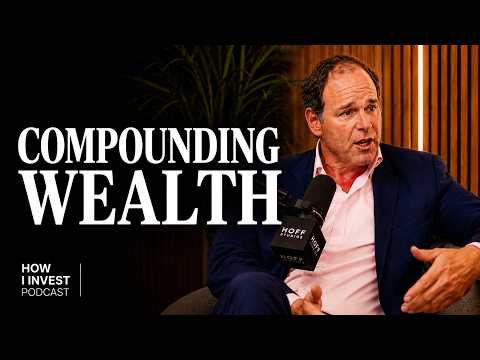
$17 Billion Family Office on Alternative Assets, Taxes, and Private Markets
 How I Invest With David Weisburd
· · Hosts: David Weisburd · Guests: Ron Albahary
Summary
Ron Albahary argues that managing wealthy taxable clients is less about finding heroic investments and more about controlling behavior, taxes, and decision quality. At LNW, which oversees $17 billion, he says the advisor’s job is to act like a psychologist and educator, helping clients stick to an investment policy statement, frame risk in dollars rather than percentages, and avoid panic selling when markets get rough.
He makes a strong case for tax-aware portfolio construction: direct indexing, asset location, tax-exempt bonds, and placing tax-inefficient strategies like hedge funds inside deferred accounts. He also says fees matter because every dollar saved compounds over time. More broadly, he argues that the best investment process is often one that makes fewer decisions, but better ones, and that humility and vulnerability improve outcomes inside an investment team.
On private markets, Albahary is skeptical of evergreen structures being used as easy liquidity and says they should be treated as the last resort. He prefers lower middle market private equity over mega-funds, where managers can buy family businesses, improve operations, and create value in ways that are less tied to macro factors. He also warns that AI is creating hidden concentration risk across portfolios, so he looks for “ingredients” that are not tethered to the AI narrative.
Key takeaways
- Ron Albahary says the biggest edge in wealth management is helping clients avoid emotional mistakes, not predicting the future.
- He emphasizes tax alpha through direct indexing, asset location, and tax-exempt bonds for taxable investors.
- Albahary argues that hedge funds and diversifiers should absorb drawdowns and reduce the risk of clients selling at the bottom.
- He prefers lower middle market private equity because smaller managers can drive operational improvement, not just financial engineering.
- He warns that AI has become an implicit concentration risk in many portfolios, so new capital should seek exposures not tied to that narrative.
Notable quotes
“I think it's an appreciation that not only do you have to be a great investor, but you're dealing with humans and they have emotions”
“So, I often refer to the investment policy statement as a business plan”
“Taxes are really upstream of compounding”
“We are very clear those structures should be the last resort in terms of your liquidity hierarchy”
“Being disciplined about investment decision- making. Being humble about your ability to predict the future”
How the episode opens
So Ron, you're the CIO of LNW, which today has $17 billion under management, mostly taxable investors. You've been investing for over three decades. When it comes to investing, what's the biggest difference between taxable and non-t taxable investment?
Well, there's an obvious answer, which is taxes. But let's put a pin in that for just a second. I think it's an appreciation that not only do you have to be a great investor, but you're dealing with humans and they have emotions.
And so you have to have a high EQ. You need to be a psychologist, an educator, an exceptional communicator with those types of clients. So understanding, you know, managing wealth for humans has a multifaceted role, especially since humans get pretty emotional about their money.
reminds me I had the CIO of McKenna, Larry Cochard, also famously endowment CIO, and he said, "One of the most underrated thing about building portfolios is making sure that portfolios aren't only good coming in, but could be held through long periods of time."
That's exactly right. I mean, from a investment psychology perspective, one of the greatest challenges in working with individuals is getting them to stick to a plan. So, I often refer to the investment policy statement as a business plan.
A lot of individuals spend more time planning their vacation than they do thinking about their portfolio. And the reality is they should be very disciplined about managing that portfolio with our help of course and creating the structure around it through the IPS and really focusing on the levers that we feel we can exert some amount of influence over to narrow the probable outcomes of that portfolio over time. So I said put a pin in taxes.
The reality is, you know, taxes are drawn the portfolio.
From the episode’s captions: roughly the first two minutes, lightly cleaned. Keep watching on YouTube →
Topics
- tax strategies
- private markets
- investor psychology
- risk measurement
- ai concentration risk
Companies and tickers mentioned
- LNW
- OpenAI
- Anthropic
- SpaceX
Watch the episode
Watch “$17 Billion Family Office on Alternative Assets, Taxes, and Private Markets” on YouTube
Summary, takeaways and quote selection by Octagon. Quotes are short excerpts; the full conversation is in the episode.
More from How I Invest With David Weisburd
-
 Hunter Walk: Why Venture is Getting Harder, Picking Great Founders, and Investing Against Consensus
-
 True Anomaly’s Even Rogers on Space Warfare, China’s Military Advantage, and the Defense Tech Boom
-
 Finding the Next Anthropic, Quantifying Venture Capital, and the Science of Picking Winners
-
 Why 95% of AI Projects Fail, Anthropic still at $2T?, and Why AI Is Still in the First Inning
-
 Peter Thiel's 27-Year Partner on the AI Bubble, the Venture Capital Crisis, and the PayPal Mafia
-
 Why Venture Is Eating Public Markets, Picking Great VCs, and the AI Boom w/Brijesh Jeevarathnam
How I Invest With David Weisburd, this episode and its artwork belong to David Weisburd. Octagon is not affiliated with the show; this page is an independent summary.
