
Episode summary
Ron Rofé on AI, Founder Obsession, and Venture Returns
 How I Invest With David Weisburd
· · Hosts: David Weisburd · Guests: Ron Rofé

Summary
Ron Rofé argues that venture returns come from backing exceptional founders, not from chasing whatever sector is most crowded. He says he does invest in AI, but avoids making it his focus because consensus capital can obscure whether a team truly cares about the problem or is just riding hype. His standard is whether a founder will keep working when the market cools and whether they show humility, persistence, resilience, ambition, and vision.
He uses Robinhood, Webflow, Alma, and his first investment, Study Edge, to show how non-consensus bets can become category leaders. He points to founders who stayed with the same problem for years, learned from customers, and adjusted as needed: Vlad Tenev, Webflow’s founder, and Harry Ritter all fit that pattern. Ron says the best founders are often people he knew before they had a company, because long observation makes it easier to separate real conviction from polished pitch language.
He also frames venture as a relationship business. Helping founders with small things, staying in touch, and making introductions can create trust and lower friction later, but he says the real edge is pattern recognition around great people. His final advice is blunt: nobody knows anything, so investors should do what they believe in and keep learning rather than blindly following trends.
Key takeaways
- Ron Rofé says he avoids focusing on AI because consensus investing can hide whether a founder is truly committed or just chasing hype.
- He argues the biggest opportunity cost is missing an amazing team, not missing the hottest industry.
- Ron says founders who keep working on the same problem for years often develop the deepest insights and the strongest products.
- He cites Robinhood, Webflow, and Alma as examples of non-consensus bets that paid off because the founders were resilient and adaptable.
- Ron says humility matters because the best founders listen to users, absorb feedback, and pivot when the market changes.
Notable quotes
“I have no focus but to find amazing teams to invest in”
“I think that the opportunity cost for missing out on working with an amazing team is much higher than on investing in what everyone else is investing in right now”
“We're not looking to invest in ideas and we're not looking to invest in technology. We're looking to invest in founders that are obsessed and extremely passionate about what they're doing and they won't give up”
“I have in my office on our wall I have our five values that we look for in founders and it's humility, persistence, resilience, ambition, and vision”
“Nobody knows anything. Do what's good for you with your own conviction and follow your own path”
How the episode opens
Ron, nearly 90 plus percentage of venture capitalists today are exclusively investing into AI. You're not. Why not?
I would say that an amazing team and business can come out of anywhere, out of any industry or out of any channel. And I have invested historically in AI companies, but it's not my focus. And the truth is I have no focus but to find amazing teams to invest in.
And the problem I had over the years after being in different cycles is that when there's consensus investing and everyone is focused on the same thing and then a lot of VCs are throwing money there, it clouds the market and it's hard for me to understand if the team I'm looking at is truly solving a problem they care about or they're just excited about an industry where there's a lot of money being thrown there and I don't know if they're truly committed to it long term. So that's the reason I try not to focus on what everyone else is doing. Having said that, I have a handful of AI companies that I've invested in that were a little bit before all the excitement and hype and it's teams I've gotten to know over a long period of time.
So I have a company called Convey ex Nvidia founder immigrant that I really really trust and I know that he's doing it for the right reasons and won't give up and no matter how challenging it will be or when the VC market dries up for AI he'll still be working on the problem he's solving. We have Harmonic that Vlad Tennet from Robin Hood and Tutor started. I invested in it two and a half years ago.
I know Vlad from our investment in Robin Hood for many many years and I think it's extremely exciting.
From the episode’s captions: roughly the first two minutes, lightly cleaned. Keep watching on YouTube →
Topics
- ai venture investing
- founder quality
- non-consensus investing
- venture returns timing
- founder resilience
Companies and tickers mentioned
- Rainfall Ventures
- Robinhood
- Webflow
- Alma
- Harmonic
Watch the episode
Watch “Ron Rofé on AI, Founder Obsession, and Venture Returns” on YouTube
Summary, takeaways and quote selection by Octagon. Quotes are short excerpts; the full conversation is in the episode.
More from How I Invest With David Weisburd
-
 Hunter Walk: Why Venture is Getting Harder, Picking Great Founders, and Investing Against Consensus
-
 True Anomaly’s Even Rogers on Space Warfare, China’s Military Advantage, and the Defense Tech Boom
-
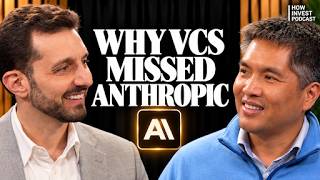 Finding the Next Anthropic, Quantifying Venture Capital, and the Science of Picking Winners
-
 Why 95% of AI Projects Fail, Anthropic still at $2T?, and Why AI Is Still in the First Inning
-
 Peter Thiel's 27-Year Partner on the AI Bubble, the Venture Capital Crisis, and the PayPal Mafia
-
 Why Venture Is Eating Public Markets, Picking Great VCs, and the AI Boom w/Brijesh Jeevarathnam
How I Invest With David Weisburd, this episode and its artwork belong to David Weisburd. Octagon is not affiliated with the show; this page is an independent summary.
