
Episode summary
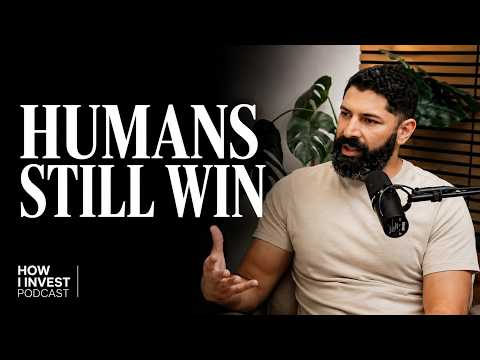
Russ d'Sa on AI, Jobs, and the Future of Work
 How I Invest With David Weisburd
· · 44 min · Hosts: David Weisburd · Guests: Russ D'Sa
Summary
Russ D’Sa argues that voice AI is becoming a major computer interface because it is faster, more natural, and now good enough to handle real work. He sees the future as multimodal rather than voice-only: screens, keyboards, touch, and computer vision will still matter for creative and precision tasks, but voice will increasingly handle delegable, agent-driven workflows like customer support, patient intake, loan qualification, and scheduling.
He says the voice AI breakout came from two improvements: speed and conversational intelligence. Low latency reduces the uncanny-valley effect, while better turn-taking, interruption detection, and backchannel handling make agents feel more human and useful. He also argues that coding agents are the largest AI use case today, with voice applications close behind because both can generate substantial token volume, but voice remains more synchronous and open-ended.
On labor, Russ D’Sa takes a blunt view: AI will do most work over time, especially repetitive and undifferentiated tasks, though there will be a transition period of higher creativity and productivity. He thinks people should lean into differentiation, agency, taste, and roles where humans are still hard to replace, especially in physical-world work and relationship-heavy jobs. For companies, he says AI should be someone’s full-time KPI, and he believes AI-native companies will eventually outcompete incumbents built before this shift.
Key takeaways
- Russ D’Sa says voice AI is already being deployed in customer service, patient intake, insurance checks, and loan qualification because phone-based workflows are natively voice-driven.
- Russ D’Sa argues the real unlock for voice AI was not just model quality but low latency and conversational intelligence, including turn-taking and interruption handling.
- Russ D’Sa believes AI will eventually do most mundane digital and physical work, but that the transition will also create a period of unusually high creativity and productivity.
- Russ D’Sa advises workers to focus on differentiated work—taste, judgment, supervision, and human relationships—rather than repetitive entry-level tasks.
- Russ D’Sa says companies should make AI integration someone’s full-time job, because telling everyone to “use more AI” is not enough.
- Russ D’Sa’s hiring philosophy emphasizes slope and agency over pedigree, and he says AI magnifies people who are already highly self-directed.
Notable quotes
“execution is now getting commoditized and so in a world like that, ideas actually end up becoming the more valuable component of the two”
“The two things that we look for, one is like slope. Right? Tying back to like entry-level jobs and things like that”
How the episode opens
If you have AI agents that can do basically all the mundane tasks that a human doesn't want to do, right? AI already that does that. So, let's imagine that over time you unlock all of that data and it can perform any task in a digital space.
And then you take that AI or a version of it and you put it into a physical robot that has arms and legs and can walk around and can fold laundry and take your kids to school and build houses and all of that stuff. If that exists in a 10-year time horizon, what are humans doing? Ultimately, most work will be done by machines.
But in that time, I do think that there's going to be new jobs. In the interim, there will be this period of amazing creativity and productivity.
My guest today is Russ Hanneman, CEO of Life Kit, a unicorn AI company that has raised more than $180 million from investors including Index, Altimeter, and Redpoint Ventures. Life Kit powers voice AI for companies including Tesla and XAI, giving Russ a unique point of view on the future of computing, digital labor, and the next wave of AI. Without further ado, here's my conversation with the Russ.
So, you power voice AI for Tesla and XAI. Five years from now, what percentage of interactions with AI will happen through voice?
It's hard to pin it down to a percentage. The reason why is that voice is not like in isolation the interface or the ultimate interface. There are certainly things that benefit from having a screen. Keyboards aside, like screens are useful for consumption of content, right? Like one screen that people have been using for such a long time is the TV. And I don't think that that's going to go away, right?
From the episode’s captions: roughly the first two minutes, lightly cleaned. Keep watching on YouTube →
Topics
- voice ai
- ai agents
- future of work
- job automation
- ai startups
Companies and tickers mentioned
- TSLA
- LiveKit
- Tesla
- xAI
Watch the episode
Watch “Russ d'Sa on AI, Jobs, and the Future of Work” on YouTube
Summary, takeaways and quote selection by Octagon. Quotes are short excerpts; the full conversation is in the episode.
More from How I Invest With David Weisburd
-
 Hunter Walk: Why Venture is Getting Harder, Picking Great Founders, and Investing Against Consensus
-
 True Anomaly’s Even Rogers on Space Warfare, China’s Military Advantage, and the Defense Tech Boom
-
 Finding the Next Anthropic, Quantifying Venture Capital, and the Science of Picking Winners
-
 Why 95% of AI Projects Fail, Anthropic still at $2T?, and Why AI Is Still in the First Inning
-
 Peter Thiel's 27-Year Partner on the AI Bubble, the Venture Capital Crisis, and the PayPal Mafia
-
 Why Venture Is Eating Public Markets, Picking Great VCs, and the AI Boom w/Brijesh Jeevarathnam
How I Invest With David Weisburd, this episode and its artwork belong to David Weisburd. Octagon is not affiliated with the show; this page is an independent summary.
