
Episode summary
The Art of Quiet Compounding as an Investor
 How I Invest With David Weisburd
· · 32 min · Hosts: David Weisburd · Guests: Mark Sotir
Summary
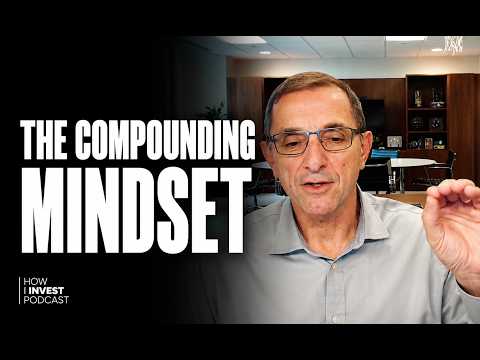
Mark Sotir argues that the best private equity is really owner-style business building: buy companies, hold them, improve operations, and stay focused on downside protection rather than perfect forecasting. He says Sam Zell drilled into him that an investor should think about risk first, assume more can go wrong than underwriting suggests, and constantly ask whether the investment is being paid enough for that risk.
A major theme is adaptability. Sotir says the firm tries to prepare instead of predict, because budgeting and five-year projections break down in volatile markets. He uses analogies like a raft in rapids and says companies need flexibility, experimentation, and cushion to survive shocks like tariffs or other black swan events.
He also makes the case that long-duration capital creates better incentives. Because Equity Group Investments has dedicated family capital, Sotir says the firm can hold businesses for 8 to 10 years, focus on organic growth and cash generation, and create value operationally rather than through quick buy-and-sell transactions. He emphasizes that control, transparency, and the right management team matter more than micromanagement, especially in founder- and family-owned businesses.
Key takeaways
- Sotir says Sam Zell’s core lesson was to think like an owner, not a trader, and to obsess over downside protection before chasing upside.
- He argues that the firm’s capital base lets it hold companies for 8 to 10 years, which shifts value creation from transaction timing to operational improvement.
- Sotir says businesses should be prepared for more problems than they model, because “the hundred-year storm” can happen every 10 years.
- He believes companies need flexibility, not rigid plans, because tariffs, market shifts, and other shocks are hard to predict.
- Sotir says the firm wins by combining control, patient capital, and a focus on cash flow so portfolio companies can keep compounding.
Notable quotes
“He taught me a lot. Probably the the biggest thing that has to do with private equity is just having an owner's mindset, right”
“we're the kind of place that thinks about the hundred-year storm every 10 years, right? we just assume more things are going to go wrong than you put into your thesis”
“we try not to predict as much as prepare”
“our DPI for our unrealized investments right now is one. Okay. So, out of my entire portfolio, I have all our money out”
How the episode opens
Today I'm excited to welcome Mark Soder, president of Equity Group Investments, the private investment firm founded by the late billionaire investor and entrepreneur Sam Zel. So you worked with Sam Zel, one of the most legendary investors for 18 years before he passed away in 2023. What did Sam teach you about private equity?
Yeah. Well, he, as you said, I mean, he was an investor for over 60 years, and I got to spend a long time with him. He taught me a lot.
Probably the the biggest thing that has to do with private equity is just having an owner's mindset, right? He would always say all the time, he's an owner, not an investor. And what he meant by that was we buy businesses and we hold them and we build them and we're not transactional.
We're not just buying and selling stuff really quick. So that was like a really important driver of what we do and and and obviously he taught us that. The other big thing was just assessing risk and and we all talk about it, but it was he spent an immense amount of time trying to understand the downside, trying to figure out how to protect us, you know, protect our downside.
Um, so everybody does this, but very quickly he got to I think I understand the thesis. I can imagine what the upside is. We all hope it happens, but just convince me that things can't really go wrong.
And then the last thing is he would he would always talk about are you getting paid for that risk? Right? So, you know, every investment we make has risk.
Do you understand it? And are you getting paid for it? I would also say he didn't use these words, but we we're the kind of place that thinks about the hundred-year storm every 10 years, right?
From the episode’s captions: roughly the first two minutes, lightly cleaned. Keep watching on YouTube →
Topics
- owner mindset
- downside risk management
- private equity operating discipline
- long-term compounding
- cash flow and capital structure
Companies and tickers mentioned
- KO
- Equity Group Investments
- Chai Trust Company
- Sunburst Technology
- Budget Group
- Coca-Cola
Watch the episode
Watch “The Art of Quiet Compounding as an Investor” on YouTube
Summary, takeaways and quote selection by Octagon. Quotes are short excerpts; the full conversation is in the episode.
More from How I Invest With David Weisburd
-
 Hunter Walk: Why Venture is Getting Harder, Picking Great Founders, and Investing Against Consensus
-
 True Anomaly’s Even Rogers on Space Warfare, China’s Military Advantage, and the Defense Tech Boom
-
 Finding the Next Anthropic, Quantifying Venture Capital, and the Science of Picking Winners
-
 Why 95% of AI Projects Fail, Anthropic still at $2T?, and Why AI Is Still in the First Inning
-
 Peter Thiel's 27-Year Partner on the AI Bubble, the Venture Capital Crisis, and the PayPal Mafia
-
 Why Venture Is Eating Public Markets, Picking Great VCs, and the AI Boom w/Brijesh Jeevarathnam
How I Invest With David Weisburd, this episode and its artwork belong to David Weisburd. Octagon is not affiliated with the show; this page is an independent summary.
