
Episode summary
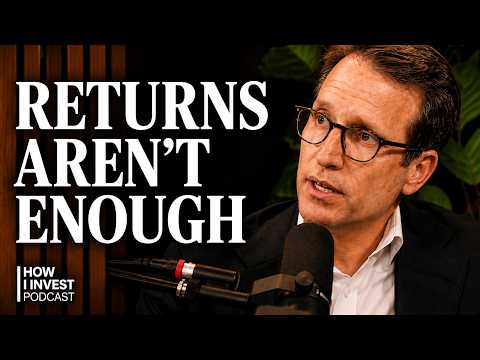
Why Reputation Matters More Than Fund Returns
 How I Invest With David Weisburd
· · 1 hr 7 min · Hosts: David Weisburd · Guests: Lex Suvanto
Summary
Lex Suvanto argues that AI is making media the first layer of diligence for LPs and wealth allocators, because large language models surface third-party validated sources before firms’ own marketing. He says that makes reputation, not just reported returns, a front-door asset for general partners, and it pushes firms to think more carefully about what they say, where they say it, and whether they can back it up with substance.
He says the best firms will not sound generic. To stand out, GPs need a clear point of view, a differentiated message, and proof points that make that message credible across websites, LinkedIn, podcasts, trade media, and video. Lex Suvanto also argues that many managers are underestimating how much the wealth channel differs from institutional LPs: wirehouses, RIAs, multifamily offices, and high-net-worth investors each need different materials, education, and levels of trust.
A major theme is that trust and reputation are forward-looking signals. Lex Suvanto says LPs increasingly care about the CEO’s visibility, the firm’s culture, and whether the team can communicate authentically without sounding like a pitch. In his view, the firms that win will combine disciplined messaging with creativity, audience segmentation, and a willingness to do the hard work of incremental improvement.
Key takeaways
- Lex Suvanto says AI is elevating media because LLMs prioritize third-party verified sources, making reputation more discoverable than firms’ own claims.
- Lex Suvanto says LPs increasingly value the CEO’s reputation, the firm’s reputation, and culture as forward-looking indicators, sometimes even more than returns.
- Lex Suvanto says many GPs still fail to differentiate themselves because they sound too similar, even when their underlying strategies are different.
- Lex Suvanto says the wealth channel is not one audience but several, and each intermediary needs different education, packaging, and trust-building.
- Lex Suvanto says authentic thought leadership works because it gives leaders a point of view, not just a product pitch, and that attracts attention over time.
Notable quotes
“All of a sudden, we are in the golden age of media because LLM's number one source of information”
“media is the number one source of information. But if you think about it, why it's because it's third-party verified”
“AI is going to reward companies with substance. AI is going to reward companies that have depth of presence across a variety of communications platforms”
“the reputation of the CEO matters and that makes sense. The CEO defines the strategy. The CEO personifies the brand”
How the episode opens
These models are changing every week, but today what are those data sources that you see come up over and over as LPS, diligence GPS on AI? Incredibly, when digital platforms really started to accelerate, I think people started to assume that media might become less important. All of a sudden, we are in the golden age of media because LLM's number one source of information.
If anybody's searched an LLM recently, you will see the information is tagged to media sources. So media is the number one source of information. But if you think about it, why it's because it's third-party verified.
Those media sources are not being paid to generate that content. So it's authoritative. It's third party validated.
It's not sponsored, so it kind of makes sense. Edelman also does a lot of research on trust. Recently, Edel Edelman put out a separate survey on brand trust.
What makes people believe and trust specific brands? By far the biggest the number one source is media. Again, because they're not being paid, it's not a sponsored source.
After that, pretty far down in terms of the numeric was the company itself and what the company is saying about its own reputation.
Is this old media in terms of New York Times and CNN and all these online kind of highly reputable old media sources or is it new media like newsletters, podcasts, X feeds? It's funny you use the term old media versus new media. I would come back at you and ask you which of those sources is your first access in the morning.
Some of the conventional or highly established the biggest media I would call it New York Times, Wall Street Journal etc. These are highly trusted sources. These brands are by far more trusted by general population and by the institutional LP and private capital ecosystem.
From the episode’s captions: roughly the first two minutes, lightly cleaned. Keep watching on YouTube →
Topics
- ai in fundraising
- reputation and trust
- fundraising differentiation
- thought leadership
- gp branding mistakes
Companies and tickers mentioned
- Edelman Smithfield
Watch the episode
Watch “Why Reputation Matters More Than Fund Returns” on YouTube
Summary, takeaways and quote selection by Octagon. Quotes are short excerpts; the full conversation is in the episode.
More from How I Invest With David Weisburd
-
 True Anomaly’s Even Rogers on Space Warfare, China’s Military Advantage, and the Defense Tech Boom
-
 Finding the Next Anthropic, Quantifying Venture Capital, and the Science of Picking Winners
-
 Why 95% of AI Projects Fail, Anthropic still at $2T?, and Why AI Is Still in the First Inning
-
 Peter Thiel's 27-Year Partner on the AI Bubble, the Venture Capital Crisis, and the PayPal Mafia
-
 Why Venture Is Eating Public Markets, Picking Great VCs, and the AI Boom w/Brijesh Jeevarathnam
-
 Federated Hermes CEO on $400 Billion in Cash, the Private Markets Boom, and AI
How I Invest With David Weisburd, this episode and its artwork belong to David Weisburd. Octagon is not affiliated with the show; this page is an independent summary.
