
Episode summary
How Family Offices Design Portfolios for 30-Year Outcomes
 How I Invest With David Weisburd
· · 27 min · Hosts: David Weisburd · Guests: Zach Wainwright
Summary
Zach Wainwright argues that the biggest edge in public markets is often not stock selection but how capital is structured, taxed, and held over time. He says long-term investing means something very different for an asset owner or family office than for a trader, because the goal is to let capital compound for a generation rather than a quarter. At Wellington, he says he learned to find a repeatable edge; at TIFF, he learned that committing to fund one through fund three can capture a manager’s best years and align incentives through GP capital and carry.
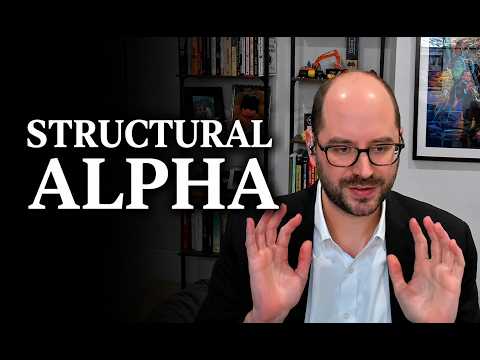
He also frames family offices as having a structural advantage because they invest off a balance sheet, not in rigid buckets. That lets them be contrarian, provide liquidity when others need it, and pursue opportunities that do not fit standard mandates. At Twin Oak, he says the firm’s three value levers are security selection, asset allocation, and structural alpha, with tax awareness as the easiest form of alpha to add.
A large part of the conversation focuses on ETF tax efficiency and tail-risk hedging. Wainwright says mutual funds can create tax drag through forced sales and distributed gains, while ETFs can preserve more after-tax return through in-kind mechanics. He also says Twin Oak is trying to package institutional-style hedge books inside an ETF so clients can hedge severe drawdowns and still redeploy into recoveries.
Key takeaways
- Wainwright says long-term investing is different for family offices because they are optimizing for next-generation compounding, not quarter-to-quarter performance.
- He views fund one through fund three as the best window for manager alpha, before strong managers become crowded and LP access disappears.
- He argues family offices can create structural edge by investing off a balance sheet, which lets them be contrarian and avoid rigid bucket constraints.
- Wainwright says tax alpha is the easiest alpha to add, and an ETF wrapper can preserve more after-tax return than a mutual fund.
- He says Twin Oak’s tail-risk product is built to protect against severe drawdowns while still allowing redeployment into rebounds.
Notable quotes
“long-term means a different thing. And I now have a true appreciation for what that means”
“fund one to fund three are a manager's best performing funds”
“they don't have buckets. They have a balance sheet”
“I think tax alpha is the easiest way to add alpha for clients”
“You still owe the taxes, but can we remove the frictions along the way”
How the episode opens
So, you've worked at some of the top investment firms in the world, Wellington, TIFF, at a top single family office. What are some principles that you learn that you apply to your day-to-day investing career? The starting point um is have a long time horizon, right?
When you start your investing journey, everyone tells you think long term. And for someone who's 21 years old that's never had a job before, like that's very hard to really put that into effect. But I think as I roll forward and I I worked at TIFF and I worked at with family offices, long-term means a different thing.
And I now have a true appreciation for what that means. Making an investment for a quarter or four quarters, even if that could be long-term in the the public equity investing world, means something very different when you're investing for the next generation. And why is that so important?
Gets back to like the idea of like are you an asset owner or or just an investor. And I think you can great investors can be both. But the idea is you deploying your capital and letting it compound and continue to drive value for you for you for a very long time.
And when I think about my investment philosophy, it's how can you unlock the potential inside of a portfolio and I think there's different levers you can pull, but it's really about aligning it with the time horizon that you have.
What were your lessons from your time at Wellington? It's a great place to start your investing career because you see so many different disciplines. You see growth, large cap, small cap, international. Um, you see a lot of different tools being deployed. And I think for me what that what that taught me was you have to figure out what's true to yourself.
From the episode’s captions: roughly the first two minutes, lightly cleaned. Keep watching on YouTube →
Topics
- structural alpha
- etf tax efficiency
- family office portfolio design
- tail-risk hedging
- tax alpha
Companies and tickers mentioned
- Twin Oak ETF Company
- Wellington Management
- TIFF
- AlphaSense
Watch the episode
Watch “How Family Offices Design Portfolios for 30-Year Outcomes” on YouTube
Summary, takeaways and quote selection by Octagon. Quotes are short excerpts; the full conversation is in the episode.
More from How I Invest With David Weisburd
-
 Hunter Walk: Why Venture is Getting Harder, Picking Great Founders, and Investing Against Consensus
-
 True Anomaly’s Even Rogers on Space Warfare, China’s Military Advantage, and the Defense Tech Boom
-
 Finding the Next Anthropic, Quantifying Venture Capital, and the Science of Picking Winners
-
 Why 95% of AI Projects Fail, Anthropic still at $2T?, and Why AI Is Still in the First Inning
-
 Peter Thiel's 27-Year Partner on the AI Bubble, the Venture Capital Crisis, and the PayPal Mafia
-
 Why Venture Is Eating Public Markets, Picking Great VCs, and the AI Boom w/Brijesh Jeevarathnam
How I Invest With David Weisburd, this episode and its artwork belong to David Weisburd. Octagon is not affiliated with the show; this page is an independent summary.
