
Episode summary
What the Best Investors Actually Optimize For
 How I Invest With David Weisburd
· · Hosts: David Weisburd · Guests: Ron Biscardi
Summary
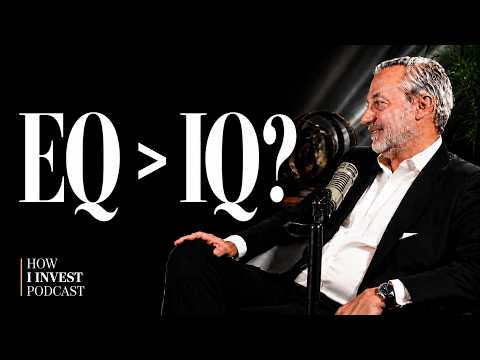
The conversation argues that the best investors optimize less for raw IQ or near-term fees and more for learning speed, humility, and relationships. Ron Biscardi says top allocators are “sponges,” constantly reading, seeking conflicting views, and admitting that even a strong thesis can be wrong because markets are probabilistic. He also argues EQ matters because networks surface information, solve problems faster, and create trust with LPs and GPs.
A major theme is fundraising in private markets. Biscardi says first-time managers should expect a long sales cycle, need an anchor investor, and should build credibility through repeated in-person meetings rather than assuming capital will come quickly. He frames LP fundraising as a double-gated process: first LPs decide whether a manager is worth work, and only then do they decide whether to invest.
The episode also defends conviction, but only when it is rooted in deep bottoms-up understanding and balanced by adaptability. Biscardi says the strongest managers are often entrepreneurs, not just traders, because they build brands, recruit teams, and maintain relationships. He closes by emphasizing that market reality is harsh, unfair, and emotionally difficult, which is exactly why successful investors need systems and self-control.
Key takeaways
- Ron Biscardi says top allocators stand out by their appetite for learning and their humility about being wrong.
- Biscardi argues EQ is a real investing edge because relationships help investors gather information and solve problems faster.
- He says first-time managers should expect fundraising to take a long time and should not start without at least a strong indication of an anchor investor.
- Biscardi frames LP fundraising as a double-gated process: many managers fail before LPs ever do the work.
- He says the best long-term managers are often entrepreneurs who can market, recruit, and build a franchise, not just trade well.
Notable quotes
“the most common thread is their interest in learning. They're constantly educating themselves, learning new things”
“EQ is absolutely huge. EQ enables you to use a network and relationships to gather more information”
“People who get into the business and think they're going to raise money in 3 months or 6 months, you're just setting yourself up to lose”
“I think the common thread of the GPS who made it is they were also great entrepreneurs”
“The market doesn't care about anything. The market does what the market does”
How the episode opens
How much of a factor is having an anchor today?
It's a big one. It's a signal to all the other investors that someone hopefully did the work to understand the strategy to evaluate the manager and got comfortable that both the manager management team and the strategy are worth betting on. People who get into the business and think they're going to raise money in 3 months or 6 months, you're just setting yourself up to lose.
So, you have to be ready for a long process. And then it's really just a matter of getting out there and being in front of people as many times and as often as possible.
What separates the top 1% of allocators from everybody else?
I think there's a huge like a ton of similarities between the top allocators and the top managers. Generally speaking, I feel like the most common thread is their interest in learning. They're constantly educating themselves, learning new things.
Like they're approaching their job with this like voracious desire to learn new things and to get into the weeds and to all the details. And I think there's also while, you know, Wall Street is certainly known for its egos, in my experience, the best investors always have a a very humble side to them. I mean, this is a business that is ruthless.
The market doesn't care about anything. The market does what the market does. And it's our job to try and navigate that market.
And I think the best investors approach it with a sense of humility because you can be really really confident in your view and still be completely wrong because maybe you miss something. And this is all probabilistic which means some percentage of the time it's not going to go the way it should have gone.
From the episode’s captions: roughly the first two minutes, lightly cleaned. Keep watching on YouTube →
Topics
- relationship-driven investing
- eq in investing
- emerging manager fundraising
- private markets behavioral edge
- conviction vs adaptability
Companies and tickers mentioned
- iConnections
- OpenAI
- SpaceX
- Anthropic
Watch the episode
Watch “What the Best Investors Actually Optimize For” on YouTube
Summary, takeaways and quote selection by Octagon. Quotes are short excerpts; the full conversation is in the episode.
More from How I Invest With David Weisburd
-
 Hunter Walk: Why Venture is Getting Harder, Picking Great Founders, and Investing Against Consensus
-
 True Anomaly’s Even Rogers on Space Warfare, China’s Military Advantage, and the Defense Tech Boom
-
 Finding the Next Anthropic, Quantifying Venture Capital, and the Science of Picking Winners
-
 Why 95% of AI Projects Fail, Anthropic still at $2T?, and Why AI Is Still in the First Inning
-
 Peter Thiel's 27-Year Partner on the AI Bubble, the Venture Capital Crisis, and the PayPal Mafia
-
 Why Venture Is Eating Public Markets, Picking Great VCs, and the AI Boom w/Brijesh Jeevarathnam
How I Invest With David Weisburd, this episode and its artwork belong to David Weisburd. Octagon is not affiliated with the show; this page is an independent summary.
