
Episode summary
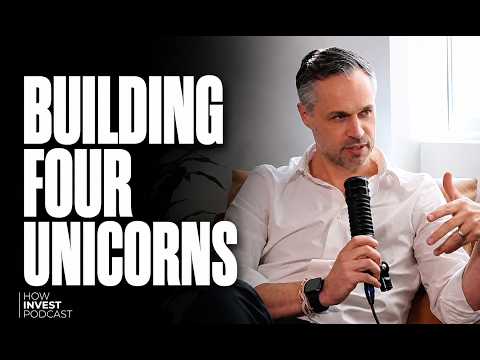
The Hardest Lessons I Learned Building 4 Unicorns
 How I Invest With David Weisburd
· · 53 min · Hosts: David Weisburd · Guests: Errik Anderson
Summary
Errik Anderson argues that the real breakthrough in biotech is not simply more capital, but better infrastructure for innovation. He says Alloy Therapeutics is built as a biotech infrastructure company spanning early discovery through commercialization, with the goal of reducing the cost and time of experiments so more good science can happen and more drugs can reach patients. He also says most biotech companies fail for the same reason — they run out of money — while success depends on the right people, timing, and macro conditions.
He makes a strong case for staying private longer, saying private ownership gives founders more flexibility, less overhead, and more room to compound value without public-market short-termism. He compares biotech to other compounding businesses and argues that founders should go public only when the benefits clearly exceed the advantages of remaining private.
Across the conversation, Anderson returns to a recurring theme: innovation is not scalable in a purely mechanical way. He says you cannot just throw more money at creative work and expect better results; instead, companies need systems that reward conviction, talent, and repeated experimentation. He frames Alloy as a long-duration, mission-driven business that reinvests all revenue back into innovation and access to innovation.
Key takeaways
- Errik Anderson says Alloy Therapeutics is a biotech infrastructure company designed to support the full value chain, not just one drug program.
- Errik Anderson argues that most biotech failures share one cause: the company runs out of money.
- Errik Anderson says reducing the cost of each experiment should produce more experimentation and therefore more innovation in biotech.
- Errik Anderson prefers staying private as long as possible because private companies are more flexible and less exposed to short-term market pressure.
- Errik Anderson says public-market control structures can help founders preserve a long-term scientific strategy, as in the Regeneron example.
Notable quotes
“It's a true biotech infrastructure company that is taking a very long view of both services, technologies, and the the drugs that flow from that”
“I think the ability to maintain a competitive advantage and think about other drugs that look like that sort of sometimes you want to own the platform”
“I would evaluate it through that lens. At what point does it make for us make sense for us to be public? Is it more valuable to be public than private”
How the episode opens
So you just announced your series E which would came in at a billion dollars. So you now have another unicorn. What number unicorn is this? Uh this would be my fourth actually. Yeah. Yeah. This is of companies where I've been the founder of the co-founder. That's right.
And what makes Alloy Therapeutics different than the other three companies?
It's a true biotech infrastructure company that is taking a very long view of both services, technologies, and the the drugs that flow from that. So we're looking at the entire value chain from early stage drug discovery all the way through to commercialization and we're putting together the pieces so that we can coordinate that ecosystem of innovation from what happens in our academic labs all the way through to servicing pharma and latest stage clinical and we started in one particular area and we've expanded more and more to be able to touch the whole supply chain. What distinguishes Alloy from some of my other companies is it is a biotech infrastructure company.
U meaning that we're going to touch a whole bunch of different pieces and just be the faithful servant and supporter of hopefully all of pharma and all of biotech as we go forward. And I quote you often on the podcast but specifically I love this concept. You built the business that you wanted to work in for the rest of your career.
How's that played out? This was something you told me in 2019. I think this was like one of your main organizing mechanisms for all therapy.
How's that played out? That's a philosophy we have to kind of build the business that you want to work in. It's uh it a little bit comes from our single family office where uh we realized as we've been building companies for 15 20 25 years now uh that when you invest in companies you write a check and then you spend your time making sure that your investment goes well.
From the episode’s captions: roughly the first two minutes, lightly cleaned. Keep watching on YouTube →
Topics
- biotech infrastructure
- innovation systems
- private markets strategy
- biotech experimentation costs
- scaling creativity
Companies and tickers mentioned
- Alloy Therapeutics
Watch the episode
Watch “The Hardest Lessons I Learned Building 4 Unicorns” on YouTube
Summary, takeaways and quote selection by Octagon. Quotes are short excerpts; the full conversation is in the episode.
More from How I Invest With David Weisburd
-
 Hunter Walk: Why Venture is Getting Harder, Picking Great Founders, and Investing Against Consensus
-
 True Anomaly’s Even Rogers on Space Warfare, China’s Military Advantage, and the Defense Tech Boom
-
 Finding the Next Anthropic, Quantifying Venture Capital, and the Science of Picking Winners
-
 Why 95% of AI Projects Fail, Anthropic still at $2T?, and Why AI Is Still in the First Inning
-
 Peter Thiel's 27-Year Partner on the AI Bubble, the Venture Capital Crisis, and the PayPal Mafia
-
 Why Venture Is Eating Public Markets, Picking Great VCs, and the AI Boom w/Brijesh Jeevarathnam
How I Invest With David Weisburd, this episode and its artwork belong to David Weisburd. Octagon is not affiliated with the show; this page is an independent summary.
