
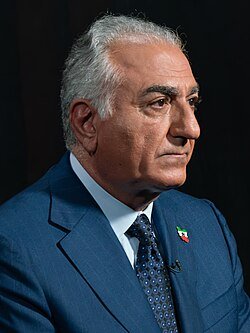
Will Reza Pahlavi lead Iran in 2026?
Short Answer
1. Market Behavior & Drivers
- No: Reza Pahlavi lacks significant international diplomatic support from Western powers.
- No: Trump administration policies in 2026 undermined Pahlavi's leadership ambitions.
- No: Experts lack consensus on Pahlavi's monarchist restoration viability in 2026.
Who Wins and Why
| Outcome | Market | Model | Why |
|---|---|---|---|
| Yes | 4.2% | 4.2% | Reza Pahlavi could potentially lead Iran in 2026 should the current regime face significant internal challenges. |
Current Context
Sources (14)
- 1Iran: Is Reza Pahlavi's political star fading?dw.com
- 2Regime change? Inside Reza Pahlavi’s faltering bid to lead Iran | The Times of Israeltimesofisrael.com
- 3Inside Reza Pahlavi’s faltering bid to lead Iran, trigger regime change | The Jerusalem Postjpost.com
- 4Protests in Iran: Possible U.S. Responses and Issues for...congress.gov
- 5Protests in Iran: Possible U.S. Responses and Issues for Congresscongress.gov
- 6Protests in Iran: Possible U.S. Responses and Issues for...congress.gov
- 7Protests in Iran: Possible U.S. Responses and Issues forcongress.gov
- 8Crown prince Reza Pahlavi on US military intervention in Iran and how a post Islamic Republic 'transition' would work - ABC Newsabc.net.au
- 9What to know about Iran's exiled Crown Prince, Reza Pahlaviaxios.com
- 10U.S. and Israeli Military Operations Againstcongress.gov
- 11Trump's U-turn reopens Tehran's political faultline | Iran Internationaliranintl.com
- 12Trump and Iran clash over Strait of Hormuz talks as cargo ship is attackednbcnews.com
- 13Status of US-Iran talks uncertain as ship struck in Hormuz - AL-MONITOR: The Middle Eastʼs leading independent news source since 2012al-monitor.com
- 14Live updates: Trump calls off Iran strikes, warns of ‘last chance’ to sign a deal | CNNcnn.com
2. Price Chart
Historical Price (Probability)
3. Market Data
Contract Snapshot
This market resolves to "Yes" if Reza Pahlavi de facto holds and exercises the powers of the head of state of Iran by December 31, 2026, 11:59 PM ET, demonstrating primary governing authority and effective control over state institutions, regardless of formal title or international recognition. Otherwise, it resolves to "No." Formal appointment or foreign recognition is not required, and the primary resolution source will be a consensus of credible reporting; symbolic or exile leadership without effective domestic authority will not qualify for a "Yes" resolution.
Available Contracts
Market options and current pricing
| Outcome bucket | Yes (price) | No (price) | Last trade probability |
|---|---|---|---|
| Yes | $0.04 | $0.96 | 4% |
Market Discussion
Traders overwhelmingly predict Reza Pahlavi will not lead Iran by 2026, with a 95.7% probability for "No." Key arguments against his leadership highlight Iran's entrenched theocratic system, Pahlavi's lack of an organized domestic power base or military support in exile, and the fact that current succession planning remains within the established regime. While scenarios like widespread unrest or elite defections could theoretically alter the outcome, these have not materialized at scale within the specified timeframe.
4. Trust Index
Official decision: one office decides and holds the answer before the public
Integrity risk· Information exposure
Includes the cost to trade: a $1,000 order can't be filled here because the order book is too thin.
Weighted blend with hard caps — a critically weak safety pillar, or a severe trading anomaly, caps the total regardless of the rest. Full methodology · About the Trust Index
5. What specific policy shifts from the U.S. Trump administration in 2026 could materially improve Reza Pahlavi's prospects of taking power?
| Trump Admin Policy on Pahlavi | Explicitly refrained from endorsing regime change centered on installing Reza Pahlavi [1][2][3] |
|---|---|
| Policy Shift | Mid-2026 shift toward diplomatic engagement with existing Iranian government [2][4][5] |
| Pahlavi Leadership Probability (end 2026) | 3-11% as of August 2026 [6][7][8][9] |
Sources (9)
- 1Regime change? Inside Reza Pahlavi's faltering bid to lead...reuters.com
- 2Regime change? Inside Reza Pahlavi’s faltering bid to lead Iran | The Times of Israeltimesofisrael.com
- 3Inside an exiled prince’s plan for regime change in Iran – POLITICOpolitico.eu
- 4President Trump’s Iran Agreement Is America First in Action – The White Housewhitehouse.gov
- 5Trump says parameters met for a deal to end Iran war | AP Newsapnews.com
- 6Will Reza Pahlavi lead Iran in 2026? Predictions & Odds | Polymarketpolymarket.com
- 7Will Reza Pahlavi be head of state in Iran end of 2026? — 3% | Orrery market check | Orreryorrery.me
- 8Reza Pahlavi Leading Iran in 2026: What Would It Takelines.com
- 9Will Reza Pahlavi lead Iran in 2026 92% No · Polymarketexplorer.struct.to
6. What is the 2026 consensus among Iran experts and geopolitical analysts regarding the viability of a monarchist restoration led by Reza Pahlavi?
| Expert Consensus on Restoration | No consensus among Iran experts regarding viability of monarchist restoration (August 2026) [1][2][3][4][5] |
|---|---|
| Requirements for Transition | Absence of clear procedural legitimacy, organizational capacity, or broad-based domestic consensus (cited by experts) [1][6][7][8][5] |
| Prediction Market Probability | 8%-18% probability of Reza Pahlavi leading Iran in 2026 (mid-2026 prediction markets) [9][10][11][12] |
Sources (12)
- 1Iran: Is Reza Pahlavi's political star fading?dw.com
- 2Inside Reza Pahlavi’s faltering bid to lead Iran, trigger regime change | The Jerusalem Postjpost.com
- 3Iran’s exiled crown prince is touting himself as a future leader. Is this what’s best for the country?theconversation.com
- 4The rise of Reza Pahlavi: Iranian opposition leader or opportunist?theconversation.com
- 5A Blueprint Without a Mandate? Pahlavi’s Post-Regime Plan for Iran and the Question of Legitimacythelevantfiles.org
- 6Crown prince Reza Pahlavi on US military intervention in Iran and how a post Islamic Republic 'transition' would work - ABC Newsabc.net.au
- 7Democratic Transition in Iranoiac.org
- 8Political Legitimacy, Monarchy, and Democratic Transition in Iran – E-International Relationse-ir.info
- 9Will Reza Pahlavi lead Iran in 2026? Predictions & Odds | Polymarketpolymarket.com
- 10Will Reza Pahlavi lead Iran in 2026? — 13% Chance (Live)predictionhunt.com
- 11Will Reza Pahlavi lead Iran in 2026? — 18% YES | PredictScanpredictscan.tech
- 12Will Reza Pahlavi lead Iran in 2026 92% No · Polymarketexplorer.struct.to
7. How does the international diplomatic support for Reza Pahlavi compare to that for the interim government under President Masoud Pezeshkian from key powers like the U.S. and E.U.?
| International Diplomatic Support for Reza Pahlavi | Minimal; U.S. and E.U. distance themselves [1][2][3][4] |
|---|---|
| US-Iran Diplomatic Framework | Pakistan-mediated MoU signed June 2026 [1][5][6][7] |
| Reza Pahlavi's Prospect to Lead Iran in 2026 | No evidence; rejected by major powers [1][2][4][8] |
Sources (11)
- 1Regime change? Inside Reza Pahlavi’s faltering bid to lead Irantribune.com.pk
- 2Why Western Leaders Holding Back on Iran Reza Pahlavi | Mirage Newsmiragenews.com
- 3Alternatives for Iran’s Future: “Not the First Address” — Europe’s Growing Distance from Pahlavi Becomes Visible - Iran News Updateirannewsupdate.com
- 4Son of former Shah of Iran appeals to Western countries for support | Reutersreuters.com
- 5Iran’s Pezeshkian hails US deal as foreign policy cornerstoneen.yenisafak.com
- 6What President Pezeshkian's Message About Islamabad Understanding Said, and Left Unsaidnournews.ir
- 7Pezeshkian: We Must Ensure the Other Side Adheres to the Memorandum They Signed - WANAwanaen.com
- 8Son of Iran's last shah appeals for more pressure to help protesters | Reutersreuters.com
- 9Trump Accuses China of Election Meddling; Fears Mount of US and Iran Escalation | Bloomberg...youtube.com
- 10US-Iran Talks Continue; SK Hynix's US Debut | Bloomberg Daybreak: US Editionyoutube.com
- 11Iran Says Hormuz Talks Underway, Stocks Rise as Oil Plunge | Bloomberg Daybreak: US Editionyoutube.com
8. What are the most credible proxy indicators for measuring Reza Pahlavi's popular support within Iran's borders during 2026?
| Estimated Raw Support | 59% [1][2][3][4][5] |
|---|---|
| Estimated Corrected Support | 77% [1][2][3][4][5] |
| Internal Political Movement | Lacks a verifiable, organized movement [1] |
Sources (5)
- 1Measuring Political Support Under Censorship: Reza Pahlavi’s True Support Among Named-Preference Anti-Regime Iranians | Public Opinion and Voting Behavior | APSA Preprints | Cambridge Open Engagepreprints.apsanet.org
- 2Reza Pahlavi emerges as central figure in Iran | The Jerusalem Postjpost.com
- 3Iran's Crown Prince Reza Pahlavi Has Become Indispensable to the Country's Oppositionforeignpolicy.com
- 4The crown prince waiting for Iran's Islamic Republic to fall - Asia Timesasiatimes.com
- 5Can Reza Pahlavi II really run Iran if the Islamic Republic is ousted by a US military operation?wionews.com
9. What evidence from 2026 indicates the level of support for, or opposition to, Reza Pahlavi among key internal Iranian factions like the IRGC and bazaar merchants?
| Pahlavi's public support | Expressed for bazaar merchants and protesters in April 2026 (chanting his name) [1][2] |
|---|---|
| IRGC support evidence | Unsubstantiated [3][4] |
| Pahlavi's political status (August 2026) | Not the leader of Iran; political bid faltering [4][5][6][7] |
Sources (7)
- 1Iran’s Crown Prince Reza Pahlavi backs protests: Join your fellow citizens in the streetsgiasabcnews.com
- 2Iran’s Crown Prince Reza Pahlavi backs protests: Join your fellow citizens in the streetscodpitnews.com
- 3Reza Pahlavi’s Claims of IRGC Support Challenged in Washington Examiner Analysis - Iran News Updateirannewsupdate.com
- 4Regime change? Inside Reza Pahlavi’s faltering bid to lead Irantribune.com.pk
- 5Iran: Is Reza Pahlavi's political star fading?dw.com
- 6Regime change? Inside Reza Pahlavi's faltering bid to lead...reuters.com
- 7Inside Reza Pahlavi’s faltering bid to lead Iran, trigger regime change | The Jerusalem Postjpost.com
10. What Could Change the Odds
Key Catalysts
Key Dates & Catalysts
- Closes: December 31, 2026
Sources (16)
- 1Iran power struggle over Strait of Hormuz: Is Mojtaba Khamenei sidelining President Pezeshkian in US strategy clash?gulfnews.com
- 2Trump's U-turn reopens Tehran's political faultline | Iran Internationaliranintl.com
- 3Iran Update Special Report, August 3, 2026understandingwar.org
- 4Iran’s leaders are united over the war but not over what comes next | AP Newsapnews.com
- 5Khamenei warns Iranian president Pezeshkian over resignation threats | The Jerusalem Postjpost.com
- 6U.S. Conflict with Irancongress.gov
- 7U.S. Conflict with Irancongress.gov
- 8Iran: Is Reza Pahlavi's political star fading?dw.com
- 9Regime change? Inside Reza Pahlavi’s faltering bid to lead Irantribune.com.pk
- 10Reza Pahlavi, exiled son of Iran's last shah, at centre of protest chants - BBC Newsbbc.co.uk
- 11Crown prince Reza Pahlavi on US military intervention in Iran and how a post Islamic Republic 'transition' would work - ABC Newsabc.net.au
- 12Is Iran on the brink of change?brookings.edu
- 13The Hidden Path to Regime Change in Iran | Foreign Affairsforeignaffairs.com
- 14Protests in Iran: Possible U.S. Responses and Issues for...congress.gov
- 15Protests in Iran: Possible U.S. Responses and Issues for...congress.gov
- 16Trump Says US May Strike Iran Again, Threatens New Blockade | Bloomberg Businessweekyoutube.com
