
Episode summary
How the AI Boom Is Distorting Corporate Debt & Bond Markets
 Alpha Exchange
· · 7 min

Summary
The discussion argued that the AI capex boom is increasingly distorting credit markets, not just equity valuations. The guest said some of the financing around chips and data-center spending is starting to look “a little bit circular,” echoing pre-GFC-style lending patterns, even if the borrowers are often large companies with strong balance sheets. The concern is less about immediate banking-system stress than about how much credit is being pushed through institutions with lighter oversight.
The guest also pushed back on the idea that this is harmless because the lending sits outside traditional banks. He pointed to a roughly trillion-dollar increase in loans to non-depository financial institutions over the last six or seven years, arguing that banks are effectively financing private credit, which then extends capital in more questionable ways. From a regulatory standpoint, he said capital rules should not only reflect default risk but also help shape how much credit reaches the broader economy.
On markets, the guest said hyperscaler borrowing is helping keep long-end yields firm and is pressuring other corporate issuers. He argued that when AI investment is so large, bonds become less useful as a hedge against slower growth, since the spending itself supports nominal growth. That weakens the usual stock-bond diversification and reduces demand for bonds, which can push yields higher.
Key takeaways
- The guest said some AI-related financing looks “a little bit circular,” raising pre-GFC-style concerns about how credit is being extended.
- He said loans to non-depository financial institutions have risen by close to a trillion dollars in six or seven years, showing banks are funding private credit indirectly.
- The guest argued the Fed may lower capital ratios on these loans, but he thinks regulators should keep more of this lending inside the banking system.
- He said hyperscalers can borrow at 6%, 7%, or 8% because they expect AI returns of 30% to 40%, but that pressures other corporate borrowers.
- The guest argued AI capex weakens the traditional bond hedge because it supports nominal growth and raises stock-bond correlation.
Notable quotes
“some of it is starting to look a little bit circular in my view”
“there's a lot of lending that's taking place”
“close to a trillion dollars of new loans in the last six or seven years”
“their belief is that the return on capital or the return on investment on AI is going to, you know, so they don't care if they're borrowing at 6%, 7%, 8%”
“there's no way that you're going to see a nominal growth slow down”
How the episode opens
Part of your essay was around this idea that low rate regimes, sometimes extremely low rate regimes, have not really sponsored a big capex cycle. And now we have something where rates are reasonably high, certainly in the context of, you know, last couple decades, and we've got this capex boom. Does monetary policy need to slow that capex boom to slow demand? Is that part of it?
I think that and that was where the FT piece comes in is that I think that the AI capex spending, I think it it's some of it is starting to look a little bit circular in my view, you know, and that I think is where there's this big debate because you have there's a lot of lending that's taking place. And obviously it's lending coming from some of the best companies in the world, you know, with some of the best balance sheets and they're borrowing against plenty of assets, etc. But there are certainly a lot of, you know, some of the chip financing deals look fairly circular and, you know, which reminds me of how things were almost, you know, pre-GFC.
And I was I'm not even thinking about like the late '90s, but just the pre-GFC experience where you had just, you know, lending that just didn't look as as much bank-driven as it should have been. And I think there's this big debate in the policy community. One view that I think the Fed holds is this is great, let's have this lending take place outside the banking institutions.
Because, you know, if there are losses there, you know, it doesn't infect the banking system the way that subprime infected the banking system, you know, in the GFC. I have a somewhat different view that, you know, we have this huge growth in loans not to the underlying, you know, everyone says that, you know, the banking system's losing losing out to private credit as being the marginal lender out there.
From the episode’s captions: roughly the first two minutes, lightly cleaned. Keep watching on YouTube →
Topics
- ai capex
- corporate debt
- bond markets
- monetary policy
- private credit lending
Watch the episode
Watch “How the AI Boom Is Distorting Corporate Debt & Bond Markets” on YouTube
Summary, takeaways and quote selection by Octagon. Quotes are short excerpts; the full conversation is in the episode.
More from Alpha Exchange
-
 How to Tell a Pullback From a Bear Market
-
 Consumer Stress Hiding Beneath a Strong Market
-
 Financing the AI Boom: Why Power Assets Appeal to This Credit Investor
-
 What Does a MOVE of 100 Actually Mean?
-
 Why Markets Keep Creating New Opportunities for Alpha
-
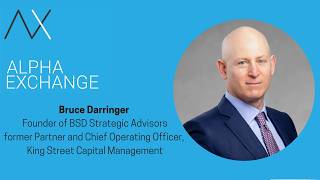 276: Bruce Darringer, Founder BSD Strategic Advisors
Alpha Exchange, this episode and its artwork belong to Dean Curnutt. Octagon is not affiliated with the show; this page is an independent summary.
