
Episode summary
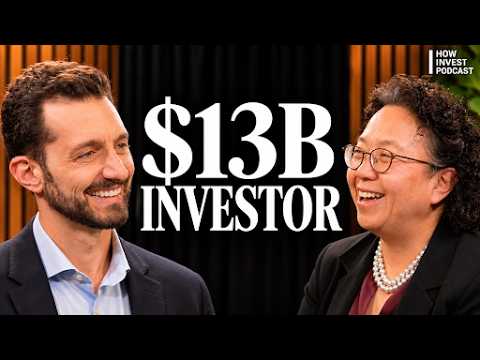
Melissa Ma on Why Investors Are Wrong About China, Who Wins the AI Race, and Asia's PE Fire Sale
 How I Invest With David Weisburd
· · Hosts: David Weisburd · Guests: Melissa Ma
Summary
Melissa Ma argues that Asia remains a compelling private equity hunting ground because the region is still being repriced by geopolitics, sentiment, and market structure rather than by a collapse in fundamentals. She says Asia Alternatives began with a domestic-consumption and demographics thesis, then built a country-specialist platform because the best growth was in small and mid-sized businesses that required local access. China was 51% of the firm’s capital over its first 21 years, but she has reduced that exposure to roughly 25% to a third after what she calls the “triple C crisis” of regulatory crackdown, COVID, and real estate weakness.
Even so, she remains constructive on China, arguing that the country is still investable if investors distinguish ideology from economic pragmatism. She says the current opportunity is especially strong in secondaries, where Asia Alternatives has expanded from about 5% of the portfolio to 30% plus. In her view, aging funds, discounts in Asia versus global buyouts, and reduced American participation have created a “perfect storm” in which sellers need liquidity and buyers can capture pricing dislocation.
She also sees India moving from a minority-growth market toward a more mature buyout ecosystem, helped by domestic buyers and public-market exits, while Australia has become a selective source of cross-border technology opportunities. On AI, she argues the market is too focused on Silicon Valley and LLMs, and that Asia has an advantage in physical AI because of decades of manufacturing, robotics, and supply-chain depth.
Key takeaways
- Melissa Ma says Asia Alternatives cut China exposure from 51% over its first 21 years to roughly 25% to a third, but still sees China as investable.
- She says the “triple C crisis” — regulatory crackdown, COVID, and real estate — crushed confidence without creating a liquidity crisis.
- Ma argues Asia secondaries are attractive because pricing is roughly 15% to 20% cheaper than global buyouts, with even wider gaps in venture.
- She says India’s buyout market is improving because control deals and domestic investors are finally creating a better exit ecosystem.
- Ma believes Asia has an edge in physical AI and robotics because the region controls manufacturing depth and supply-chain data.
- She says US LPs are the most hesitant on China, while Asian, Middle Eastern, European, and Canadian investors have started to come back.
Notable quotes
“Find something that's growing, that's long-term scalable, but underpenetrated, right”
“The triple C crisis, we call the China confidence crisis because unlike other don't it's not a financial crisis”
“It is because of a market maturation, right? A market maturation”
“I think we are just at the beginning, right of the next big wave, and there it's hard to see how”
“the reason that I mentioned this, right, is that therefore when you see the difference in the models, right”
Topics
- china investing thesis
- asia private equity secondaries
- ai race physical ai robotics
- india buyout liquidity
- private equity firm building
Companies and tickers mentioned
- GS
- Goldman Sachs
Watch the episode
Summary, takeaways and quote selection by Octagon. Quotes are short excerpts; the full conversation is in the episode.
More from How I Invest With David Weisburd
-
 Cybersecurity CEO on AI Agents Gone Rogue, the Next Cybersecurity Crisis, and the AI Arms Race
-
 THL Partners’ Todd Abrecht: Private Equity’s AI Reckoning, Building Moats, and the Art of the Buyout
-
 Baylor Endowment on Rethinking Venture Capital, Concentrated Portfolios, and Power of Compounding
-
 Hunter Walk: Why Venture is Getting Harder, Picking Great Founders, and Investing Against Consensus
-
 True Anomaly’s Even Rogers on Space Warfare, China’s Military Advantage, and the Defense Tech Boom
-
 Finding the Next Anthropic, Quantifying Venture Capital, and the Science of Picking Winners
How I Invest With David Weisburd, this episode and its artwork belong to David Weisburd. Octagon is not affiliated with the show; this page is an independent summary.
