
Episode summary
What did the Fed meeting mean for mortgage rates?
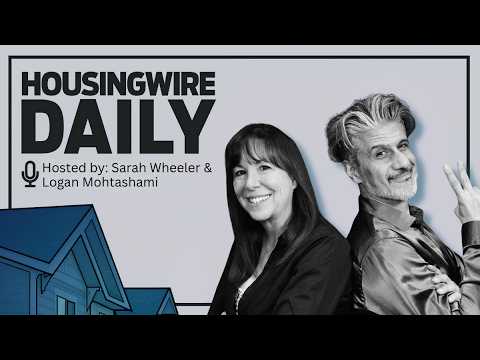
 HousingWire Daily
· · 27 min · Hosts: Sarah Wheeler · Guests: Logan Mohtashami, Kevin Warsh
Summary
The host and a guest argued that the Fed’s latest pause matters less for the short-term policy decision than for what it signals about mortgage rates, bond yields, and the timing of the next move. The guest said the Fed seemed comfortable waiting until December because the period between now and then is “information-rich,” with midterms, oil prices, trade tensions, and geopolitical risk all still in flux. He stressed that jobless claims remain low and that the Fed is now more focused on inflation than on labor weakness.
A major theme was that mortgage rates are being driven by a mix of fundamentals and technical levels. The guest said housing demand has repeatedly improved when mortgage rates move below 6.64% and slowed when they move above that level toward 7%. He also argued that the 10-year yield staying below 5.35% helped prevent a more serious bond selloff, while easing in the AI trade and some easing in oil-sensitive fear reduced pressure on yields.
They also discussed the Fed’s changing communication style under Kevin Warsh, including fewer surprises, no dots, and a new plan for some meetings to become strategy sessions rather than rate-setting meetings. The guest said that approach could reduce confusion, while warning that governors and presidents may still send forward guidance.
Key takeaways
- The guest said the Fed likely delayed action until December because the next few weeks are an “information-rich environment” for inflation, oil, and geopolitics.
- He argued mortgage demand improves when rates are below 6.64% and weakens when they move above that level toward 7%.
- The guest said low jobless claims keep the Fed focused on inflation rather than labor-market weakness.
- He viewed the 10-year yield’s failure to break above 5.35% as a key technical support for bonds and mortgage rates.
- He said the Fed liked seeing some weakness in the AI trade because it reduced pressure on yields and risk assets.
Notable quotes
“the period between now and then will be an information-rich environment”
“Jobless claims was the key to everything and he he comes out right away and talks about jobless claims, which I love to see”
“when mortgage rates get below 6.64 and head toward 6, housing demand grows”
“When mortgage rates get above 6.64 and head toward 7, especially the velocity from 7% to 7.60, housing noticeably slows down”
“I am a big fan of killing the dots, you know, um and he even basically said I'm never going to do a dot”
How the episode opens
Welcome everyone. Joined today again by my podcast partner lead analyst Logan Motashami to talk about the Fed meeting and the Fed presser and what it all means for mortgage rates. Super excited about this.
We we did a live webinar for our members yesterday right after the presser ended and then now we're going to take the best parts of that and and have it for this podcast. So thanks to everyone who joined us yesterday. Next time you guys if you didn't get to let's join in but Logan welcome to this podcast.
You know it it it is fascinating that this entire Fed meeting you could break it up into a few really really interesting points but I think you almost have to be a market person to kind of understand what Kevin Warsh was talking about but at least for us the whole month of October the 10-year yield cannot get above 5.35% and the risk is bond escalation. I thought Kevin did a good job of trying to you know calm things down as much as he could and but the our theme in the last few podcasts if it bleeds you can kill it. So I don't know people might have a different take on me than than I have on this but I thought Kevin Warsh actually really loved the fact that the AI actually some of those things bled a little bit.
Now I say this right now Oracle just raised their guidance core weave stock is is is rebounding and some of the debt concerns are being alleviated to a degree but I thought it was really interesting how the Federal Reserve loved to see a little crack in the AI story just by raising rates one time in the last last few months.
From the episode’s captions: roughly the first two minutes, lightly cleaned. Keep watching on YouTube →
Topics
- fed meeting
- mortgage rates
- interest rates
- housing market
- midterms
Watch the episode
Watch “What did the Fed meeting mean for mortgage rates?” on YouTube
Summary, takeaways and quote selection by Octagon. Quotes are short excerpts; the full conversation is in the episode.
More from HousingWire Daily
-
 The headlines impacting mortgage rates
-
 Has housing demand already changed with lower rates?
-
 How midterms and jobs week will affect rates
-
 Preparing for Q1 growth in reverse mortgages
-
 A clear pathway to sub-7% mortgage rates for Thanksgiving?
-
 Open Real Estate: Four Brokerage Giants Bet on a More Transparent Housing Market
HousingWire Daily, this episode and its artwork belong to HousingWire. Octagon is not affiliated with the show; this page is an independent summary.
