
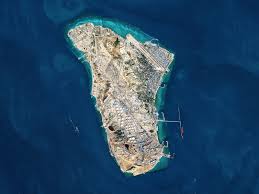
Kharg Island no longer under Iranian control by...?
Yes refers to: December 31
Short Answer
1. Market Behavior & Drivers
- Since last update (~27d): Headline market probability dropped 1.9pp, with model probability down 1.4pp; edge compressed.
- September 30 outcome saw market-led probability fall 1.8pp; the edge compressed.
- March 31, June 24, and July 31 outcomes all resolved to 'no'.
- Kharg Island likely remains Iranian, indispensable as its primary oil export hub.
- Iran has significantly fortified Kharg Island, reinforcing expectations of continued control.
Who Wins and Why
| Outcome | Market | Model | Why |
|---|---|---|---|
| December 31 | 8.0% | 4.6% | Evidence confirms Kharg Island remains under Iranian control, solidifying expectation through 2026. |
Current Context
Sources (22)
- 1Iran Calls Trump’s Kharg Island Attack Claim ‘Laughable’, Says Oil Operations Continue | Outlook Indiaoutlookindia.com
- 2Kharg Island no longer under Iranian control by...? Predi... 2026 | Polymarketpolymarket.com
- 3Kharg Island no longer under Iranian control by August 31?laikalabs.ai
- 4Kharg Island no longer under Iranian control by… Odds & Prediction Market Analysis | CryptoSlatecryptoslate.com
- 5Kharg Island Under Iranian Control by End of 2026? Odds | Lines.comlines.com
- 6Kharg Island no longer under Iranian control by...?limitless.exchange
- 7strait-of-hormuz-prediction-markets-iran-oil-shipping-live-data.mdgithub.com
- 8polymarket-autotrader/CLAUDE.md at maingithub.com
- 9U.S., Iran exchange strikes for first time since July as Trump...cnbc.com
- 10Is Iran’s Kharg Island Under Attack? Trump Offers No Evidence - Modern Diplomacymoderndiplomacy.eu
- 11Crude Loading Resumes At Iran’s Kharg Island Terminal - Maritime Newsmaritimenews.com
- 12No tankers loaded at Kharg Island for a week amid US blockade, FT says | The Jerusalem Postjpost.com
- 13U.S. Conflict with Irancongress.gov
- 14U.S. Conflict with Irancongress.gov
- 15MorningNews_20260613_Claude-1-2-2.mdgithub.com
- 16Pakistan Says Deal Is Close Even as Iran, US Harden Stances | Bloomberg Businessweekyoutube.com
- 17Trump Signals Economic Pressure on Iran; Israel Rejects US Proposal | Bloomberg Daybreak: US Editionyoutube.com
- 18Iran's Economic Lifeline; Previewing Nvidia Earnings | Bloomberg Daybreak: US Editionyoutube.com
- 19Iran war: What happens if Trump pushes to seize Kharg...cnbc.com
- 20U.S. bombing of Kharg Island, Iran's critical oil hub, sparks new threats to target Gulf oil infrastructurenbcnews.com
- 21Why Iran's Kharg Island is central to Strait of Hormuz security | Iran Internationaliranintl.news
- 22Kharg Island: Iran’s energy lifeline that has so far escaped attacktheconversation.com
2. Price Chart
Historical Price (Probability)
3. Market Data
Contract Snapshot
This market, sourced from Polymarket, resolves to "Yes" if Kharg Island is no longer under Iran's primary governmental or military control by any of the specified deadlines (e.g., March 31, April 15, July 31, August 31, September 30, or December 31, 2026, all at 11:59 PM ET), with another state or authority having established actual control. It resolves to "No" if Iran retains control, if control is contested/unclear by the deadline, or if only temporary disruptions, raids, or claims without actual established control occur. Resolution relies on official government/military statements and a consensus of credible reporting.
Available Contracts
Market options and current pricing
| Outcome bucket | Yes (price) | No (price) | Last trade probability |
|---|---|---|---|
| December 31 | $0.08 | $0.93 | 8% |
Market Discussion
As of August 31, 2026, Kharg Island remains under Iranian control, with officials dismissing claims of seizure and stating that oil operations continue despite a U.S. naval blockade and earlier reported U.S. military strikes on the island [1][2][3]. Consequently, a prediction market asking if Kharg Island would no longer be under Iranian control by August 31, 2026, would resolve to "No" [4].
Sources (4)
4. Trust Index
Settlement is decided by a token-holder vote.
Integrity risk· Outcome control
Includes the cost to trade: a $10,000 order can't be filled here because the order book is too thin.
Weighted blend with hard caps — a critically weak safety pillar, or a severe trading anomaly, caps the total regardless of the rest. Full methodology · About the Trust Index
5. What specific Iranian military actions in the Strait of Hormuz could trigger a direct U.S. intervention aimed at seizing Kharg Island?
| Current Control Status | Under Iranian control as of August 31, 2026 [1][2][3][4][5] |
|---|---|
| Proximity to Iranian Mainland | 15-21 miles [1][6][7] |
| Prediction Market Probability (no longer under Iranian control by Aug 31, 2026) | 5%-12% as of early August 2026 [8] |
Sources (9)
- 1Seizing Iran's Kharg Island would be a risk, experts say | AP Newsapnews.com
- 2Trump mulls risky Kharg Island takeover to force Iran...axios.com
- 3Trump says US ‘may take over Kharg Island’: Here’s what you need to know | Donald Trump News | Al Jazeeraaljazeera.com
- 4How the US could try to seize Iran’s Kharg Island - and why it might backfire - CNAchannelnewsasia.com
- 5The Kharg Island Gamble: A Probabilistic Risk Analysis of a U.S. Seizure Strategyindrastra.com
- 6Kharg Island: How the US could seize Iran's key oil terminalbbc.com
- 7Examining US Military Options for Kharg Island and the...hudson.org
- 8Thorny-Fir's Kharg Island no longer under Iranian control by August 31? Bearish Analysis | Questflownext.questflow.ai
- 9Iran's Kharg Island oil terminal is a prime but risky US target | AP Newsapnews.com
6. How critical is Kharg Island to Iran's economy versus its other oil export terminals like those at Sirri or Lavan islands?
| Crude Oil Export Share | 90% to 96% of Iran's crude oil exports [1][2][3][4][5][6][7] |
|---|---|
| Primary Role | Iran's primary oil export hub [1][2][3][4][5][6][7] |
| Current Control | Remains under Iranian control as of August 31, 2026 [8][6] |
Sources (9)
- 1Explainer: Kharg Island, Iran’s oil export hub | Latest Market Newsargusmedia.com
- 2Why Iran's Kharg Island is central to Strait of Hormuz security | Iran Internationaliranintl.news
- 3Kharg Island: Iran's Oil Backbone & Greatest Vulnerability EXPLAINER: Why Kharg Island is the backbone of Iran’s oil economy – and its greatest vulnerability | Kpler - Mar 16, 2026kpler.com
- 4Explainer: Why Kharg Island is vital to Iran and the global economy | Euronewseuronews.com
- 5What is Kharg Island? Iranian petroleum site takes center stage as oil prices soar - ABC Newsabcnews.com
- 6Kharg Island, struck by US, is key hub for Iran oil exports | Reutersreuters.com
- 7Kharg Island: The Chokepoint Behind 96% of Iran’s Oil Exports - Iran Open Data (IOD)iranopendata.org
- 8Kharg Island | Oil Terminal, Attack, Significance, Map,...britannica.com
- 9Background Reference: Iraneia.gov
7. How do the U.S. Fifth Fleet's amphibious assault capabilities compare to Iran's anti-access/area denial (A2/AD) strategy for defending Kharg Island?
| Kharg Island Status | Under Iranian control (as of August 31, 2026) [1][2][3] |
|---|---|
| U.S. Military Operations (Kharg) | Air strikes against military infrastructure (March 2026) [1][2][3] |
| Iranian Defense Strategy (Kharg) | Layered anti-access/area denial (A2/AD) [4][5][6][7][1] |
Sources (12)
- 1Kharg: Iran fortifying Kharg Island as US weighs possible seizure plan, laying traps and moving air defences: Report - The Times of Indiatimesofindia.indiatimes.com
- 2Kharg Island | Oil Terminal, Attack, Significance, Map,...britannica.com
- 3Iran's Kharg Island oil terminal is a prime but risky US targetapnews.com
- 4Iran's asymmetric maritime strategy in the Strait of Hormuz...faf.ae
- 5Kharg Island: Iran's Crown Jewel, Greatest Vulnerability, and the Perilous Calculus of Seizure and Sustainment - Defence Research and Studiesdras.in
- 6Kharg Island: The Illusion of Decisive Victory and...csconversations.in
- 7Iran’s Kharg Island Defenses Blasted | SOFREPsofrep.com
- 8AT SEA, FROM THE SEA, AND ASHOREtf515.marines.mil
- 9USS Tripoli ARG And 31st MEU Complete Six-Month Indo-Pacific And CENTCOM Deploymentoceannews.com
- 10Forward-Deployed U.S. Navy Flattop Concluding Six-Month Missionforbes.com
- 11Kharg Island: Iran's Oil Backbone & Greatest Vulnerabilitykpler.com
- 12Why does the US have Iran's Kharg Island in its sights?bbc.com
8. Which publicly available datasets can be used to monitor the operational status of the Kharg Island oil terminal in near real-time?
| SAR monitoring lead time | 4–7 weeks ahead of official statistics [1][2] |
|---|---|
| Loading resumption confirmed | Mid-August 2026 [3][4] |
| Key monitoring methods | SAR imagery, Hormuz Monitor, GitHub projects, commercial analytics firms [1][2][5][6][7][8] |
Sources (8)
- 1Iran Oil Exports — Satellite Data & Kharg Island Storage...oilradar.io
- 2How we track Iranian crude oil exports using Sentinel-1 SAR satellite imagery | by Vladislav Bachevsky | Jun, 2026 | Mediummedium.com
- 3Crude Loading Resumes At Iran’s Kharg Island Terminal - Maritime Newsmaritimenews.com
- 4Kharg Reactivates as Iran's Caspian Corridor Expandswindward.ai
- 5Hormuz Monitor API - Strait of Hormuzhormuzmonitor.com
- 6jasonhjohnson/strait-of-hormuz-datagithub.com
- 7yasumorishima/hormuz-ship-trackergithub.com
- 8satlens/satlensgithub.com
9. What does recent open-source intelligence reveal about Iran's defensive fortifications and military readiness on Kharg Island?
| Current Control Status | Iranian (as of August 31, 2026) [1][2][3][4] |
|---|---|
| Deployed Defenses | Additional personnel, MANPADS, anti-personnel and anti-armor mines [1][3][5][4] |
| Probable Control through 2026 | Over 92% chance Iran retains control (as of late August 2026) [6][7] |
Sources (7)
- 1Iran building up defenses of Kharg Island to protect against...cnn.com
- 2Kharg Island: Why does the US have it in its sights?bbc.com
- 3Kharg: Iran fortifying Kharg Island as US weighs possible seizure plan, laying traps and moving air defences: Report - The Times of Indiatimesofindia.indiatimes.com
- 4Limited US Ground Operations in Iran Will Not Shift the...quincyinst.org
- 5Why Iran's Kharg Island is central to Strait of Hormuz security | Iran Internationaliranintl.com
- 6Kharg Island Under Iranian Control by End of 2026? Odds | Lines.comlines.com
- 7Kharg Island no longer under Iranian control by… Odds & Prediction Market Analysis | CryptoSlatecryptoslate.com
10. What Could Change the Odds
Key Catalysts
Key Dates & Catalysts
- Closes: January 01, 2027
Sources (16)
- 1Will the US and Iran be at war on January 1st, 2027? | Manifoldmanifold.markets
- 2Iran’s Khamenei calls for Gulf unity as Hormuz tensions persist | US-Israel war on Iran News | Al Jazeeraaljazeera.com
- 3US Readies Isolation Plan for Iran; Trump Tariffs on Drones | Bloomberg Daybreak: US Editionyoutube.com
- 4When will the US and Iran jointly publish a formal agreement or permanent ceasefire document?wooleyrhinoresearch.com
- 5realfishsam/polymarket-iran-may-23github.com
- 6danielrosehill/Iran-Israel-Ceasefire-Prediction-090426github.com
- 7Kharg Island no longer under Iranian control by...? Predi... 2026 | Polymarketpolymarket.com
- 8Kharg Island Under Iranian Control by End of 2026? Odds | Lines.comlines.com
- 9The Strait of Hormuz: Security Developments and Impacts...congress.gov
- 10https://www.congress.gov/crs_external_products/R/HTML/R45281.htmlcongress.gov
- 11U.S. Conflict with Irancongress.gov
- 12U.S. Conflict with Irancongress.gov
- 13U.S. Conflict with Irancongress.gov
- 14Iran's disfigured supreme leader remains invisible six months into an existential war - AL-MONITOR: The Middle Eastʼs leading independent news source since 2012al-monitor.com
- 15Iran’s Mojtaba Khamenei urges Gulf rulers in written message to confront ‘real enemy’nbcnews.com
- 16Iran leader’s absence gives war camp room to shape policy | Iran Internationaliranintl.news
